Entrepreneurship
Inventory Management for Fashion & Clothing Business in Nigeria [2026]
Entrepreneurship



There's nothing more frustrating than finally having the right size and colour a customer's been asking for, and still losing the sale because you took too long scrolling through your gallery trying to prove it exists.
Not on Bumpa yet? Start your free 14-day trial here and start tracking every size, every colour, properly.
Selling fashion items in Nigeria can be either very rewarding or very distressing, often because of inventory problems. Let me paint a picture for you. You have a collection of bubu, and a customer sends you a DM asking for that outfit in size 12, in red. You're almost certain you have it — in fact, you could swear you just saw it somewhere. So you open your gallery and start scrolling. 15 photos in, nothing. 25 photos in, maybe you find a red dress, but it's size 8. By the time you actually find size 12, the customer has either lost patience, found the same dress on someone else's page, or the spirit to buy just left them (to be fair to them, honestly).
This goes beyond an organizational problem. Fashion items are notoriously difficult to keep inventory for, more than almost any other kind of retail, and if you've been feeling like everyone else has figured this out except you, I'm here to tell you that's not true. This is coming from someone who's spoken to fashion retailers who've had their businesses for the past 5, sometimes 10 years; you just don't have the right system for it yet. And believe it or not, on Bumpa, we have hundreds, in fact thousands, of fashion sellers who've made Bumpa their home simply because of the simplicity and ease with which it helps them keep inventory for their business.
Why does fashion inventory break normal stock tracking?
One thing most people don't realize until they're neck-deep in the chaos is that selling a fashion item is never just about one product. In fact, one product tends to have many different variations. If you sell bags or jewelry, that bag can come in pink, purple, brown, beige — and even the browns can come in different shades. Your jewelry can be gold, silver, platinum, in different qualities and finishes. And it gets worse if you're selling shoes or clothes; that top might come in size 8, size 10, size 12, and however many other sizes and colours it comes in.
Often, that "one product" is actually 10 to 15 separate items you need to track stock for, individually. This is why even a simple notebook or spreadsheet can end up complicating what should actually be simple, and once you understand this, everything else about managing your inventory starts to make a lot more sense. So I'm going to walk you through six tested ways to track your inventory as a fashion business owner in Nigeria, regardless of your size. Whether you're a small business, a medium-sized business, or an already large one, this is the perfect guide for you.
1. Start tracking your products & it's variations


The first mindset shift you need to make is this: stop thinking of "the dress" as one thing. It's not. The dress in size 12, red is a completely different item from the dress in size 12, blue, or the dress in size 14, red. If you're tracking all of them under one general name, you're not actually tracking your inventory; you're just tracking that a dress exists somewhere.
This is where most fashion sellers get stuck, because tracking every single variation manually sounds exhausting, and honestly, it would be, if you were doing it in a notebook. But it doesn't have to be that complicated.
With Bumpa, you can add variations under one product, so your "Bubu Dress" stays as one product, but every size and colour combination is tracked individually underneath it. You get to see exactly how many you have in size 12, red, separately from size 14, blue, without creating a hundred different product listings or losing your mind trying to keep up. One product, all its variations, properly accounted for.
2. Know which sizes actually sell (most shops guess)

Here's something a lot of fashion sellers don't realize is costing them: most of them are restocking based on vibes, not data. You "feel like" size M sells more, so you order more M; meanwhile, it's actually size L that's been quietly selling out every single time.
This happens because without proper tracking, you don't actually see the pattern; you just remember whatever sold most recently, or whatever you personally prefer.
With Bumpa's analytics, you can see exactly which sizes and colours are actually moving, not what you assume is moving. So instead of restocking on guesswork, you're restocking based on real numbers — what your customers are genuinely buying, size by size, colour by colour. This alone can save you from tying down money in sizes that barely sell, while running out of the ones that actually do.
3. Set low-stock alerts per size, not per product

Here's a trap a lot of sellers fall into: seeing "12 units in stock" and assuming they're fine, when in reality, all 12 units are size 8, and most of your customers wear 14 to 16. On paper, you look stocked. In reality, you're completely out of what people actually want.
This is exactly why tracking stock at the product level alone doesn't work for fashion. "In stock" means nothing if it's not broken down by the specific size and colour your customers are asking for.
With Bumpa, you can set low-stock alerts per variant, not just per product. So you're notified when size 14 is running low, specifically, not just when the dress as a whole is "getting low" in some vague sense. This way, you're always aware of what's actually available to sell, not just what technically still exists somewhere in your stock.
4. Photograph and catalogue once, not from memory every time

Remember the scrolling-through-40-photos moment from earlier? This is exactly what causes that. If your products aren't properly catalogued, you're relying on memory, or worse, your gallery, every single time a customer asks a question. And memory is not a system.
The fix is simple, even if it takes a little upfront effort: photograph and catalogue each product once, properly, with its variations clearly attached, and never do that scrolling exercise again.
With Bumpa, you can upload images per variation, so your red size 12 has its own photo, separate from your blue size 14, all organized under one product on your storefront. When a customer asks if you have something, you're not scrolling, you're checking. And with everything catalogued on your storefront, customers can even see and confirm availability themselves, before they even DM you.
5. Track what's reserved vs. what's actually available

This one is a familiar kind of chaos: you tell one customer "I've kept it for you," then somehow, that same item gets sold to someone else before the first person pays. Nobody did anything wrong, exactly. It's just that "I've kept it for you" was never actually recorded anywhere; it just existed as a mental note that got lost in the busyness of the day.
This is one of the quiet ways fashion sellers lose trust with customers, and it happens more often than most people admit.
With Bumpa, your stock updates in real time across your storefront and your sales, so once an item is marked or sold, it reflects everywhere, immediately. No more double-selling the one piece you promised to two different people, because what you see is what's actually available, not what you're hoping is still there.
6. Do a size-and-colour-specific stock count
When it's time to physically count your stock, counting "20 dresses" isn't actually useful information. You need to know 20 dresses, broken down by exactly which sizes and colours, because that's the only version of the count that tells you anything you can actually act on.
This is where doing your stock count properly, size by size and colour by colour, makes all the difference between a count that just confirms a number, and one that actually shows you what to reorder, what's sitting too long, and what's about to run out.
If you haven't done this before, we broke down exactly how to approach a stock count and, without needing to shut down your business to do it, in how to do a stock count when you can't afford to close your shop.
The bottom line
At the end of the day, the goal here was to get you to a place where you never have to say "let me check" to a customer again, where you already know, instantly, exactly what you have, in what size, in what colour, without scrolling through a single photo.
If that's the kind of system you're ready for, start your 14-day free trial with Bumpa, and let your inventory finally work as hard as you do.
Frequently Asked Questions
1. How do I organize inventory for a clothing business with many sizes and colours?
The key is tracking at the variant level, not the product level, meaning each size and colour combination is counted individually, not lumped together as "one dress." Grouping variations under one product, while still tracking their stock separately, keeps things organized without creating hundreds of duplicate listings.
2. What's the best way to track stock for a fashion reseller in Nigeria?
Using inventory software built to handle product variations is the most reliable approach, since manual methods like notebooks or spreadsheets struggle once you factor in multiple sizes and colours per item. A system like Bumpa lets you track each variation, set alerts per size, and see real-time stock across all your sales channels.
3. How do I stop overselling the same item to different customers?
The most effective way is to have your stock update in real time the moment an item is sold or reserved, so it reflects everywhere instantly, not just in your head or a mental note. This removes the guesswork that usually leads to promising the same piece to two different customers.
Subscribe to our Blog
If you love tips & content like this that will help with your small business marketing and growth, then you’ll be excited to know we have more! We can send you notifications when they are published if you share your email address with us. We promise not to be a bother, and you can always unsubscribe at any time!
Want to Learn More about Bumpa & how to Grow Your Business with it?
You can sign up to Bumpa in 5 seconds as a small business owner and let us begin the journey of growing your business with you!
Related Articles
View Related Articles Here

Features
8 Things You Can Automate on Bumpa So Your Business Runs While You Rest

Features
How to Set Up TikTok Pixel on Bumpa | Step-by-Step Guide

Features
Collect the Birthday & Gender Information of Your Customers Through Multiple Ways on Bumpa.

Entrepreneurship
How to Get Paid Faster: The Complete Guide to Business Payments in Nigeria & Kenya

Tips
How to Choose the Right Payment Options for Your Customers in 2026

Features
How to Set Up Facebook Pixel on Bumpa | Step-by-Step Guide

Entrepreneurship
How to Build a Good Inventory Management System (Step-by-Step)
Tips
How to Keep Daily Records of Sales for Your Business Easily

Tips
How to Detect, Deal with & Prevent Fake Bank Alerts for Your Business

Sales
How Gift Cards, Product Bundles, and Add-Ons Can Help You Make More Money Per Order on Bumpa

Entrepreneurship
Pezesha & Bumpa Partner to Empower Merchants with Digital Business Tools

Features
What Happens When My Bumpa Subscription Expires?

Entrepreneurship
How to Track Profit for Your Business in Nigeria in 2026

Tips
7 Signs You Need Inventory Management Software In 2026

Entrepreneurship
How to Prepare Your Business for Black Friday (2025): A Simple 10-Step Plan With Checklists and Templates

Entrepreneurship
Black Friday Marketing Strategy In 2026: 7-Day Plan for Small Businesses

Tips
When to Restock Inventory: Reorder Point Guide for Nigerian Businesses in 2026

Entrepreneurship
Inventory Management for Fashion & Clothing Business in Nigeria [2026]

Tips
6 Ways to Stop Staff From Stealing Your Stock (Without Losing Trust in Your Team)

Tips
Instagram Business Account Disabled? Here's Exactly What to Do in the Next 24 Hours (2026 Guide)

Entrepreneurship
From One Blender to 25 Branches and Counting: How FruityLife Manages Its Business with Bumpa

Features
New on Bumpa: The July Updates That Make Running Your Business Easier

Features
Create Emails That Drive Sales with Bumpa's Sales Email Template

Features
June Bumpa Product Update: Here's what's new!

Tips
8 Things To Do Before You Launch Your Online Store In 2026

Tips
10 Ways to Get more Customers & Increase Sales for your Business

Tips
Top 5 Online Selling Platforms & Sites in Nigeria (2026 Guide)

Tips
How to Optimise your Bumpa Website for more Visibility on Google in 2026!

Entrepreneurship
How To Start A Bag & Accessories Business In Nigeria In 2026

Tips
When to Upgrade Your Bumpa Plan And How to Know You're Ready

Entrepreneurship
10 Signs Your Business Needs Better Structure and Organization In 2026

Entrepreneurship
Bumpa vs WooCommerce: Is "Free and Powerful" Actually Free for Nigerian and Kenyan Businesses?

Entrepreneurship
Bumpa vs Shopify: Which Platform Actually Works Best For African Businesses?

Features
How to Improve SEO for Your Bumpa Website in 14 Steps

Features
Is the Bumpa App Free? (2026 Update: What’s Free, What’s Paid & What You Get)

Entrepreneurship
How to Use Social Media to Drive Sales to Your Bumpa Store In 2026

Entrepreneurship
25 Small Business Ideas in Kenya with Low Capital (2026 Guide)

Features
Every Physical Store You Add on your Bumpa Account Now Has Its Own Terminal Account. Here's Why It Matters

Features
Grow Your Business Faster with Loans: Say Hello to Bumpa Capital!

Features
How to Stop Staff Theft in Your DMs and Your Physical Store Using Bumpa

Tips
Business Name Ideas - How to Generate One + 42 Examples

Entrepreneurship
Bumpa vs Wix: A Guide for Nigerian Business Owners

Entrepreneurship
Bumpa vs Paystack Storefront: Which Is Right for Your Business?

Entrepreneurship
Bumpa vs Flutterwave Store: What Nigerian Sellers Actually Need to Know

Entrepreneurship
7 Marketing Tools You Can Use on Bumpa To 5x Sales. (Free & Paid 2026)

Spotlight
From a Mom's Shop Floor to 10K Orders: How Harjoke Fabrics Automated Sales with Bumpa

Features
Bumpa Wallet Is Here: A Faster Way to Get Paid Instantly, Grow Your Money & Stay in Control

Spotlight
For our One of One, Teejay…
Entrepreneurship
8 Best Paystack Storefront Alternatives Nigeria (2026)

Sales
How to Start an Online Business in Kenya (2026 Complete Guide)

Features
Bumpa POS: A Simple Point of Sale System for Businesses in Nigeria

Entrepreneurship
How Bumpa Helps Business Owners Adapt To Nigeria’s New Tax Laws in 2026

Sales
5 Reasons Why Your Business Isn't Making Money (And How To Fix It)

Features
Selling Internationally: Start Collecting Foreign Payments with Bumpa’s Multi-currency Feature!

Features
How to Get Started on Bumpa: An Onboarding Guide.

Tips
10 Small Business Ideas you can start with 20,000 in Nigeria in 2026
Tips
How to Collect Customer Reviews and Boost Sales With Them In 2026

Tips
How to File CAC Annual Returns Online in 2026 as a Business Owner

Entrepreneurship
Happening Live: 30 Days of Bumpa with Kelvin! (Plus 3M Up for Grabs)!

Features
What’s New This Month for Your Business (November 2025)

Entrepreneurship
Share Your Story, Win ₦500,000: Bumpa Business Story 2025

Features
Bumpa Product Updates: What’s New This Month for Your Business (October 2025)
Features
Your Store, Your Way: Introducing Bumpa Website Extensions
Tips
Black Friday Coupon Code Ideas (2025): 27 Proven Promos + How to Name, Cap, and Track Them

Communities
"We Don't Do Impossible" - Celebrating CX Week at Bumpa

Tips
How to Create Professional Invoices for Small Businesses with an Online Invoice Generator
Tips
How to Create & Start an Online Store in Nigeria in 2024
Features
How to Use the Bumpa App: The Ultimate Guide For Small Business Management
Features
Recover More Sales With Bumpa’s New Automated Abandoned Order Reminders
Tips
Black Friday 2025: The Business Guide to Deals That Triple Your Sales

Spotlight
Ronbee Signature: The Entrepreneur who Ditched the Idea of Being A Professor to Become A Jewelry & Perfume Connoisseur.
Spotlight
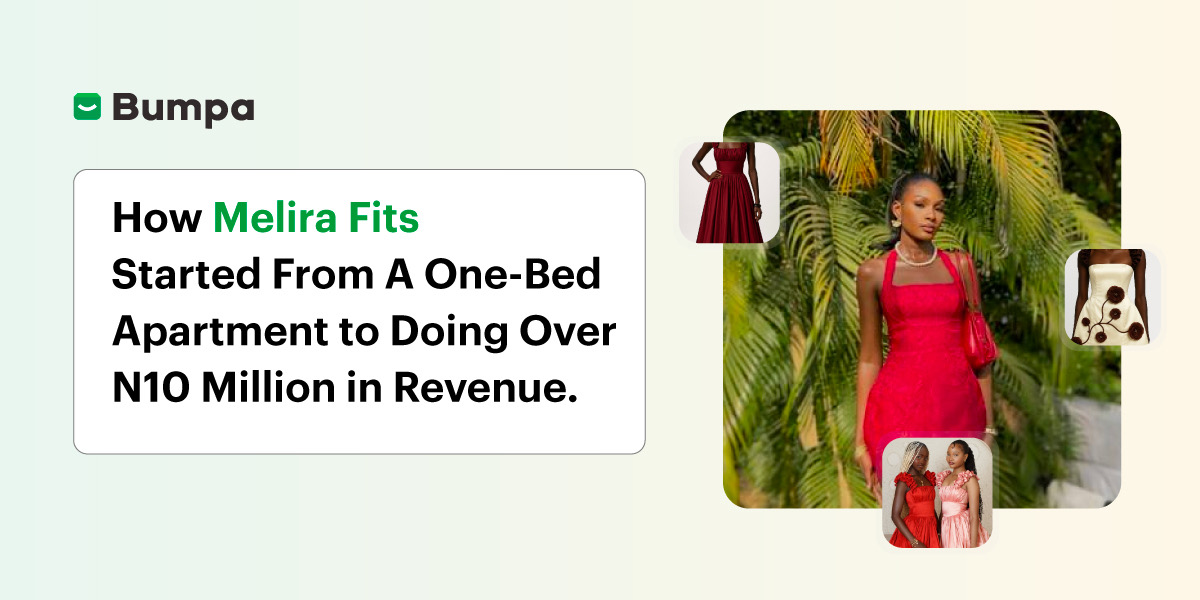
How Melira Fits Started From A One-Bed Apartment to Doing Up To 15 Million in Revenue.
Features
Get Amazon-Level Delivery for your Business with Bumpa’s New Shipping Automation

Tips
How Businesses (Small and Big) Are Making Big Money with AI in 2025! (Here's How)

Tips
How to Make Money on the Internet in 2025 (12 Easy E-commerce Hustles That Actually Pay)

Tips
These 7 Business Finance Mistakes May Cost You Millions !
Tips
6 Bumpa Websites Designed With New Themes to Inspire Your Online Store
Features
The Ultimate Guide to Managing Your Multiple Stores for Your Business with Bumpa

Features
How to Set Up Google Analytics for Your Bumpa Website

Tips
These 5 Urgent Fixes Will Save Your Dying Online Store!

Entrepreneurship
Be Part of Something Big: Join Our Partners' Program To Help Businesses Go Digital with Bumpa!
Tips
How to Write Product Descriptions that Convert Online Shoppers + Examples & Template
Features
Introducing Brand New Professional Website Themes & Templates For Your Bumpa Store!

Entrepreneurship
ShowUp #2: Love is in the Air! (And So Are Sales)

Tips
How to Turn your Products into Irresistible Valentine's Day Gifts

Features
How to Add Shipping Fees on Your Bumpa App

Features
How does Online Payment Work on Bumpa?

Entrepreneurship
The Biggest Business Growth Event (BBGW) of 2025 Is Here!

Tips
Top 8 Trending Products to Launch a Successful Online Business in 2025

Tips
4 Secret Growth Strategies Smart Businesses Are Stealing in 2025

Entrepreneurship
ShowUp #1: Thank You for 2024 and Welcome to 2025! 🎉

Features
What to Know about Bumpa’s KYC Verification & Fraud Prevention

Entrepreneurship
Shape Your 2025: 50 Motivational and Inspirational Quotes Every Business Owner Needs

TipsFeatures
25 Marketing Strategies for Increasing Sales to Implement on Day One of 2025!

Entrepreneurship
The Season of Sales - Lessons, Tips & Giveaways

EntrepreneurshipFeatures
A Good Time For Gifts: Celebrating Our Super Sellers with WiiCreate! 🎁

Entrepreneurship
How Lagos's Top Parfait Brand, Melony Pine Fruit Hub Manages Its Growing Success with Bumpa
Features
Bumpa's Invoice Generator 2.0: Now with Custom Notes & Upgraded Shipping Slips
Features
Planning Your Next Big Sales? 8 Bumpa Features You Can't Miss!
TipsFeatures