Entrepreneurship
How to Build a Good Inventory Management System (Step-by-Step)
Entrepreneurship



Knowing exactly what products you have in stock is often the first step to building a profitable business, one your customers can actually trust.
Not on Bumpa yet? Start your free 14-day trial here and know exactly what's in stock before your customers even start sending inquiries.
Any good business that's going to excel in 2026 and beyond needs a solid foundation, and one of the biggest problems most businesses in Nigeria face is inventory management, more specifically, actually knowing how much stock they have at any given time, and whether they have more or less than they think.
This is often why, when you walk up to a vendor to buy something, you hear things like "let me check if I have that," followed by 20 to 30 minutes of rummaging around for a product they most likely don't have.
This does two things:
It frustrates the customer standing right in front of you
It slowly erodes trust, because customers stop believing you when you tell them something is in stock, since you've been wrong before.
A good inventory system fixes this. Not just by helping you know what you have, but by helping you catch discrepancies early, before they turn into lost sales, lost trust, or worse, lost money you didn't even know was walking out the door.
If you've ever felt like you're managing inventory through a collection of habits that mostly work, rather than an actual system, this article is for you. We're going to walk you through exactly how to build one, step by step, no complicated software required.
What makes an inventory system actually "good"?
But what actually makes a good inventory system, what makes it worth your time, especially for Nigerian businesses? This is exactly the question Bumpa is uniquely positioned to help you solve.
A good inventory management system should have the following:
The ability to update in real time, so you always know exactly what stock you have, not what you had yesterday, or what you think you have.
The ability to automate repetitive processes, so you're not manually doing the same stock update over and over, saving you time and energy you can put elsewhere.
The ability to help you manage your operations, especially if you have staff. Knowing what each staff member has touched, what actions they've taken on the platform, and being able to track orders properly, all in one place.
All of this, and more, is exactly what Bumpa does for your business. And if you're not using Bumpa, chances are you're losing hours every week manually repeating processes that could easily be automated by an app that costs less than a single meal, about ₦5,000 monthly.
5 Ways To Build A Good Inventory Management System
Having a business management platform, an inventory management platform like Bumpa, is one thing. Actually using that platform properly to make your inventory process easier is another thing entirely. So whether you're already using Bumpa, or you're on another platform, here are 5 things to do to build a good inventory management system.
1. Pick one single source of truth for your stock
The root cause of most inventory chaos is having stock recorded in more than one place. We've covered this before, if you're still doing this, it's worth reading the signs that you've outgrown manual tracking.
This is exactly what Bumpa helps you fix. Your product prices stay static and don't change unless you, or a staff member you've given permission to, go in to adjust them. And with price history, you can see every single change ever made to a product's price, so you always know the full timeline, and whether that change was made by you or by your staff.
2. Name your products and variants consistently
Another major problem I see, whether vendors are using a good management platform or a bad one, is poor naming. Without a proper naming system in place, sizes, colours, and variations end up becoming a problem instead of an advantage.
What you actually want is to name your products in a way you'll easily remember, so you can find them even in the middle of a thousand other products. We broke this down properly in how to track sizes and colours without losing your mind.
3. Set a reorder point for every product
Don't just restock "whenever it feels low." Every product needs its own reorder point, a specific number that tells you exactly when it's time to order more, based on how fast it sells and how long it takes to restock. We walked through exactly how to calculate this in when to restock your business: how to know before you run out.
4. Build a counting rhythm you'll actually stick to
Pick one specific cadence, weekly, biweekly, or monthly, whatever works for you, and actually sit down to take stock of everything you've sold over that period.
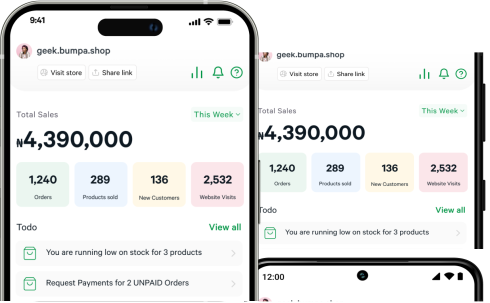
This is far easier with Bumpa, since your dashboard already shows you how many products you have in stock right now, how many you've sold, and how many you have left to sell. It cuts your counting time down by hours, compared to writing everything out in a notebook.
5. Put a check in place to catch discrepancies early
Without a good inventory system, it's very difficult to catch staff theft or discrepancies in your business early. With Bumpa, you can set permission levels for your staff. If you don't want them seeing how much revenue your business is making that month, you can simply block that view. If you don't want them editing product prices, you can restrict that too, so you can go to Yaba market and come back to meet your prices exactly as you left them.
If this is a concern for your business, we go deeper into it in 6 ways to stop staff from stealing your stock.
How long does it take to set up a proper inventory system?
A proper inventory system shouldn't take you more than a few hours to properly set up. The real hallmark of a good system isn't how long it takes to build, it's whether you can set it and then actually leave it, without panicking that you're going to lose track of things.
Once your source of truth is picked, your products are named properly, your reorder points are set, and your counting rhythm is in place, the system should just run, quietly doing its job in the background while you focus on actually running your business.
Get Started Now
You don't need to build this perfectly on day one. Although with Bumpa, you honestly can, in less than 24 hours. What you really need is a system that's 80% right and consistently used, one that automates the repetitive, mind-numbing parts of running your business so you don't have to.
If you've been struggling to track your products, know exactly what you have in stock, and catch discrepancies early, this is your sign to stop guessing.
Try Bumpa free for 14 days and see for yourself why it's quickly becoming the next best thing since sliced bread for businesses like yours.
Frequently Asked Questions
1. How do I create an inventory management system from scratch?
Start with one single source of truth for your stock, then name your products and variants consistently, set a reorder point for every product, build a counting rhythm you'll actually stick to, and put a check in place to catch discrepancies early. These 5 steps, done properly, are enough to build a working system, even if you're starting with nothing.
2. What's the easiest inventory system for a small business?
The easiest system is one that updates itself. Manually tracking stock in a notebook or spreadsheet requires you to remember to update it every time, which is where most systems break down. An app like Bumpa updates your stock automatically with every sale, so there's nothing for you to forget.
3. Do I need software to have a good inventory system?
Not strictly, but it makes a significant difference. The 5 steps in this article can technically be done manually, but software removes the most common failure point, human error and inconsistency, while also saving you hours you'd otherwise spend counting and recording by hand.
4. How often should I update my inventory records?
Ideally, in real time, as sales happen, rather than at the end of the day or week. If you're tracking manually, aim for at least a consistent weekly count, since the longer you wait, the harder it becomes to catch discrepancies early.
Related Articles
View Related Articles Here

Tips
How to Switch to Bumpa Before Black Friday (Without the Risk)

Tips
6 Ways to Use Bumpa to Get Paid Faster and Never Chase Payments Again

Entrepreneurship
How Bumpa POS Helps You Run a Physical Sale Without Losing Track of Stock or Money

Entrepreneurship
How to Sell in Your Shop and Online at the Same Time With One POS

Features
How to Use Advanced Settings on Bumpa Loyalty

Features
How to Activate Loyalty Points Feature on Bumpa

Features
Grow Your Revenue & Customer Retention With the New Loyalty Points Feature on Bumpa

Spotlight
Think Business Loans Are Stressful? Nineteenth Shoes Clears Up 5 Myths and Tells Us How Bumpa Capital Helped

Spotlight
Meet Tayo Adejumo, The Business Owner Paid 4 Years of Bumpa Upfront in 2022. Here's Why

Tips
5 Best Inventory Management Software for Small Businesses (Online & Physical Retail Stores)

Entrepreneurship
How to Separate Your Business and Personal Finances [2026 Guide]

Spotlight
The Extra Mile: Celebrating Customer Service Week 2026 at Bumpa

Features
8 Things You Can Automate on Bumpa So Your Business Runs While You Rest

Features
How to Set Up TikTok Pixel on Bumpa | Step-by-Step Guide

Features
Collect the Birthday & Gender Information of Your Customers Through Multiple Ways on Bumpa.

Entrepreneurship
How to Get Paid Faster: The Complete Guide to Business Payments in Nigeria & Kenya

Tips
How to Choose the Right Payment Options for Your Customers in 2026

Features
How to Set Up Facebook Pixel on Bumpa | Step-by-Step Guide

Entrepreneurship
How to Build a Good Inventory Management System (Step-by-Step)
Tips
How to Keep Daily Records of Sales for Your Business Easily
Tips
How to Detect, Deal with & Prevent Fake Bank Alerts for Your Business

Sales
How Gift Cards, Product Bundles, and Add-Ons Can Help You Make More Money Per Order on Bumpa

Entrepreneurship
Pezesha & Bumpa Partner to Empower Merchants with Digital Business Tools

Features
What Happens When My Bumpa Subscription Expires?

Entrepreneurship
How to Track Profit for Your Business in Nigeria in 2026

Tips
7 Signs You Need Inventory Management Software In 2026

Entrepreneurship
How to Prepare Your Business for Black Friday (2025): A Simple 10-Step Plan With Checklists and Templates

Entrepreneurship
Black Friday Marketing Strategy In 2026: 7-Day Plan for Small Businesses

Tips
When to Restock Inventory: Reorder Point Guide for Nigerian Businesses in 2026

Entrepreneurship
Inventory Management for Fashion & Clothing Business in Nigeria [2026]

Tips
6 Ways to Stop Staff From Stealing Your Stock (Without Losing Trust in Your Team)

Tips
Instagram Business Account Disabled? Here's Exactly What to Do in the Next 24 Hours (2026 Guide)

Entrepreneurship
From One Blender to 25 Branches and Counting: How FruityLife Manages Its Business with Bumpa

Features
New on Bumpa: The July Updates That Make Running Your Business Easier

Features
Create Emails That Drive Sales with Bumpa's Sales Email Template

Features
June Bumpa Product Update: Here's what's new!

Tips
8 Things To Do Before You Launch Your Online Store In 2026

Tips
10 Ways to Get more Customers & Increase Sales for your Business

Tips
Top 5 Online Selling Platforms & Sites in Nigeria (2026 Guide)

Tips
How to Optimise your Bumpa Website for more Visibility on Google in 2026!

Entrepreneurship
How To Start A Bag & Accessories Business In Nigeria In 2026

Tips
When to Upgrade Your Bumpa Plan And How to Know You're Ready

Entrepreneurship
10 Signs Your Business Needs Better Structure and Organization In 2026

Entrepreneurship
Bumpa vs WooCommerce: Is "Free and Powerful" Actually Free for Nigerian and Kenyan Businesses?

Entrepreneurship
Bumpa vs Shopify: Which Platform Actually Works Best For African Businesses?

Features
How to Improve SEO for Your Bumpa Website in 14 Steps

Features
Is the Bumpa App Free? (2026 Update: What’s Free, What’s Paid & What You Get)

Entrepreneurship
How to Use Social Media to Drive Sales to Your Bumpa Store In 2026

Entrepreneurship
25 Small Business Ideas in Kenya with Low Capital (2026 Guide)

Features
Every Physical Store You Add on your Bumpa Account Now Has Its Own Terminal Account. Here's Why It Matters

Features
Grow Your Business Faster with Loans: Say Hello to Bumpa Capital!

Features
How to Stop Staff Theft in Your DMs and Your Physical Store Using Bumpa

Tips
Business Name Ideas - How to Generate One + 42 Examples

Entrepreneurship
Bumpa vs Wix: A Guide for Nigerian Business Owners

Entrepreneurship
Bumpa vs Paystack Storefront: Which Is Right for Your Business?

Entrepreneurship
Bumpa vs Flutterwave Store: What Nigerian Sellers Actually Need to Know

Entrepreneurship
7 Marketing Tools You Can Use on Bumpa To 5x Sales. (Free & Paid 2026)

Spotlight
From a Mom's Shop Floor to 10K Orders: How Harjoke Fabrics Automated Sales with Bumpa

Features
Bumpa Wallet Is Here: A Faster Way to Get Paid Instantly, Grow Your Money & Stay in Control

Spotlight
For our One of One, Teejay…

Entrepreneurship
8 Best Paystack Storefront Alternatives Nigeria (2026)

Sales
How to Start an Online Business in Kenya (2026 Complete Guide)

Features
Bumpa POS: A Simple Point of Sale System for Businesses in Nigeria

Entrepreneurship
How Bumpa Helps Business Owners Adapt To Nigeria’s New Tax Laws in 2026

Sales
5 Reasons Why Your Business Isn't Making Money (And How To Fix It)

Features
Selling Internationally: Start Collecting Foreign Payments with Bumpa’s Multi-currency Feature!

Features
How to Get Started on Bumpa: An Onboarding Guide.

Tips
10 Small Business Ideas you can start with 20,000 in Nigeria in 2026

Tips
How to Collect Customer Reviews and Boost Sales With Them In 2026

Tips
How to File CAC Annual Returns Online in 2026 as a Business Owner

Entrepreneurship
Happening Live: 30 Days of Bumpa with Kelvin! (Plus 3M Up for Grabs)!
Features
What’s New This Month for Your Business (November 2025)

Entrepreneurship
Share Your Story, Win ₦500,000: Bumpa Business Story 2025

Features
Bumpa Product Updates: What’s New This Month for Your Business (October 2025)
Features
Your Store, Your Way: Introducing Bumpa Website Extensions

Tips
Black Friday Coupon Code Ideas (2025): 27 Proven Promos + How to Name, Cap, and Track Them

Communities
"We Don't Do Impossible" - Celebrating CX Week at Bumpa

Tips
How to Create Professional Invoices for Small Businesses with an Online Invoice Generator

Tips
How to Create & Start an Online Store in Nigeria in 2024
Features
How to Use the Bumpa App: The Ultimate Guide For Small Business Management
Features
Recover More Sales With Bumpa’s New Automated Abandoned Order Reminders
Tips
Black Friday 2025: The Business Guide to Deals That Triple Your Sales

Spotlight
Ronbee Signature: The Entrepreneur who Ditched the Idea of Being A Professor to Become A Jewelry & Perfume Connoisseur.

Spotlight
How Melira Fits Started From A One-Bed Apartment to Doing Up To 15 Million in Revenue.
Features
Get Amazon-Level Delivery for your Business with Bumpa’s New Shipping Automation

Tips
How Businesses (Small and Big) Are Making Big Money with AI in 2025! (Here's How)

Tips
How to Make Money on the Internet in 2025 (12 Easy E-commerce Hustles That Actually Pay)

Tips
These 7 Business Finance Mistakes May Cost You Millions !
Tips
6 Bumpa Websites Designed With New Themes to Inspire Your Online Store
Features
The Ultimate Guide to Managing Your Multiple Stores for Your Business with Bumpa

Features
How to Set Up Google Analytics for Your Bumpa Website

Tips
These 5 Urgent Fixes Will Save Your Dying Online Store!

Entrepreneurship
Be Part of Something Big: Join Our Partners' Program To Help Businesses Go Digital with Bumpa!

Tips
How to Write Product Descriptions that Convert Online Shoppers + Examples & Template

Features
Introducing Brand New Professional Website Themes & Templates For Your Bumpa Store!

Entrepreneurship
ShowUp #2: Love is in the Air! (And So Are Sales)

Tips
How to Turn your Products into Irresistible Valentine's Day Gifts

Features
How to Add Shipping Fees on Your Bumpa App
Features
How does Online Payment Work on Bumpa?

Entrepreneurship