Entrepreneurship
Bumpa vs Wix: A Guide for Nigerian Business Owners
Entrepreneurship



If you've been researching platforms for your business, you've probably landed on both of these at some point and you're not quite sure what separates them.
Wix is undoubtedly hard to ignore. The homepage alone is convincing, the templates are genuinely beautiful, the drag-and-drop editor looks easy enough for anyone to use, and there's a free plan sitting right there, practically waving at you.
Bumpa, on the other hand, feels more specific, more focused on selling, more built around the way Nigerian and Kenyan businesses actually operate. But from the outside, both seem to do the same basic thing: help you build an online store and start selling.
So the question is reasonable. If Wix already exists and it's this polished and this affordable, why would you need anything else?
The honest answer is that Bumpa or Wix are not competing for the same customer.
Sure, Wix was built to help people make websites. Great, professional, beautiful websites. That's what it was designed for, and it's exceptional at it. Bumpa was built to help product-based businesses in Nigeria and Kenya manage everything from payments, inventory, customer orders, Instagram DMs, WhatsApp, logistics, staff, analytics, and more. The overlap on the surface is clear, but underneath, these tools are solving different problems for different people.
I've spent real time on Wix, and this article is going to be as honest as I can make it, including the parts where Wix genuinely wins. Because it does win in some areas. And I'll show you those too.
What I won't do is give you another vague "it depends" answer and leave you more confused than when you started. By the time you finish reading this, you'll know exactly which platform fits your business and why.
What Are Wix and Bumpa, Really?
Let me give you an analogy to make this easier to understand.
A microwave and a gas cooker both heat food. You can use either one and end up with something warm on your plate. But if you're cooking a full pot of jollof rice for a party of 50 people, you're not reaching for the microwave, not because the microwave is bad, but because it was built for something else entirely. It does its job brilliantly—just not that particular job.
That's exactly the relationship between Wix and Bumpa.
Wix launched in 2006 to help people build beautiful websites. Photographers, restaurants, event planners, designers, creative agencies, these are the people it was made for, and honestly, the templates are genuinely stunning. The drag-and-drop editor is one of the best built. In 2020, Wix added the ability to sell products online but it was built on top of a website builder — layered on, not baked in.
Bumpa launched the same year, 2020, in Nigeria. But with a completely different mission. Not to build websites. To help product-based businesses in Africa actually run their operations, from inventory to payments to customer messages to staff management to logistics. The online store Bumpa gives you is just one part of a much bigger system. Everything else like the payments, the DMs, the analytics, the couriers, the invoices — is built around it, not bolted onto it.
The TechCabal piece on Bumpa's 2025 milestones captures this well, with several merchants going from zero to 20,000 orders in a year, and they’re doing it because they have a full operating system behind them.
So before we go any further, here's the question worth sitting with: do you need a website, or do you need to run a business?
Your answer to that question will tell you almost everything you need to know about which platform belongs in your life.
What Does Wix Actually Cost in Nigeria?
Let's talk about the free plan first, because it's the thing that catches most people's attention.
Yes, Wix has a free plan, and you can genuinely build a website on it. But it won’t let you do the most important thing involved in a business: accept payments from customers. It also puts Wix's own branding across your website, like their logo, their name, on your store. And you can't use your own domain name. So instead of www.yourbrandname.com, you get something like yourbrandname.wixsite.com/home.
For a business that needs to look professional and actually collect money from customers, the free plan isn't usable. It's more of a preview and useful for exploring the platform, not for running a real operation.
To actually sell on Wix, you need the Core plan at $29 a month, billed annually. At current exchange rates, that's roughly ₦46,000+ every month, paid in US dollars. Not Naira. Which means every time the dollar strengthens against the Naira, your bill quietly goes up without anyone sending you a warning.
The Business plan is $39/month if you want more advanced features — automated tax, better shipping tools. Business Elite is $159/month for the full suite.
Now in comparison, here's what Bumpa costs:
Starter — ₦5,000/month: your online store, order management, sales recording
Scale — ₦10,000/month: customer management, SMS and email campaigns, growth tools
Growth — ₦250,000/year: multi-location inventory, staff accounts, international payments in USD and GBP, POS, advanced analytics
Enterprise — custom pricing for large-scale operations with specific needs
Everything in Naira. No exchange rate surprises at the end of the month. No virtual dollar card needed just to pay for the platform you're trying to run your business on.
Getting Paid: How It Actually Works in Nigeria and Kenya
Pricing is one thing. But the more important question for any business owner is simpler than that: when a customer wants to pay you, what actually happens?
On Wix:
Wix has its own built-in payment processor called Wix Payments. The problem is that it's only available in 15 countries — and Nigeria and Kenya are not among them. So from day one, you're connecting a third-party gateway: Paystack, SeerBit, or DPO Group if you're in Kenya (DPO supports M-Pesa, which matters).
To be fair about something, Wix gets right: it doesn't charge you an extra transaction fee on top of your gateway. Whatever Paystack charges, that's all you pay; Wix doesn't take a cut on top. That's genuinely more fair than some other platforms, and it's worth saying clearly.
But here's what Wix still can't do for you, even with Paystack connected: it can't accept a bank transfer directly on your store. It won't let a customer pay by USSD. It won't send you or your staff a WhatsApp notification the moment a payment lands. It can't manage your DM orders and your website payments in the same place. And it won't give you a wallet where your money settles instantly and earns interest while it sits there.
Those aren't small gaps for a business operating in Nigeria or Kenya. They're the difference between a payment tool and a payment system.
On Bumpa:
This is where the distance between the two platforms becomes impossible to ignore. Bumpa's entire payment infrastructure was built around how money actually moves in the African market — not how it moves in the US or Europe, but here:
Bumpa Terminal — accepts bank transfers, cards, USSD, QR codes, and cash, all at 1.5%. The moment a payment comes in, you and your staff get a WhatsApp notification instantly. No refreshing. No chasing.
Bumpa Wallet — your money settles immediately, earns 8% interest on whatever sits in the balance, and you can withdraw anytime for just ₦50
Proof of Payment — customers can upload their transfer confirmation directly on your store. No more "I've paid, please check" messages landing in your DMs at midnight
Payment Request — if a customer owes you money, you send them a payment reminder link from inside Bumpa — on WhatsApp, Instagram, anywhere. They pay. Done.
Paystack and Nomba — if you already use either of these and prefer to keep them, Bumpa integrates with both
International payments in USD and GBP — available on the Growth plan via Stripe. A diaspora customer in London pays in pounds, one in Houston pays in dollars, and the money settles in that currency. No manual routing, no foreign bank account required.
That's not a payment tab inside a website builder. That's a complete financial operating system built for the way business actually gets done in Nigeria and Kenya.
And payments are just one piece of what Bumpa manages. The next piece — the one that trips up most product businesses trying to use Wix — is inventory.
Running Your Business Every Day
Forget the feature comparisons for a moment and let's talk about what your typical Monday morning looks like.
You sell skincare products. You have a website, you take orders on Instagram, and you do markets on weekends. It's 8 am, and you're starting your week.
On Wix, Monday morning looks like this:
Three customers sent DMs last night asking about your Vitamin C serum. Those don't appear anywhere in Wix — they're sitting on Instagram, waiting. You open Instagram, screenshot the orders into your notes app, manually check how many units you have left, then send each customer a payment link and wait for them to confirm.
One of them says she's transferred. You open your bank app to verify. She has. You go back to Instagram to confirm her order. You write down her address. You open a separate logistics app, enter her details manually, and book a pickup.
Meanwhile, your website had two orders come in overnight. You process those in Wix. Then back to Instagram to reply to the other two DMs. Then on WhatsApp, you have another customer asking if you have the face wash in stock. You check. You do. You reply. You add it to your notes.
By 10am, you've touched six different apps, and you haven't packed a single order yet.
Wix handled two of those transactions. The rest of your morning happened somewhere else entirely.
On Bumpa, the same Monday morning:
You open one app.
The Instagram DMs, website orders, and WhatsApp inquiries are all there. You process them one by one, and inventory updates are automatically as you go. Each customer gets an automated message the moment their payment is confirmed: your order is being prepared. You don't type that. Bumpa sends it automatically to your customer.
You generated barcodes for your new serum batch last week, so the stock is properly tracked. Bumpa already sent you a low-stock alert on the brightening cream, so you know to reorder before it runs out, not after a customer orders something you don't have.
You set up a discount coupon for your end-of-month sale last night — percentage off, expires automatically on the 31st, prices revert on their own. You don't need to remember to turn it off.
You send a bulk SMS to every customer who bought from you in the last 30 days, letting them know about the sale. From inside Bumpa. It takes two minutes.
Your staff member in Abuja gets a WhatsApp notification when a customer pays at that location — without being able to see your full account balance or financial data. You set those permissions yourself.
You check your analytics: identify your best-selling product this week, which channel drove the most revenue, average amount each customer spends. You export the last three months of sales data — you're applying for a business loan, and the bank needs the numbers.
You book a ShipBubble pickup for today's orders. The customer names, addresses, and order details are already there. You tap confirm. Done.
It's still before noon.
This is what it feels like to use Bumpa for your business management. It is the one tool built around the reality of running a product business in Nigeria or Kenya, not around the reality of publishing a website. Every part of your operation — inventory, abandoned orders, customer communication, staff management, logistics, analytics — is connected, because that's how a real business actually works.
And there's still more that most comparisons never even mention.
What Other Features Does Bumpa Offer You?
Most business owners who sign up for Bumpa come for the online store and the payments. Those are the things that show up in comparisons like this one. But there's a second layer to it. These are features you discover after a few weeks of actually using the platfor, that tend to be the ones people talk about most.
Professional invoices that look the part. Bumpa's Invoice Generator creates invoices with custom notes and secure shipping slips — the kind that make it look like you have an actual accounts department. Not a screenshot of a WhatsApp conversation. Not a payment link with a voice note attached. A proper, professional document that you can send to a corporate client, a wholesale buyer, or anyone who needs paperwork before they pay.
Automated order updates without you lifting a finger. Every time a customer places an order, Bumpa handles the communication automatically: payment confirmed, order being prepared, shipped, out for delivery, delivered. Your customer stays informed at every step and you don't write a single message. That's hours back in your week, every week, compounding quietly in the background.
Back-in-stock alerts. A product sells out. A customer signals interest. When stock comes back, Bumpa notifies them automatically. You don't lose the sale, you just wait a beat and pick it back up.
Flash sales with countdown timers. Run a time-limited sale with a live countdown timer sitting on your store. When the clock hits zero, the sale ends. When the sale ends, your prices revert. You set it once and let it run. There are also product add-ons and custom checkout extensions, which are complementary products suggested at checkout, custom fields, whatever your store needs.
Your business data, exportable on demand. Every sale, every customer, every transaction — available as an export whenever you need it. Applying for a business loan? Grant application? Visa? Your financial history is right there, ready to print or send. No accountant required for the basics.
Bumpa Academy. Free business courses. A community of business owners sharing resources and strategies. Monthly emails with grant opportunities, accelerators, and competitions. Bumpa doesn't just give you a platform — it gives you support for the journey beyond the software.
None of these features would make sense on Wix, because Wix was never trying to solve these problems. They make sense on Bumpa because every single one of them exists to answer a question a Nigerian or Kenyan business owner has actually asked.
Where Wix Genuinely Wins
I've spent most of this article showing you where Bumpa pulls ahead. But an honest comparison has to go both ways and there are things Wix does genuinely well that deserve to be said clearly.
Design is where Wix wins, and it's not close. Over 900 templates, a drag-and-drop editor that gives you complete creative control, and AI tools that help you build something beautiful in a fraction of the time it would take from scratch. If you're a photographer, architect, caterer, event planner, or any kind of creative professional, Wix was made for you and the product reflects that. The visual quality of what you can build on Wix, without any technical skill, is genuinely impressive.
Wix doesn't charge extra for using Paystack. We mentioned this in the payments section, but it's worth repeating in context: unlike Shopify, which adds 0.6%–2% on top of your gateway's fees just for using a third-party processor, Wix keeps it clean. You pay what Paystack charges and nothing more goes to Wix. That's fair.
For service businesses, Wix is an excellent choice. If you're a consultant, fitness trainer, photographer, or any business that doesn't manage physical inventory, Wix gives you everything you need at a reasonable price.
So, Which One Is Right For You?
By now, the answer is probably forming in your head already. But let's make it as clear as possible.
Use Wix if:
Your business is service-based like photography, design, events, fitness, consulting
You need a beautiful online presence, and selling is secondary to everything else
Creative control and design flexibility matter most to you
Your inventory is simple with just a few products, one location, no staff to manage
Use Bumpa if:
You sell physical products like fashion, beauty, food, gadgets, and anything with actual stock to track
Your customers pay by bank transfer, card, USSD, or cash and you need a payment system that handles all of that natively
You take orders through Instagram DMs, WhatsApp, and your website at the same time, and need them all in one place
You want inventory, payments, orders, customer messages, staff, logistics, and analytics managed from a single platform
You want to pay in Naira and never think about exchange rates when your subscription renews
You're planning to grow with more products, more locations, more orders, and you want a platform that grows with you instead of one you'll have to migrate away from
The Verdict
You came here with a question and hopefully the answer is clear now.
Wix is a genuinely excellent product for the person it was designed for. If that's you, a creative professional, a service business, someone whose primary need is a beautiful website, use it. It will serve you well.
But if you're running a product business in Nigeria or Kenya where you’re selling fashion, beauty, food, gadgets, or anything physical with stock that needs managing, you need something built for that job. Not a website builder that added a shop. Not a platform that requires three workarounds before your first sale. Something designed from the ground up for how business actually works in this part of the world.
Bumpa manages your store, your inventory, your payments, your customer messages, your staff, your logistics, your analytics, and your growth — all from one app, priced in Naira, used by 136,000+ merchants who are building exactly the kind of business you're building right now.
The right tool makes the work feel lighter. You just found it.
Try Bumpa free for 14 days — no credit card required, no dollar subscriptions, no features you have to hunt down in an app marketplace. Just your business, finally running the way it should.
Frequently Asked Questions
1. Which is better for selling online in Nigeria — Wix or Bumpa?
For a product business in Nigeria, Bumpa. It handles inventory, payments, Instagram DMs, WhatsApp orders, customer messaging, logistics, and analytics from one platform — all priced in Naira. Wix can be set up to sell using Paystack, but it has no DM integration, no WhatsApp order management, no multi-location inventory, and no local logistics support. If you're a service business that occasionally sells something online, Wix works well for that.
2. Is Wix good for Nigerian businesses?
It depends on the type of business. For service-based businesses — photographers, designers, event planners, consultants — yes, Wix is genuinely excellent. For product businesses that need inventory management, social commerce, and local payment infrastructure built in, Wix has real gaps that become more frustrating the more your business grows.
3. Can I use Wix to sell products in Nigeria?
Yes — by connecting Paystack or SeerBit as your payment gateway. And to Wix's credit, it doesn't add extra fees on top of what your gateway charges, which is fair. But there's no Instagram DM integration, no WhatsApp selling, no multi-location inventory tracking, and no local logistics. For a serious product operation, those missing pieces add up faster than you'd expect.
4. Is Wix free for Nigerian businesses?
Wix has a free plan, but it can't accept payments and displays Wix's branding across your site. For a real product business, it's not usable. To actually sell, you need the Core plan at $29/month — roughly ₦46,000+ paid in USD. Bumpa's Starter plan starts at ₦5,000/month in Naira.
5. What is the difference between Wix and Bumpa?
The simplest way to put it: Wix builds websites. Bumpa runs businesses. Wix gives you a store. Bumpa gives you inventory management, payment processing, DM order management, customer messaging, automated order updates, logistics booking, staff accounts, invoicing, business analytics, data exports, and more — all from one app built specifically for product businesses in Nigeria and Kenya.
6. Does Wix support Paystack in Nigeria?
Yes — Paystack connects to Wix as a third-party payment gateway, and Wix doesn't charge an extra transaction fee on top of Paystack's fees. That's genuinely fair. Wix Payments itself, however, is not available in Nigeria or Kenya.
Related Articles
View Related Articles Here

Spotlight
The Extra Mile: Celebrating Customer Service Week 2026 at Bumpa

Features
8 Things You Can Automate on Bumpa So Your Business Runs While You Rest

Features
How to Set Up TikTok Pixel on Bumpa | Step-by-Step Guide

Features
Collect the Birthday & Gender Information of Your Customers Through Multiple Ways on Bumpa.

Entrepreneurship
How to Get Paid Faster: The Complete Guide to Business Payments in Nigeria & Kenya

Tips
How to Choose the Right Payment Options for Your Customers in 2026

Features
How to Set Up Facebook Pixel on Bumpa | Step-by-Step Guide

Entrepreneurship
How to Build a Good Inventory Management System (Step-by-Step)
Tips
How to Keep Daily Records of Sales for Your Business Easily
Tips
How to Detect, Deal with & Prevent Fake Bank Alerts for Your Business

Sales
How Gift Cards, Product Bundles, and Add-Ons Can Help You Make More Money Per Order on Bumpa

Entrepreneurship
Pezesha & Bumpa Partner to Empower Merchants with Digital Business Tools

Features
What Happens When My Bumpa Subscription Expires?

Entrepreneurship
How to Track Profit for Your Business in Nigeria in 2026

Tips
7 Signs You Need Inventory Management Software In 2026

Entrepreneurship
How to Prepare Your Business for Black Friday (2025): A Simple 10-Step Plan With Checklists and Templates

Entrepreneurship
Black Friday Marketing Strategy In 2026: 7-Day Plan for Small Businesses

Tips
When to Restock Inventory: Reorder Point Guide for Nigerian Businesses in 2026

Entrepreneurship
Inventory Management for Fashion & Clothing Business in Nigeria [2026]

Tips
6 Ways to Stop Staff From Stealing Your Stock (Without Losing Trust in Your Team)

Tips
Instagram Business Account Disabled? Here's Exactly What to Do in the Next 24 Hours (2026 Guide)

Entrepreneurship
From One Blender to 25 Branches and Counting: How FruityLife Manages Its Business with Bumpa

Features
New on Bumpa: The July Updates That Make Running Your Business Easier

Features
Create Emails That Drive Sales with Bumpa's Sales Email Template

Features
June Bumpa Product Update: Here's what's new!

Tips
8 Things To Do Before You Launch Your Online Store In 2026

Tips
10 Ways to Get more Customers & Increase Sales for your Business

Tips
Top 5 Online Selling Platforms & Sites in Nigeria (2026 Guide)
Tips
How to Optimise your Bumpa Website for more Visibility on Google in 2026!

Entrepreneurship
How To Start A Bag & Accessories Business In Nigeria In 2026

Tips
When to Upgrade Your Bumpa Plan And How to Know You're Ready

Entrepreneurship
10 Signs Your Business Needs Better Structure and Organization In 2026

Entrepreneurship
Bumpa vs WooCommerce: Is "Free and Powerful" Actually Free for Nigerian and Kenyan Businesses?

Entrepreneurship
Bumpa vs Shopify: Which Platform Actually Works Best For African Businesses?

Features
How to Improve SEO for Your Bumpa Website in 14 Steps

Features
Is the Bumpa App Free? (2026 Update: What’s Free, What’s Paid & What You Get)

Entrepreneurship
How to Use Social Media to Drive Sales to Your Bumpa Store In 2026

Entrepreneurship
25 Small Business Ideas in Kenya with Low Capital (2026 Guide)
Features
Every Physical Store You Add on your Bumpa Account Now Has Its Own Terminal Account. Here's Why It Matters

Features
Grow Your Business Faster with Loans: Say Hello to Bumpa Capital!

Features
How to Stop Staff Theft in Your DMs and Your Physical Store Using Bumpa
Tips
Business Name Ideas - How to Generate One + 42 Examples
Entrepreneurship
Bumpa vs Wix: A Guide for Nigerian Business Owners

Entrepreneurship
Bumpa vs Paystack Storefront: Which Is Right for Your Business?

Entrepreneurship
Bumpa vs Flutterwave Store: What Nigerian Sellers Actually Need to Know
Entrepreneurship
7 Marketing Tools You Can Use on Bumpa To 5x Sales. (Free & Paid 2026)

Spotlight
From a Mom's Shop Floor to 10K Orders: How Harjoke Fabrics Automated Sales with Bumpa
Features
Bumpa Wallet Is Here: A Faster Way to Get Paid Instantly, Grow Your Money & Stay in Control

Spotlight
For our One of One, Teejay…
Entrepreneurship
8 Best Paystack Storefront Alternatives Nigeria (2026)

Sales
How to Start an Online Business in Kenya (2026 Complete Guide)

Features
Bumpa POS: A Simple Point of Sale System for Businesses in Nigeria

Entrepreneurship
How Bumpa Helps Business Owners Adapt To Nigeria’s New Tax Laws in 2026

Sales
5 Reasons Why Your Business Isn't Making Money (And How To Fix It)
Features
Selling Internationally: Start Collecting Foreign Payments with Bumpa’s Multi-currency Feature!

Features
How to Get Started on Bumpa: An Onboarding Guide.
Tips
10 Small Business Ideas you can start with 20,000 in Nigeria in 2026

Tips
How to Collect Customer Reviews and Boost Sales With Them In 2026

Tips
How to File CAC Annual Returns Online in 2026 as a Business Owner

Entrepreneurship
Happening Live: 30 Days of Bumpa with Kelvin! (Plus 3M Up for Grabs)!
Features
What’s New This Month for Your Business (November 2025)

Entrepreneurship
Share Your Story, Win ₦500,000: Bumpa Business Story 2025
Features
Bumpa Product Updates: What’s New This Month for Your Business (October 2025)
Features
Your Store, Your Way: Introducing Bumpa Website Extensions

Tips
Black Friday Coupon Code Ideas (2025): 27 Proven Promos + How to Name, Cap, and Track Them

Communities
"We Don't Do Impossible" - Celebrating CX Week at Bumpa
Tips
How to Create Professional Invoices for Small Businesses with an Online Invoice Generator
Tips
How to Create & Start an Online Store in Nigeria in 2024
Features
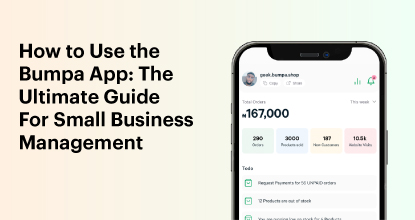
How to Use the Bumpa App: The Ultimate Guide For Small Business Management
Features
Recover More Sales With Bumpa’s New Automated Abandoned Order Reminders

Tips
Black Friday 2025: The Business Guide to Deals That Triple Your Sales

Spotlight
Ronbee Signature: The Entrepreneur who Ditched the Idea of Being A Professor to Become A Jewelry & Perfume Connoisseur.
Spotlight
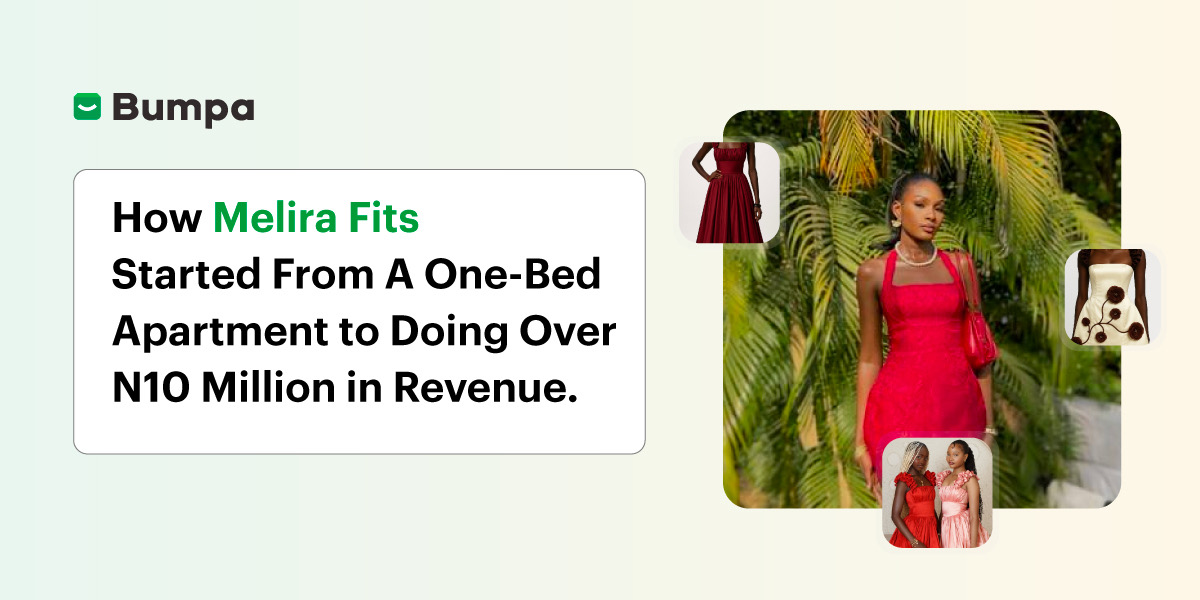
How Melira Fits Started From A One-Bed Apartment to Doing Up To 15 Million in Revenue.
Features
Get Amazon-Level Delivery for your Business with Bumpa’s New Shipping Automation

Tips
How Businesses (Small and Big) Are Making Big Money with AI in 2025! (Here's How)

Tips
How to Make Money on the Internet in 2025 (12 Easy E-commerce Hustles That Actually Pay)

Tips
These 7 Business Finance Mistakes May Cost You Millions !
Tips
6 Bumpa Websites Designed With New Themes to Inspire Your Online Store
Features
The Ultimate Guide to Managing Your Multiple Stores for Your Business with Bumpa

Features
How to Set Up Google Analytics for Your Bumpa Website
Tips
These 5 Urgent Fixes Will Save Your Dying Online Store!
Entrepreneurship
Be Part of Something Big: Join Our Partners' Program To Help Businesses Go Digital with Bumpa!

Tips
How to Write Product Descriptions that Convert Online Shoppers + Examples & Template
Features
Introducing Brand New Professional Website Themes & Templates For Your Bumpa Store!

Entrepreneurship
ShowUp #2: Love is in the Air! (And So Are Sales)

Tips
How to Turn your Products into Irresistible Valentine's Day Gifts

Features
How to Add Shipping Fees on Your Bumpa App
Features
How does Online Payment Work on Bumpa?

Entrepreneurship
The Biggest Business Growth Event (BBGW) of 2025 Is Here!

Tips
Top 8 Trending Products to Launch a Successful Online Business in 2025

Tips
4 Secret Growth Strategies Smart Businesses Are Stealing in 2025

Entrepreneurship
ShowUp #1: Thank You for 2024 and Welcome to 2025! 🎉
Features
What to Know about Bumpa’s KYC Verification & Fraud Prevention

Entrepreneurship
Shape Your 2025: 50 Motivational and Inspirational Quotes Every Business Owner Needs

TipsFeatures
25 Marketing Strategies for Increasing Sales to Implement on Day One of 2025!

Entrepreneurship
The Season of Sales - Lessons, Tips & Giveaways

EntrepreneurshipFeatures
A Good Time For Gifts: Celebrating Our Super Sellers with WiiCreate! 🎁

Entrepreneurship
How Lagos's Top Parfait Brand, Melony Pine Fruit Hub Manages Its Growing Success with Bumpa
Features
Bumpa's Invoice Generator 2.0: Now with Custom Notes & Upgraded Shipping Slips
Features