Entrepreneurship
Bumpa vs Shopify: Which Platform Actually Works Best For African Businesses?
Entrepreneurship



Bumpa Terminal processes local payments at 1.5% — no third-party gateway, no extra transaction fees, no virtual dollar card needed to stay subscribed. Bank transfers, cards, USSD, cash. It all works, and you get paid instantly.
Not on Bumpa yet? Sign up for free today and see what your business has been missing.
A few years ago, before I joined Bumpa, I was running a fashion business out of Lagos. It wasn’t a massive operation, but I had quite a lot of products, customers, orders, the whole thing. And at some point the way I was managing everything, DMs here, a notebook there, payment links flying across WhatsApp, it stopped being sustainable, and after a particularly frustrating experience with a customer I realized that I needed a proper system.
I asked around and everyone I asked suggested the same thing: Shopify.
So I tried it. And for the first few hours, honestly? I was impressed. The store looked clean and professional. The setup flow was smooth. I remember thinking, okay, this is the one.
Then I tried to connect a payment method. And that was the start of my troubles.
Shopify Payments which is the gateway built directly into Shopify that handles everything in one place and removes the extra transaction charges, doesn't work in Nigeria or Kenya. You have to use a third-party provider like Paystack or Flutterwave, which is fine, except Shopify then charges you an additional fee on every sale for doing that. On the Basic plan (which cost about $25/month), that's 2% on top of whatever the gateway already takes. I was selling a ₦15,000 dress and paying fees to three different parties before the money hit my account.
Then I went to pay my monthly subscription. My Nigerian debit card got declined and I had to waste hours scouting and trying to get a virtual dollar card just to pay for the platform I was trying to use to run my business.
And the things I actually needed like a way to manage Instagram DM orders without losing track, WhatsApp product sharing, local courier integration, none of that was included in my package. Each one was a separate app, and each app had a price. Each app needed to be configured. I spent more time that weekend managing Shopify than I spent managing my actual business.
To be fair, Shopify has built something genuinely impressive, and millions of businesses around the world run on it successfully. But those businesses are mostly operating in markets Shopify was designed for, where Shopify Payments works.
For a business in Lagos or Nairobi, those assumptions don't hold.
That experience is a big part of why I ended up at Bumpa which is a platform built in Nigeria, for product-based businesses in Africa, from the ground up. Shopify powers millions of stores globally and has earned every bit of its reputation. Bumpa has processed over ₦160 billion in transactions across 136,000+ merchants — including brands doing hundreds of millions of naira a year, businesses managing multiple locations with full staff teams, and founders selling to diaspora customers in London and New York who pay in pounds and dollars.
The million dollar question is which of these platforms is right for you?
What Are Bumpa and Shopify, Really?
If you've been researching ecommerce platforms for your business, you already know what Shopify is. But it's worth being precise about what each platform was actually built for, because that context explains almost everything else in this comparison.
Shopify launched in Canada in 2006, and today it powers stores in over 175 countries. It's genuinely one of the best-built software products of the last two decades with a clean interface, an app marketplace with over 8,000 integrations, a thriving developer community, and infrastructure that can handle everything from a solo founder's first store to a global brand processing millions of dollars in daily sales. If you need to sell to customers in the UK, the US, or across Europe with world-class fulfilment and multi-currency checkout, Shopify's infrastructure is hard to beat.
The gap isn't in what Shopify built. The gap is in what it was built for. The payment infrastructure, the default logistics assumptions, the way the platform thinks about commerce, it was designed for Western markets. Not Lagos. Not Nairobi. Not the reality of a business that sells through Instagram DMs, gets paid via bank transfer, and books riders through WhatsApp.
Bumpa on the other hand, is a different kind of platform entirely. Founded in Nigeria in 2020, it was built from scratch for product-based businesses in Africa and built with this market as the starting point. Fashion brands, beauty businesses, food vendors, electronics sellers, the businesses that make up the backbone of commerce in Nigeria and Kenya.
With over 136,000 active merchants, more than ₦160 billion in transactions processed, and businesses on the platform that have gone from zero to 20,000 orders in a single year.
Contrary to popular opinion, Bumpa isn't a trimmed-down version of what Shopify does. It's a full business management platform that offers business owners like you an online storefront, real-time inventory, payment processing (local and international), Instagram DM integration, logistics, staff management, and analytics, across four tiers from Starter to Enterprise. It's mobile-first because that's how business owners in this market actually work, not because it was an afterthought, but because it was a deliberate design decision from day one.
TechCabal, one of Africa's most respected tech publications, covered the scale of what Bumpa merchants have built, you can read that here. It's worth a look if you want a picture of what's actually happening on the platform beyond the headline numbers.
Pricing: What Would You Be Paying For Either Platforms?
Speaking of numbers and prices, for businesses operating in Nigeria or Kenya, the headline price is almost never the real price.
What Does Shopify Actually Cost?
Shopify's Basic plan starts at $39 per month. At current exchange rates, that's somewhere north of ₦62,000 — or around KSh 5,100 for merchants in Kenya. In today’s economy, that is very pricey for a payment subscription that should be made monthly.
Here's the first thing you need to know: Shopify Payments — Shopify's built-in payment processor, the one that makes the financial side of the platform work cleanly — is not available in Nigeria or Kenya. Which means every sale you process has to go through a third-party gateway like Paystack or Flutterwave. Shopify then charges you an additional transaction fee on top of whatever your gateway already takes. 2% per sale on the Basic plan. 1% on the mid-tier. 0.6% on Advanced. In terma of real numbers, here’s what that looks like, If your business is processing ₦2 million in sales a month, that's ₦40,000 going to Shopify in transaction fees. Every month. On top of your subscription of ₦65 thousand naira, and extra gateway fees.
Then there are the apps. The things that make Shopify work the way you need it to — abandoned cart recovery, WhatsApp integration, inventory alerts, local payment optimisation aren't included in your basic plan. They're in the app store, and most of them carry their own monthly price tag. Anywhere from $10 to $30 each, sometimes more. A lean setup with three or four essential apps adds another $30–$100 to your monthly spend.
And before any of that, you need to actually pay Shopify. Nigerian debit cards get declined on Shopify's billing system regularly, because of international payment restrictions on Nigerian bank-issued cards. The workaround most merchants end up using is a virtual dollar card. That's an extra step, an extra account, and an extra thing to manage just to stay subscribed.
When you add it all up (subscription + transaction fees + essential apps, and the occasional premium theme ($150–$350 if the free options don't cut it), a Nigerian or Kenyan business running a lean Shopify operation is typically spending between $80 and $150 a month. That's between ₦150,000 and ₦340,000, every month, in a foreign currency that moves against the Naira.
What Does Bumpa Actually Cost?
Here's the breakdown — and notice what's included versus what costs extra on Shopify:
Starter — ₦5,000/month (billed quarterly). Your storefront, sales recording, and order management. Everything you need to get live and start selling.
Scale — ₦10,000/month (billed quarterly). Adds customer management, a full sales system, and the tools you need to start growing deliberately.
Growth — ₦250,000/year. This is where it gets serious. Multi-location inventory management, staff accounts with permissions, POS for in-person sales, advanced analytics, and — this is the part people miss — international payments in USD and GBP via Stripe. Your customers abroad pay in their currency. You get settled in that currency. No separate platform required.
Enterprise — Custom pricing for large-scale operations with specific infrastructure needs.
Across every plan, the Bumpa Terminal processes local payments at 1.5% and the features that would cost you $30–$60/month in Shopify apps, abandoned cart recovery, DM integration, marketing tools, analytics are included in these plans so you won’t have to pay for them separately.
There's a common assumption that if you want to sell to international customers like diaspora buyers in London, customers in Houston, wholesale buyers in Toronto , you need Shopify to do it properly. That assumption is outdated.
With Bumpa's growth plan, you can handle USD and GBP payments natively, through a Stripe integration that you can read more about here. You don't need a second platform and neither do you need to split your inventory management across two systems. It all lives in one place.
What Does Setting Up Your Store Look Like On Both Platforms?
Here's a simple way to think about this. imagine you want to open a shop. One option gives you a plot of land, some bricks, and a manual. The other hands you the keys to a shop that's already built and all you just add your products and open the door.
That's roughly the difference between setting up Shopify and setting up Bumpa as a business owner in Nigeria or Kenya.
Shopify setup looks like this:
Drag-and-drop store builder that's genuinely easy to use with a clean, polished, well-designed
Hundreds of themes to choose from; the ones that look truly professional cost between $150 and $350
But setting up a store that actually accepts Nigerian or Kenyan payments properly, with the right gateway connected and tested, takes most merchants days, sometimes weeks
You'll likely need to watch YouTube tutorials, join a forum, or hire someone who's done it before just to get the payment side working correctly
For most business owners in this market, Shopify setup is not a weekend project. It's a project.
Bumpa setup looks like this:
Your full branded online store is live in under 5 minutes without having to code, or hiring a designer, developer, or watching any extra tutorials
Integration with social media tools (WhatsApp and Instagram DM integration) are already there when you sign up, so you don't go looking for them in an app marketplace.
If you want a more premium look, custom website themes are available but even the default options look professional enough to send to customers on day one
Everything you need like inventory management, stock alerts/notifications, CRM and more exist inside the platform.
Time to your first order: the same day you sign up
I’ve seen many brands in different sectors of the industry like fashion, gadgets, bookstores, etc set up their Bumpa store in less time that it takes to eat lunch break and get their first order before the end of the working day.
You can see exactly how the payment and store setup works on the Bumpa blog here — it's a straightforward walkthrough that shows you what the experience actually looks like from the inside.
1. Payments: Local, International, and Everything In Between


For most African businesses, payment is often the most important part of the business ecosystem.
What does that mean in practice for both platforms:
Shopify Payments:
You have to find and connect a third-party gateway yourself like Paystack, Flutterwave, or similar
Shopify then charges you an additional transaction fee on every sale for using that gateway i.e. 2% on Basic, 1% on the mid-tier, 0.6% on Advanced, on top of what the gateway already charges
Getting your money out often means setting up a foreign bank account or using a fintech like Grey or Payoneer just to route your own earnings
And as mentioned earlier, paying your Shopify subscription from Nigeria or Kenya frequently requires a virtual dollar card because local bank cards get declined
Bumpa payments: built for how you actually get paid
Here's what Bumpa's payment setup looks like:
Bumpa Terminal — built-in payment processing at 1.5%. Accepts bank transfers, cards, USSD, and cash. No third-party gateway needed for local sales.
Bumpa Wallet — instant settlements into your wallet, with 8% interest on your balance and a ₦50 withdrawal fee. No waiting 24 hours to access your money.
Paystack and Nomba integration — already there if you prefer those gateways for your business
International payments in USD and GBP — available on the Growth plan via Stripe. Your customer in London pays in pounds. Your customer in Houston pays in dollars. The money lands in your account in that currency. No manual routing, no foreign bank account required.
Multi-currency storefront — show prices in Naira and in USD or GBP at the same time, so international customers see exactly what they're paying
A Nigerian fashion brand with diaspora customers in the UK doesn't need Shopify to collect pounds. A Kenyan beauty brand selling to customers in Canada doesn't need a second platform to accept dollars. Bumpa handles both sides of that (local and international) from a single dashboard. You can read more about how the international payment setup works right here.
For a full breakdown of every payment method Bumpa supports, this guide covers everything.
2. Inventory Management: For How African Businesses Actually Work

Your inventory is the shoes in your store on the Island, the stock at your market stall in Alaba, the three pieces someone just ordered through Instagram DM, and the items on your website that you haven't updated since last Tuesday because you've been too busy. Managing all of that, at the same time, in real time, without a full operations team behind you is the actual problem. Not warehouse management.
Shopify inventory:
Genuinely solid multi-location inventory management which is one of the stronger parts of the platform
Barcode scanning, bulk product imports, low-stock alerts all included
But advanced multi-location tracking and proper custom reporting are locked behind the higher-tier plans which costs around the range of $105 to $399 per month range or require paid apps on top
And there's no native way to reconcile DM orders or WhatsApp sales with your stock count — which, for most businesses in this market, is where a significant chunk of sales actually happen.
Bumpa inventory:
Real-time stock sync across every channel you sell through like your website, Instagram DMs, in-person sales, POS, all updating in one place, automatically
Multi-location management is built into the Growth plan: track what's in each of your physical locations without any third-party tools or developer setup
Barcode scanning, product bundles, and automatic customer segmentation — all included
Staff accounts with granular permissions, so your team member at the Abuja location can process sales and receive payment alerts without seeing your full financial data
Built for businesses with 3, 5, 10 locations — not as an expensive enterprise add-on, but as a core part of what the platform does
The Growth plan page gives you the full picture of what's included at that tier — it's worth reading if you're running or planning to run more than one location.
3. Social Commerce: Instagram, WhatsApp, and DMs
It’s no news that most Nigerian and Kenyan product businesses didn't start with a website. They started with an Instagram post, a price in the caption, and "DM to order." For a lot of those businesses, even the ones doing serious revenue today, Instagram and WhatsApp are still where the majority of sales actually happen.
So the question isn't just "does this platform have social commerce features?" The question is: does it treat social selling as a core part of how business works, or does it treat it as an add-on?
Shopify social commerce:
Facebook and Instagram Shopping integrations are available and they work but they require configuration, and getting them properly connected takes time.
WhatsApp? Limited native support. You'll need a third-party app to do anything meaningful with it.
Instagram DM orders don't sync with your Shopify inventory at all which means every DM sale is a manual process you handle separately from everything else
Bumpa social commerce:
Bumpa is an official Meta partner which Instagram DM integration isn't a plugin you install, it's built into the platform
When an order comes in through a DM, it's automatically logged and your inventory updates in real time. You don't touch it.
Any product on your Bumpa store can be shared directly to WhatsApp in one tap, whileyour customer gets the link, sees the product, and pays. Done.
35 built-in marketing features including but not limited to abandoned cart recovery, automatic customer segments, re-engagement campaigns, all included, no extra subscriptions
Facebook Pixel and Google Analytics already connected for businesses running paid ads
4. Scaling Up: Multiple Locations, Staff, and Enterprise Operations


Bumpa is not a starter tool. It gets described that way sometimes, as a platform for businesses "just getting started," something you'd use before you're ready for the "real" platforms. That framing is wrong, and it's worth correcting with specifics.
Bumpa's Growth plan is built for businesses running multiple physical locations with staff teams, complex inventory across different sites, international customers paying in foreign currency, and in-person POS alongside online sales.
The Enterprise tier is for large-scale operators with custom infrastructure needs with dedicated support, custom integrations, built around the specific demands of the operation.
Shopify scaling:
Shopify Plus is the enterprise tier, starting at $2,300 per month, built for high-volume global commerce and genuinely powerful at that level
Multi-location management, advanced staff permissions, and automation tools are available at higher tiers
But here's the reality for African businesses: every step up on Shopify means more apps, more configuration, more USD spend. The cost of scaling doesn't just go up linearly — it compounds. More locations means more integrations. More integrations means more subscriptions. More subscriptions means more dollars leaving your account every month in a currency that doesn't move in your favour.
Bumpa scaling:
Growth plan at ₦250,000/year covers multi-location inventory, staff accounts with granular permissions, revenue tracking per location, POS, and international payments — everything a serious multi-location business needs, in one annual Naira payment
Enterprise tier is fully custom — for operators who've outgrown standard tiers and need a platform built around their specific size and complexity
The platform is built to handle millions of website visitors without slowing down — flash sales, big campaign days, high-traffic moments. It hasn't crashed under load.
Staff management lets you control exactly what each team member can see and do — a sales rep in Abuja can process orders and receive payment alerts without accessing your full financial data
For a full look at what the Growth plan includes, the breakdown is here.
5. Logistics and Delivery
Shipping is one of those things that feels simple until it isn't.
Shopify has strong integrations with DHL, FedEx, and UPS which are globally recognised carriers that work well if your customers are in the US, UK, or Europe.
For last-mile delivery in Lagos, Nairobi, Kano, or Mombasa, those integrations don't help you much. Getting local courier networks connected to Shopify is possible, but it means finding the right third-party app, setting it up separately, and paying for another subscription.
With Bumpa, ShipBubble and Fez Delivery are already built in, so you don't set them up, and you don’t have to find them in a marketplace. When an order comes in, it's automatically there in ShipBubble and Fez, ready to assign to a rider of your choice.
For businesses shipping cross-border, international shipping fees can be added directly to your Bumpa storefront. The full guide on how to set that up is here.
The Side-by-Side: Everything in One Place
If you've read this far, you have a detailed picture of how these two platforms compare. But sometimes it helps to see it all in one place, especially when you're making a decision and want to check a specific point quickly.
Feature | Bumpa | Shopify |
Built for African markets | ✅ Yes — designed for Nigeria, Kenya, and beyond | ❌ No — global platform, adapted by users |
Subscription currency | Naira (NGN) — no FX risk | USD — subject to exchange rate |
Entry price (approx.) | ₦5,000/month (quarterly billing) | $39/month (≈₦62,000+) |
Shopify Payments availability | N/A (native terminal) | ❌ Not available in Nigeria or Kenya |
3rd-party transaction fee | 1.5% (Bumpa Terminal) | 0.6%–2% extra on top of gateway |
International payments (USD/GBP) | ✅ Via Stripe — Growth plan | ✅ Via Shopify Payments (not in NG/KE) |
Instagram DM integration | ✅ Native (Meta partner) | ⚠️ Via third-party apps |
WhatsApp selling | ✅ Native product links | ⚠️ Limited, requires apps |
Multi-location inventory | ✅ Built into Growth plan | ⚠️ Higher-tier plans or paid apps |
Staff accounts + permissions | ✅ Included | ⚠️ Limited on lower plans |
Local logistics (NG/KE couriers) | ✅ ShipBubble + Fez built-in | ⚠️ Via third-party apps |
Store setup time | Under 5 minutes | Hours to days (with local config) |
Abandoned cart recovery | ✅ Included | ⚠️ Included on most plans, but limited |
Enterprise tier | ✅ Custom plan available | ✅ Shopify Plus from $2,300/month |
14-day free trial | ✅ Yes | 3-day trial, then $1/month for 3 months |
Local support | ✅ Nigerian team, local knowledge | Global support, no local market context |
So, Which Platform Should You Actually Use?
Shopify makes more sense if:
Your primary market is international and you're selling mainly to customers in the UK, US, or Europe and you need global payment infrastructure that works natively without workarounds
You have a developer or a dedicated ecommerce manager who can handle the app ecosystem, configure the integrations, and maintain everything as it grows
You're building a high-volume, cross-border operation where Shopify Plus-level infrastructure is genuinely the right fit and you have the budget for it
You need very specialised B2B wholesale or custom checkout functionality that requires deep API access and developer customisation
Bumpa is the clearer answer if:
Your customers pay in Naira or Kenyan Shillings (by bank transfer, card, mobile money, or cash and you want a payment setup that just works without a workaround in sight
You sell through Instagram DMs or WhatsApp and you're tired of managing those orders separately from everything else
You're running more than one location or planning to and you need inventory, staff, and revenue tracking unified across all of them without paying in dollars every month
You want to sell to international customers too — diaspora buyers in London, customers in the US — without needing a second platform to collect foreign payments
You want a platform that can grow with you all the way to enterprise level, built on African infrastructure, without the economics getting worse every time the Naira moves
The Verdict
Shopify is one of the best ecommerce platforms ever built. I mean that genuinely, not as a setup for a takedown. The product is polished, the infrastructure is world-class, and for businesses selling primarily into Western markets with the technical resources to manage the ecosystem, it's hard to argue with.
But it was not built for a business owner in Lagos whose customers pay by bank transfer, discover products through Instagram, order via DM, and expect a rider at their door the same day. It was not built for a founder in Nairobi managing stock across three locations with a team of five and diaspora customers in London who pay in pounds. It was not built for this market — and no amount of apps, workarounds, or configurations fully closes that gap.
Bumpa was. That's not marketing language. It's the explanation for why 136,000 merchants are running their businesses on it, why over ₦160 billion in transactions have been processed through it, and why businesses on the platform have gone from their first order to 20,000 orders in a single year.
If you're building a serious product business in Nigeria or Kenya — for local customers, diaspora buyers, or both — you shouldn't have to spend your weekends adapting a platform that was never designed for your market.
Try Bumpa free for 14 days — no credit card required, no dollar conversions, no app marketplace rabbit holes. Just your store, your products, and your customers.
Frequently Asked Questions
1. Does Shopify work in Nigeria?
Yes — you can build a store on Shopify from Nigeria and start accepting orders. But Shopify Payments, the built-in processor that removes extra transaction fees, isn't available here or in Kenya. That means you'll need a third-party gateway like Paystack or Flutterwave, and Shopify will charge you an additional fee on every sale for using one — up to 2% on the Basic plan. It works, but it costs more than most people realise when they sign up.
2. Does Bumpa support international payments?
Yes. On the Growth plan, Bumpa supports payments in USD and GBP through a Stripe integration. Your international customers pay in their currency, and you get settled in that same currency — no foreign bank account required, no manual routing. It's particularly useful for Nigerian and Kenyan brands with customers in the UK, US, or Canada who want to buy but don't want to deal with Naira conversion.
3. How much does Shopify actually cost for businesses in Nigeria?
The Basic plan starts at $39/month — roughly ₦62,000 at current rates. But once you add the third-party transaction fees (up to 2% per sale), the apps you need to make the platform work locally, and the occasional premium theme, most lean Nigerian operations end up spending between $80 and $150 a month. That's between ₦128,000 and ₦240,000 every month, in a foreign currency, just to keep the store running.
4. What is Bumpa used for?
Bumpa is a business management platform for product-based businesses in Nigeria, Kenya, and across Africa. It handles your online store, inventory across multiple locations, local and international payments, Instagram DM and WhatsApp integration, logistics through ShipBubble and Fez, staff management, and business analytics — all from one app. The idea is that every channel you sell through, whether that's your website, your DMs, or a physical store, is managed in one place instead of five.
5. Can Bumpa handle large order volumes?
Yes. Bumpa's infrastructure is built to handle millions of website visitors and high transaction loads — it hasn't gone down under heavy traffic. Merchants on the platform have processed more than 20,000 orders in a single year. The Growth and Enterprise tiers are built specifically for high-volume businesses with complex inventory, multiple locations, and large teams.
6. Is Bumpa only for small businesses?
No, and this is probably the most important misconception to correct. Bumpa serves product-based businesses from a solo founder's first store all the way to brands processing hundreds of millions of naira in annual sales. The Growth plan is built for multi-location operations with staff teams and international customers. The Enterprise tier is fully custom for large-scale operators with specific infrastructure needs. It's not a platform you outgrow. It's a platform that grows with you.
7. Can I use both Bumpa and Shopify at the same time?
You can — some businesses do run both, using Shopify for international sales and Bumpa for local operations. But for most product businesses in Nigeria and Kenya whose primary market is local, running two platforms just means double the cost and double the admin with no real advantage. Bumpa's Growth plan already handles USD and GBP payments through Stripe, which removes the main reason you'd need Shopify alongside it.
Subscribe to our Blog
If you love tips & content like this that will help with your small business marketing and growth, then you’ll be excited to know we have more! We can send you notifications when they are published if you share your email address with us. We promise not to be a bother, and you can always unsubscribe anytime!
Want to Learn More about Bumpa & How to Grow Your Business with it?
You can sign up to Bumpa in 5 seconds as a small business owner and let us begin the journey of growing your business with you!
Related Articles
View Related Articles Here

Spotlight
The Extra Mile: Celebrating Customer Service Week 2026 at Bumpa

Features
8 Things You Can Automate on Bumpa So Your Business Runs While You Rest

Features
How to Set Up TikTok Pixel on Bumpa | Step-by-Step Guide

Features
Collect the Birthday & Gender Information of Your Customers Through Multiple Ways on Bumpa.

Entrepreneurship
How to Get Paid Faster: The Complete Guide to Business Payments in Nigeria & Kenya

Tips
How to Choose the Right Payment Options for Your Customers in 2026

Features
How to Set Up Facebook Pixel on Bumpa | Step-by-Step Guide

Entrepreneurship
How to Build a Good Inventory Management System (Step-by-Step)
Tips
How to Keep Daily Records of Sales for Your Business Easily

Tips
How to Detect, Deal with & Prevent Fake Bank Alerts for Your Business

Sales
How Gift Cards, Product Bundles, and Add-Ons Can Help You Make More Money Per Order on Bumpa

Entrepreneurship
Pezesha & Bumpa Partner to Empower Merchants with Digital Business Tools

Features
What Happens When My Bumpa Subscription Expires?

Entrepreneurship
How to Track Profit for Your Business in Nigeria in 2026

Tips
7 Signs You Need Inventory Management Software In 2026

Entrepreneurship
How to Prepare Your Business for Black Friday (2025): A Simple 10-Step Plan With Checklists and Templates

Entrepreneurship
Black Friday Marketing Strategy In 2026: 7-Day Plan for Small Businesses

Tips
When to Restock Inventory: Reorder Point Guide for Nigerian Businesses in 2026

Entrepreneurship
Inventory Management for Fashion & Clothing Business in Nigeria [2026]

Tips
6 Ways to Stop Staff From Stealing Your Stock (Without Losing Trust in Your Team)

Tips
Instagram Business Account Disabled? Here's Exactly What to Do in the Next 24 Hours (2026 Guide)

Entrepreneurship
From One Blender to 25 Branches and Counting: How FruityLife Manages Its Business with Bumpa

Features
New on Bumpa: The July Updates That Make Running Your Business Easier

Features
Create Emails That Drive Sales with Bumpa's Sales Email Template

Features
June Bumpa Product Update: Here's what's new!

Tips
8 Things To Do Before You Launch Your Online Store In 2026

Tips
10 Ways to Get more Customers & Increase Sales for your Business

Tips
Top 5 Online Selling Platforms & Sites in Nigeria (2026 Guide)
Tips
How to Optimise your Bumpa Website for more Visibility on Google in 2026!

Entrepreneurship
How To Start A Bag & Accessories Business In Nigeria In 2026

Tips
When to Upgrade Your Bumpa Plan And How to Know You're Ready

Entrepreneurship
10 Signs Your Business Needs Better Structure and Organization In 2026

Entrepreneurship
Bumpa vs WooCommerce: Is "Free and Powerful" Actually Free for Nigerian and Kenyan Businesses?

Entrepreneurship
Bumpa vs Shopify: Which Platform Actually Works Best For African Businesses?

Features
How to Improve SEO for Your Bumpa Website in 14 Steps

Features
Is the Bumpa App Free? (2026 Update: What’s Free, What’s Paid & What You Get)

Entrepreneurship
How to Use Social Media to Drive Sales to Your Bumpa Store In 2026

Entrepreneurship
25 Small Business Ideas in Kenya with Low Capital (2026 Guide)
Features
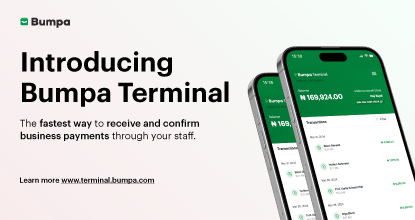
Every Physical Store You Add on your Bumpa Account Now Has Its Own Terminal Account. Here's Why It Matters

Features
Grow Your Business Faster with Loans: Say Hello to Bumpa Capital!

Features
How to Stop Staff Theft in Your DMs and Your Physical Store Using Bumpa

Tips
Business Name Ideas - How to Generate One + 42 Examples

Entrepreneurship
Bumpa vs Wix: A Guide for Nigerian Business Owners

Entrepreneurship
Bumpa vs Paystack Storefront: Which Is Right for Your Business?

Entrepreneurship
Bumpa vs Flutterwave Store: What Nigerian Sellers Actually Need to Know

Entrepreneurship
7 Marketing Tools You Can Use on Bumpa To 5x Sales. (Free & Paid 2026)

Spotlight
From a Mom's Shop Floor to 10K Orders: How Harjoke Fabrics Automated Sales with Bumpa

Features
Bumpa Wallet Is Here: A Faster Way to Get Paid Instantly, Grow Your Money & Stay in Control

Spotlight
For our One of One, Teejay…
Entrepreneurship
8 Best Paystack Storefront Alternatives Nigeria (2026)

Sales
How to Start an Online Business in Kenya (2026 Complete Guide)

Features
Bumpa POS: A Simple Point of Sale System for Businesses in Nigeria

Entrepreneurship
How Bumpa Helps Business Owners Adapt To Nigeria’s New Tax Laws in 2026

Sales
5 Reasons Why Your Business Isn't Making Money (And How To Fix It)

Features
Selling Internationally: Start Collecting Foreign Payments with Bumpa’s Multi-currency Feature!

Features
How to Get Started on Bumpa: An Onboarding Guide.
Tips
10 Small Business Ideas you can start with 20,000 in Nigeria in 2026
Tips
How to Collect Customer Reviews and Boost Sales With Them In 2026

Tips
How to File CAC Annual Returns Online in 2026 as a Business Owner

Entrepreneurship
Happening Live: 30 Days of Bumpa with Kelvin! (Plus 3M Up for Grabs)!
Features
What’s New This Month for Your Business (November 2025)

Entrepreneurship
Share Your Story, Win ₦500,000: Bumpa Business Story 2025
Features
Bumpa Product Updates: What’s New This Month for Your Business (October 2025)
Features
Your Store, Your Way: Introducing Bumpa Website Extensions

Tips
Black Friday Coupon Code Ideas (2025): 27 Proven Promos + How to Name, Cap, and Track Them

Communities
"We Don't Do Impossible" - Celebrating CX Week at Bumpa

Tips
How to Create Professional Invoices for Small Businesses with an Online Invoice Generator
Tips
How to Create & Start an Online Store in Nigeria in 2024
Features
How to Use the Bumpa App: The Ultimate Guide For Small Business Management
Features
Recover More Sales With Bumpa’s New Automated Abandoned Order Reminders

Tips
Black Friday 2025: The Business Guide to Deals That Triple Your Sales

Spotlight
Ronbee Signature: The Entrepreneur who Ditched the Idea of Being A Professor to Become A Jewelry & Perfume Connoisseur.
Spotlight
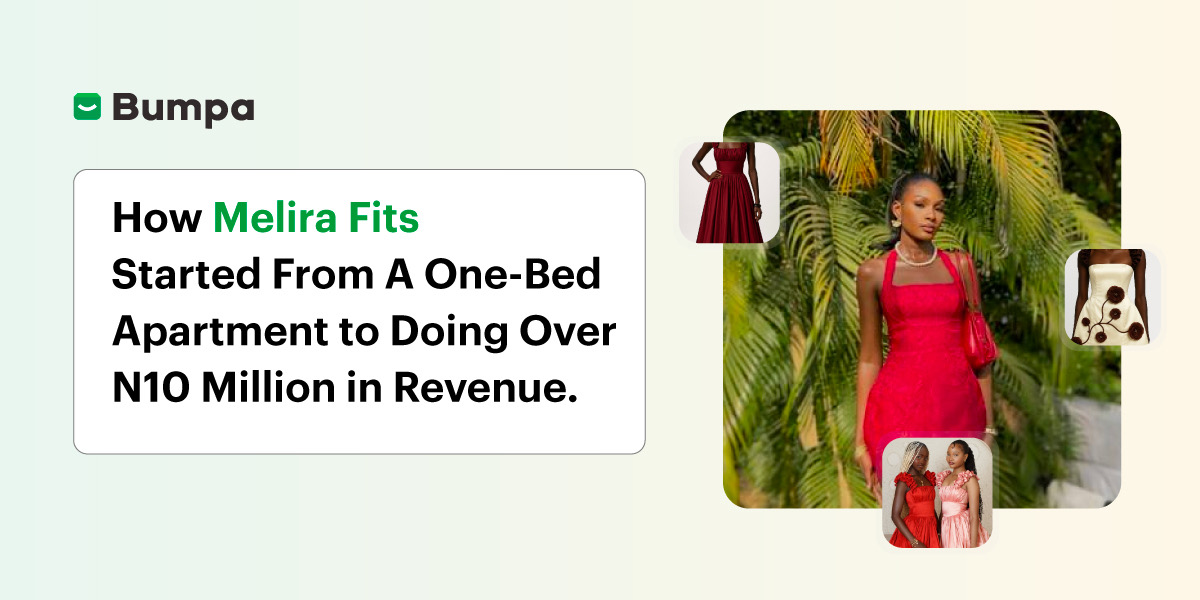
How Melira Fits Started From A One-Bed Apartment to Doing Up To 15 Million in Revenue.
Features
Get Amazon-Level Delivery for your Business with Bumpa’s New Shipping Automation

Tips
How Businesses (Small and Big) Are Making Big Money with AI in 2025! (Here's How)

Tips
How to Make Money on the Internet in 2025 (12 Easy E-commerce Hustles That Actually Pay)

Tips
These 7 Business Finance Mistakes May Cost You Millions !
Tips
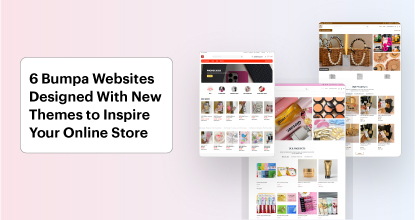
6 Bumpa Websites Designed With New Themes to Inspire Your Online Store
Features
The Ultimate Guide to Managing Your Multiple Stores for Your Business with Bumpa

Features
How to Set Up Google Analytics for Your Bumpa Website
Tips
These 5 Urgent Fixes Will Save Your Dying Online Store!

Entrepreneurship
Be Part of Something Big: Join Our Partners' Program To Help Businesses Go Digital with Bumpa!

Tips
How to Write Product Descriptions that Convert Online Shoppers + Examples & Template

Features
Introducing Brand New Professional Website Themes & Templates For Your Bumpa Store!

Entrepreneurship
ShowUp #2: Love is in the Air! (And So Are Sales)

Tips
How to Turn your Products into Irresistible Valentine's Day Gifts

Features
How to Add Shipping Fees on Your Bumpa App
Features
How does Online Payment Work on Bumpa?

Entrepreneurship
The Biggest Business Growth Event (BBGW) of 2025 Is Here!

Tips
Top 8 Trending Products to Launch a Successful Online Business in 2025

Tips
4 Secret Growth Strategies Smart Businesses Are Stealing in 2025

Entrepreneurship
ShowUp #1: Thank You for 2024 and Welcome to 2025! 🎉

Features
What to Know about Bumpa’s KYC Verification & Fraud Prevention

Entrepreneurship
Shape Your 2025: 50 Motivational and Inspirational Quotes Every Business Owner Needs

TipsFeatures
25 Marketing Strategies for Increasing Sales to Implement on Day One of 2025!
Entrepreneurship
The Season of Sales - Lessons, Tips & Giveaways

EntrepreneurshipFeatures
A Good Time For Gifts: Celebrating Our Super Sellers with WiiCreate! 🎁

Entrepreneurship
How Lagos's Top Parfait Brand, Melony Pine Fruit Hub Manages Its Growing Success with Bumpa
Features
Bumpa's Invoice Generator 2.0: Now with Custom Notes & Upgraded Shipping Slips
Features