Tips
When to Restock Inventory: Reorder Point Guide for Nigerian Businesses in 2026
Tips



As a growing business owner figuring out this terrain, especially with the economy we're all managing right now, I'm willing to bet you've been in one of these situations before:
Scenario 1: A customer comes to ask for a product you sell, but you didn't even know you'd run out. And of course, it's never just one unit they want — it's always a bulk order. Like something whispers to customers, "go and ask for plenty, but only after she's finished stock" (this is humor, please don't quote me).
Scenario 2: You know you're out of stock, but you don't know exactly which products. Maybe it's the pink bag from your Mauve Collection, or a variation of your other best-selling piece — you just can't tell without digging.
Either way, you lose the sale. And your customer? They go meet your competitor's Instagram page instead.
This might not look like a big deal until you do the math. Say your average order is ₦15,000, and this happens even 4–8 times a month. That's ₦60,000 to ₦120,000 in lost sales, every single month, without you even realizing it. And if you're not taking stock properly, you won't know you're losing money at all. You'll just be sitting there at the end of the month, wondering why profit isn't adding up.
The simplest fix? Knowing exactly when you're low — best-sellers, slow-movers, everything — before your customer has to tell you.
Before we go into the thick of things, let's first talk about what a "reorder point" actually is — and why you should care. We'll be referring to it throughout this article, so it's worth getting familiar with early.
What is a reorder point?


Simply put, your reorder point is the stock level that tells you: "restock now, before you run out."
It's not "zero." By the time you hit zero, you've already lost sales; remember Scenario 1? Your reorder point is set a little earlier, so you always have just enough stock to survive the wait time between ordering and actually receiving new stock.
Think of it as your business's early warning system. Instead of guessing when to restock (or worse, finding out from a disappointed customer), you already know the exact number that means "time to order more."
Why "restock when it's finished" doesn't work in Nigeria
Now that you know what a reorder point is, let's talk about why restocking is such a hassle in this part of the world. Most articles or even business owners, will have you believe all you have to do is wait for your stock to finish, then place an order for the new batch. Which would be beautiful, if we lived in a certain type of ecosystem.
But we don't. We live in Nigeria, where the gap between ordering a product and getting it delivered could be anything from a few days to a few weeks — and this isn't even dependent on whether you're sourcing locally or internationally. Your supplier in Aba or Onitsha might not have your exact colour ready. Your product from China might be facing clearing issues at the port. Even your logistics partner might fail you without even meaning to.
Which is exactly why waiting until your stock finishes before you order is such an expensive habit. You need a more efficient way to identify when your stock is low, so you can mitigate the loss of sales and if you haven't yet, this is a good place to get familiar with the basics of inventory management for your business.
How to calculate your reorder point (simple version)
Okay, so how do you actually figure out your reorder point? Don't worry, this is not one of those complicated supply chain formulas you need a calculator and a degree to understand. It's actually pretty straightforward once you break it down.
Your reorder point is simply:
“How much you sell daily x how long it takes to get new stock, plus a small buffer for those unexpected "wahala" days.”
Let's use Lami, who runs Dresses by Lami, as an example.
Lami sells about 5 units of her best-selling "Ankara Wrap Dress" every day. Her supplier in Aba takes about 4 days to deliver new stock once she places an order. So:
5 (daily sales) × 4 (days to restock) = 20
This means Lami needs at least 20 units in stock to survive the wait, without running out before new stock arrives.
But we all know things don't always go as planned. Her supplier could delay, or she could suddenly get a bulk order she didn't see coming. So Lami adds a small buffer, say 5 extra units, just to be safe.
20 + 5 = 25
That's her reorder point. The moment her stock drops to 25 units, that's her cue to place a new order, not when she's down to her last dress, and definitely not when a customer is already asking for one she doesn't have.
You can do this exact calculation for every product you sell, and once you know the number, you don't have to guess anymore.
5 signs you're restocking too late (or too early)


Now, how do you know if your restocking timing is actually off? Here are a few signs to check for:
1. Your DMs are full of "sold out" replies: If you're constantly typing "we've run out, please check back" more than you're typing "yes ma, available," that's not a small thing, that's lost sales piling up quietly.
2. Some products have been sitting since forever: If a particular colour or style has been on your shelf for 3 months and hasn't moved, that's money tied down doing nothing, while you're probably restocking the wrong things.
3. You're always "surprised" when stock finishes: If running out of a product is always news to you, and never something you saw coming, that's a sign you're not tracking properly — you're just reacting.
4. Your cash flow feels tight even though you're "selling": This usually means your money is stuck in slow-moving stock instead of circulating through your best-sellers.
5. You restock based on vibes, not numbers: If your restocking decisions come from "I feel like this one will sell" instead of actual sales data, you're basically gambling with your capital.
If any of these sound familiar, the fix isn't complicated; it's simply knowing your numbers before your stock (or your customers) tell you.
How to make restocking automatic instead of a guessing game
You shouldn't have to remember to check your stock. You have enough on your plate running the actual business; the last thing you need is to be manually counting units every morning just to know if you're close to your reorder point.
This is where having the right system does the heavy lifting for you.
With Bumpa:
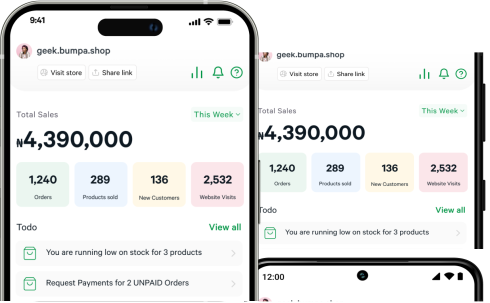
You can set low-stock alerts for every product, so instead of finding out you're low when a customer asks, you get notified the moment you hit your reorder point, per product, per variant.
You also get to see your fast-movers and slow-movers clearly, without scrolling through endless spreadsheets or trying to remember what sold last week. So instead of restocking on vibes, you're restocking based on actual numbers, what's moving, what's not, and what needs your attention now.
If you're running a fashion business specifically or any sort of business similar to this, this becomes even more important, since you're not just tracking "a dress," you're tracking every size and colour of that dress. We break this down further in how to track sizes and colours without losing your mind.
Conclusion
At the end of the day, restocking shouldn't be something you're constantly thinking about, worrying about, or finding out too late. Your business should be able to tell you when it's time, so you can focus on the actual work of selling, growing, and serving your customers.
If you're ready to stop guessing and let your stock levels speak for themselves, start your 14-day free trial with Bumpa today.
Frequently Asked Questions
1. How do I know when to restock my business?
You know it's time to restock when your stock level hits your reorder point, that's your daily sales multiplied by how long it takes to get new stock, plus a small buffer. Once you calculate this per product, you'll always know exactly when to order, instead of guessing.
2. What is a good reorder point for a small business?
There's no one-size-fits-all number — it depends on how fast a product sells and how long your supplier takes to deliver. A good reorder point is one that covers your sales during that waiting period, plus a little extra for unexpected demand.
3. How can I avoid running out of stock in Nigeria?
Given how unpredictable supplier and logistics timelines can be in Nigeria, the safest approach is building a bigger buffer into your reorder point, and tracking stock levels in real time instead of relying on memory or manual counts.
4. Does Bumpa alert me when stock is low?
Yes. Bumpa lets you set low-stock alerts per product and variant, so you're notified the moment you hit your reorder point, before your customers have to tell you first.
Subscribe to our Blog
If you love tips & content like this that will help with your business marketing and growth, then you’ll be excited to know we have more! We could always send you notifications when they are published if you share your email with us. We promise not to be a bother, and you can always unsubscribe anytime!
Want to Learn More about Bumpa & How to Grow Your Business with it?
You can sign up to Bumpa in 5 seconds as a small business owner and let us begin the journey of growing your business with you!
Related Articles
View Related Articles Here

Features
8 Things You Can Automate on Bumpa So Your Business Runs While You Rest

Features
How to Set Up TikTok Pixel on Bumpa | Step-by-Step Guide

Features
Collect the Birthday & Gender Information of Your Customers Through Multiple Ways on Bumpa.

Entrepreneurship
How to Get Paid Faster: The Complete Guide to Business Payments in Nigeria & Kenya

Tips
How to Choose the Right Payment Options for Your Customers in 2026

Features
How to Set Up Facebook Pixel on Bumpa | Step-by-Step Guide

Entrepreneurship
How to Build a Good Inventory Management System (Step-by-Step)
Tips
How to Keep Daily Records of Sales for Your Business Easily

Tips
How to Detect, Deal with & Prevent Fake Bank Alerts for Your Business

Sales
How Gift Cards, Product Bundles, and Add-Ons Can Help You Make More Money Per Order on Bumpa

Entrepreneurship
Pezesha & Bumpa Partner to Empower Merchants with Digital Business Tools

Features
What Happens When My Bumpa Subscription Expires?

Entrepreneurship
How to Track Profit for Your Business in Nigeria in 2026

Tips
7 Signs You Need Inventory Management Software In 2026

Entrepreneurship
How to Prepare Your Business for Black Friday (2025): A Simple 10-Step Plan With Checklists and Templates

Entrepreneurship
Black Friday Marketing Strategy In 2026: 7-Day Plan for Small Businesses

Tips
When to Restock Inventory: Reorder Point Guide for Nigerian Businesses in 2026

Entrepreneurship
Inventory Management for Fashion & Clothing Business in Nigeria [2026]

Tips
6 Ways to Stop Staff From Stealing Your Stock (Without Losing Trust in Your Team)

Tips
Instagram Business Account Disabled? Here's Exactly What to Do in the Next 24 Hours (2026 Guide)

Entrepreneurship
From One Blender to 25 Branches and Counting: How FruityLife Manages Its Business with Bumpa

Features
New on Bumpa: The July Updates That Make Running Your Business Easier

Features
Create Emails That Drive Sales with Bumpa's Sales Email Template

Features
June Bumpa Product Update: Here's what's new!

Tips
8 Things To Do Before You Launch Your Online Store In 2026

Tips
10 Ways to Get more Customers & Increase Sales for your Business

Tips
Top 5 Online Selling Platforms & Sites in Nigeria (2026 Guide)

Tips
How to Optimise your Bumpa Website for more Visibility on Google in 2026!

Entrepreneurship
How To Start A Bag & Accessories Business In Nigeria In 2026

Tips
When to Upgrade Your Bumpa Plan And How to Know You're Ready

Entrepreneurship
10 Signs Your Business Needs Better Structure and Organization In 2026

Entrepreneurship
Bumpa vs WooCommerce: Is "Free and Powerful" Actually Free for Nigerian and Kenyan Businesses?

Entrepreneurship
Bumpa vs Shopify: Which Platform Actually Works Best For African Businesses?

Features
How to Improve SEO for Your Bumpa Website in 14 Steps

Features
Is the Bumpa App Free? (2026 Update: What’s Free, What’s Paid & What You Get)

Entrepreneurship
How to Use Social Media to Drive Sales to Your Bumpa Store In 2026

Entrepreneurship
25 Small Business Ideas in Kenya with Low Capital (2026 Guide)

Features
Every Physical Store You Add on your Bumpa Account Now Has Its Own Terminal Account. Here's Why It Matters

Features
Grow Your Business Faster with Loans: Say Hello to Bumpa Capital!

Features
How to Stop Staff Theft in Your DMs and Your Physical Store Using Bumpa

Tips
Business Name Ideas - How to Generate One + 42 Examples

Entrepreneurship
Bumpa vs Wix: A Guide for Nigerian Business Owners

Entrepreneurship
Bumpa vs Paystack Storefront: Which Is Right for Your Business?

Entrepreneurship
Bumpa vs Flutterwave Store: What Nigerian Sellers Actually Need to Know

Entrepreneurship
7 Marketing Tools You Can Use on Bumpa To 5x Sales. (Free & Paid 2026)

Spotlight
From a Mom's Shop Floor to 10K Orders: How Harjoke Fabrics Automated Sales with Bumpa

Features
Bumpa Wallet Is Here: A Faster Way to Get Paid Instantly, Grow Your Money & Stay in Control

Spotlight
For our One of One, Teejay…
Entrepreneurship
8 Best Paystack Storefront Alternatives Nigeria (2026)

Sales
How to Start an Online Business in Kenya (2026 Complete Guide)

Features
Bumpa POS: A Simple Point of Sale System for Businesses in Nigeria

Entrepreneurship
How Bumpa Helps Business Owners Adapt To Nigeria’s New Tax Laws in 2026

Sales
5 Reasons Why Your Business Isn't Making Money (And How To Fix It)

Features
Selling Internationally: Start Collecting Foreign Payments with Bumpa’s Multi-currency Feature!

Features
How to Get Started on Bumpa: An Onboarding Guide.

Tips
10 Small Business Ideas you can start with 20,000 in Nigeria in 2026
Tips
How to Collect Customer Reviews and Boost Sales With Them In 2026

Tips
How to File CAC Annual Returns Online in 2026 as a Business Owner

Entrepreneurship
Happening Live: 30 Days of Bumpa with Kelvin! (Plus 3M Up for Grabs)!

Features
What’s New This Month for Your Business (November 2025)

Entrepreneurship
Share Your Story, Win ₦500,000: Bumpa Business Story 2025

Features
Bumpa Product Updates: What’s New This Month for Your Business (October 2025)
Features
Your Store, Your Way: Introducing Bumpa Website Extensions

Tips
Black Friday Coupon Code Ideas (2025): 27 Proven Promos + How to Name, Cap, and Track Them

Communities
"We Don't Do Impossible" - Celebrating CX Week at Bumpa

Tips
How to Create Professional Invoices for Small Businesses with an Online Invoice Generator
Tips
How to Create & Start an Online Store in Nigeria in 2024
Features
How to Use the Bumpa App: The Ultimate Guide For Small Business Management
Features
Recover More Sales With Bumpa’s New Automated Abandoned Order Reminders
Tips
Black Friday 2025: The Business Guide to Deals That Triple Your Sales

Spotlight
Ronbee Signature: The Entrepreneur who Ditched the Idea of Being A Professor to Become A Jewelry & Perfume Connoisseur.
Spotlight
How Melira Fits Started From A One-Bed Apartment to Doing Up To 15 Million in Revenue.
Features
Get Amazon-Level Delivery for your Business with Bumpa’s New Shipping Automation

Tips
How Businesses (Small and Big) Are Making Big Money with AI in 2025! (Here's How)

Tips
How to Make Money on the Internet in 2025 (12 Easy E-commerce Hustles That Actually Pay)

Tips
These 7 Business Finance Mistakes May Cost You Millions !
Tips
6 Bumpa Websites Designed With New Themes to Inspire Your Online Store
Features
The Ultimate Guide to Managing Your Multiple Stores for Your Business with Bumpa

Features
How to Set Up Google Analytics for Your Bumpa Website

Tips
These 5 Urgent Fixes Will Save Your Dying Online Store!

Entrepreneurship
Be Part of Something Big: Join Our Partners' Program To Help Businesses Go Digital with Bumpa!
Tips
How to Write Product Descriptions that Convert Online Shoppers + Examples & Template

Features
Introducing Brand New Professional Website Themes & Templates For Your Bumpa Store!

Entrepreneurship
ShowUp #2: Love is in the Air! (And So Are Sales)

Tips
How to Turn your Products into Irresistible Valentine's Day Gifts

Features
How to Add Shipping Fees on Your Bumpa App
Features
How does Online Payment Work on Bumpa?

Entrepreneurship
The Biggest Business Growth Event (BBGW) of 2025 Is Here!

Tips
Top 8 Trending Products to Launch a Successful Online Business in 2025

Tips
4 Secret Growth Strategies Smart Businesses Are Stealing in 2025

Entrepreneurship
ShowUp #1: Thank You for 2024 and Welcome to 2025! 🎉

Features
What to Know about Bumpa’s KYC Verification & Fraud Prevention

Entrepreneurship
Shape Your 2025: 50 Motivational and Inspirational Quotes Every Business Owner Needs

TipsFeatures
25 Marketing Strategies for Increasing Sales to Implement on Day One of 2025!

Entrepreneurship
The Season of Sales - Lessons, Tips & Giveaways

EntrepreneurshipFeatures
A Good Time For Gifts: Celebrating Our Super Sellers with WiiCreate! 🎁

Entrepreneurship
How Lagos's Top Parfait Brand, Melony Pine Fruit Hub Manages Its Growing Success with Bumpa
Features
Bumpa's Invoice Generator 2.0: Now with Custom Notes & Upgraded Shipping Slips
Features
Planning Your Next Big Sales? 8 Bumpa Features You Can't Miss!
TipsFeatures