Sales
How to Start an Online Business in Kenya (2026 Complete Guide)
Sales



Kenya's e-commerce market is on fire. We're talking KES 400 billion by 2028, according to Statista. That's a massive wave of opportunity rolling in, and smart entrepreneurs are positioning themselves to ride it.
But the thing is most people have no idea where to start.
You've seen it happen around you. Your neighbour's cousin is selling sneakers on Instagram and doing numbers. That lady in your WhatsApp group just launched a skincare line. Even your uncle is talking about "going digital." The internet has leveled the playing field in Kenya like never before. M-Pesa makes payments seamless, smartphones are in everyone's pockets, and social commerce is exploding. The infrastructure is there. The customers are there. The only question is: are you ready to take the leap?
This guide is your road-map. We're breaking down exactly how to start an online business in Kenya in 2026 — from that first lightbulb moment to your first real sale (and beyond). No fluff. No theory. Just practical, battle-tested steps that work.
Here's what you'll learn:
How to choose a profitable online business idea (and validate it before you waste time and money)
Legal requirements and business registration — simplified, because eCitizen doesn't have to be a headache
How to set up your online store or service without hiring a developer or breaking the bank
The tools that make running an online business ridiculously easy (spoiler: Bumpa is about to become your best friend)
Proven strategies to get your first customers — even if you're starting from zero
Let's get into it.
Why Start an Online Business in Kenya in 2026?
Let's be honest—you're probably reading this because you've been thinking about starting something online for a while now. Maybe you've seen friends doing it. Maybe you're tired of the 9-to-5 grind. Or maybe you just know there's a better way to make money than what you're doing right now.
Here's what I want you to consider: the timing has never been better. Here are 5 reasons why you should start an online business in Kenya today:
Growing Internet Penetration: Think about it. When last did you meet someone without a smartphone? When last did you go a full day without using M-Pesa? Exactly. Kenya now has over 44 million internet users—that's an 85% penetration rate. Your customers are already online. They're scrolling Instagram during lunch breaks, browsing WhatsApp at night, and yes, they're buying things.
Mobile Money Dominance: And here's the beautiful part: M-Pesa has solved the biggest problem that kills online businesses in other African countries—payment friction. Your customer doesn't need a credit card. They don't need to "trust" some foreign payment gateway. They just send M-Pesa. Done. You've been paid. It's that simple.
Lower Startup Costs: Compare that to opening a physical shop. Rent in Nairobi? Easily KES 50,000–200,000 per month depending on location. Electricity, security, employees, inventory sitting on shelves collecting dust—it adds up fast. With an online business, you can start with as little as KES 5,000–10,000. No rent. No physical overhead. Just you, your product or service, and an internet connection.
Access to Global Markets: And if you're worried about being "just another small business in Kenya," here's something most people don't realize: you're not limited to Kenya. The internet doesn't care about borders. You can sell to someone in Kampala, Lagos, or London just as easily as you can sell to someone in Westlands. That's the power of going online.
Rising Consumer Trust: Now, I'm not going to lie to you and say it's easy. It's not. Building an online business takes work, consistency, and learning as you go. You'll make mistakes. You'll have slow months. But here's what's different in 2026: Kenyans trust online businesses now. A few years ago, people were skeptical. "Is this legit?" "Will I actually get my product?" Today? E-commerce transactions in Kenya are expected to reach 12.9 million users by 2028. People are buying. The question is whether you're selling.
So ask yourself: what's really stopping you?
How To Start An Online Business In Kenya in 2026
Step 1: Choose Your Online Business Idea


To be honest, here is the part most people get stuck. They want to start an online business, but they freeze when it's time to pick what to sell. Should it be products? Services? Something else?
Let me make this simple for you: the best online business is the one that solves a real problem people are willing to pay for. That's it. Not the trendiest idea. Not what worked for your cousin's friend. The one that connects a problem to a solution—and puts money in your pocket.
Let's break down the top five online business models that are working in Kenya right now. As you read through these, ask yourself: Which one feels most natural to me? Which one could I actually see myself doing consistently?
1. E-Commerce Store (Physical Products)
This is the classic online business. You sell physical products like fashion, beauty items, electronics, Kenyan crafts, whatever and ship them to customers.
Profit margins: 30–50% depending on your niche and supplier
Best for: People who love products, understand their target market, and don't mind handling inventory and logistics
Real talk: This works if you're willing to manage stock, deal with suppliers, and handle delivery. It's not passive income. But if you pick the right products and market them well, you can build something solid. Think about what people around you are already buying online. That's your starting point.
2. Dropshipping & Reselling
Don't have capital for inventory? No problem. With dropshipping, you partner with suppliers who handle the stock and shipping. You just market the products and take orders.
Examples: Reselling from AliExpress to your customers, partnering with local wholesalers
Best for: Low-capital entrepreneurs who want to test products without financial risk
But the catch here is your profit margins are slimmer (usually 15–30%), and you're depending on someone else to fulfill orders. But it's a low-risk way to start. If a product doesn't sell, you move on. No money lost on dead stock.
3. Freelancing & Services
If you've got a skill like graphic design, content writing, web development, virtual assistance, social media management, you can sell it online. This is one of the fastest ways to start making money because you're not selling to "everyone." You're selling to businesses and people who need what you can do.
Platforms: Upwork, Fiverr, Toptal, or just cold outreach on LinkedIn
Best for: Skilled professionals who want flexibility and control over their income
This works because Kenyan freelancers are competing globally and winning. I've seen designers charging $500+ per project, writers earning $100+ per article, and VAs making $15–$25/hour. The demand is there. You just need to position yourself well and deliver quality work consistently.
4. Affiliate Marketing
Instead of creatbing the product yourself or handling customer service, you just promote other people's products and earn a commission every time someone buys through your link.
Platforms: Jumia KOL (Jumia's affiliate program), Amazon Associates
Best for: Content creators, bloggers, influencers with an audience
It is important to note that this isn't a "get rich quick" model. You need traffic, whether that's blog readers, Instagram followers, or YouTube subscribers. But once you build that audience, affiliate marketing can become a solid income stream. Some Kenyan bloggers are earning KES 50,000–200,000+ monthly just from affiliate commissions.
5. Digital Products & Online Courses
Got expertise? Package it. E-books, templates, online courses, coaching programs—these are digital products you create once and sell repeatedly.
Examples: A social media templates pack for small businesses, a course on starting a side hustle, an e-book on personal finance
Best for: Experts, coaches, and anyone with specialized knowledge
Once you create the product, your costs are basically zero, because you would not need to handle shipping, or inventory but still make profit every time someone buys. And if you know something that other people want to learn, this is one of the best ways to monetize that knowledge.
Pro Tip: Not sure which model to choose? Start with what you already know or what people constantly ask you for help with. I'm serious. If friends keep asking you "Where did you get that?" or "Can you help me with...?"—that's your business idea staring you in the face. Expertise beats passion every single time when you're building something that needs to make money.
Step 2: Validate Your Idea (Don't Skip This)

Okay, you've picked a business idea. You're excited. You can already see yourself making sales, quitting your job, living the dream.
Hold on.
Before you spend a single shilling on inventory, a website, or anything else, you need to validate that people actually want what you're planning to sell. I know this sounds boring. I know you want to jump straight in. But trust me on this: the biggest mistake Kenyan entrepreneurs make is building before validating.
I've seen it happen too many times. Someone spends KES 50,000 on stock, builds a fancy website, and then... crickets. No sales. No interest. Just regret and a pile of products sitting in their house.
Here's how you avoid that nightmare:
Check if there's actual demand. Go to Google Trends, set the location to Kenya, and search for your product or service. Is the search interest going up? Staying steady? Or is it completely flat? If nobody's searching for it, that's a red flag.
See what's already selling. Scroll through Facebook Marketplace, Instagram, and Jumia. What are people buying? What products have dozens of reviews? What posts are getting tons of engagement? If other people are successfully selling something similar, that's a good sign. You're not looking to copy—you're looking for proof of demand.
Ask your network. This is the simplest test and most people skip it. Send a message to 10–20 people you know and ask: "If I sold [product/service], would you buy it? How much would you pay?" Be specific. Don't just ask "Would you support my business?"—that gets you polite yeses that mean nothing. Ask if they'd actually pay money for it.
Test with 10–20 sales before you scale. You don't need to register a company, build a fancy website, or order massive stock to test an idea. Start small. Sell to friends. Post on your WhatsApp status. List a few items on Instagram. If you can make 10–20 sales without paid ads or a big marketing budget, you're onto something. If you can't? Either your idea needs tweaking or it's not the right fit.
Save yourself time, money, and heartbreak. Test first. Build later.
Step 3: Register Your Business (Legally)

Alright, ask yourself this: do you actually need to register your business?
Short answer: Yes.
I know what you're thinking. "But I'm just selling a few items on Instagram. Do I really need to go through all that eCitizen stuff?" Here's why you do:
You can't scale without it. Want to accept payments through proper channels? You need to be registered. Want to work with suppliers or brands? They'll ask for your registration certificate. Want to open a business bank account? Not happening without registration. At some point, if your business grows (and that's the goal, right?), you'll hit a wall if you're not legit.
It protects you legally. If something goes wrong—a customer dispute, a supplier issue, whatever—being registered gives you legal standing. You're not just "some person on Instagram." You're a real business.
It builds credibility. Customers trust registered businesses more. It's that simple. When you can say "We're a registered business, here's our certificate," people feel safer buying from you.
So yes, register. But here's the good news: it's way easier than it used to be.
How to Register via eCitizen (Business Registration Service)
The Kenyan government moved everything online through eCitizen and the best part is that you can do this from your phone.
Here's the step-by-step:
1. Create an eCitizen account If you don't have one already, sign up at eCitizen. You'll need your ID number and phone number.
2. Navigate to Business Registration Service (BRS) Once you're logged in, find the Business Registration Service section. This is where all company and business name registrations happen.
3. Choose your structure You've got two main options:
Business Name (sole proprietorship or partnership) — KES 950, takes 3–5 days
This is the simplest and cheapest option. Perfect if you're just starting out. You operate under your own name or a business name, but you and the business are legally the same entity.
Private Limited Company — KES 10,750, takes 5–7 days
This is a separate legal entity. More credibility, better for raising capital or bringing in partners, but slightly more complex and expensive.
Pro Tip: For most e-commerce businesses starting out, a Business Name is enough. Upgrade to a Private Limited Company when you're consistently doing KES 500,000+ monthly or when you're ready to bring in investors or partners.
4. Propose 3–5 business names Come up with a few name options because your first choice might already be taken. Make sure the names are unique, memorable, and not too similar to existing businesses.
5. Fill in the required details You'll need to provide:
Business activities (what you're selling/doing)
Registered office address (can be your home address)
Shareholder/partner information (just you if it's a sole proprietorship)
6. Upload documentsUsually just your ID and KRA PIN (if you have one already—if not, you'll get it automatically during registration).
7. Pay the registration fee Use M-Pesa, card, or whatever payment method eCitizen accepts. The fee is non-refundable, so double-check everything before you submit.
8. Receive your Certificate of Incorporation/Registration Within 3–7 days, you'll get your certificate via email. Print it out and keep it safe. You'll need it for opening bank accounts, applying for permits, and dealing with suppliers.
Here Are A Few Other Things You'd Need
KRA PIN (Tax Registration)
Good news: this is usually automated when you register your business. KRA (Kenya Revenue Authority) will assign you a PIN automatically. You'll use this for filing taxes and any official business transactions.
County Business Permit
This is separate from your business registration. Every county in Kenya requires businesses to get an operating permit. The cost varies anywhere from KES 5,000 to KES 30,000 per year depending on your county and what you're selling. Check with your county government offices or their website for the exact requirements.
Trademark Registration (Optional)
If your brand is critical to your business, think unique logo, catchy name, specific products—consider registering a trademark with the Kenya Industrial Property Institute (KIPI). It costs a bit more, but it legally protects your brand from copycats.
This might feel like a lot but you're only doing this once and forgetting about it. And honestly, once you've done it, you'll feel official. Like you're running a real business. Because you are.
Step 4: Set Up Your Online Store or Service Platform

Things might get a little complicated from this point onwards but trust me, it'd be worth it. You've validated your idea. You've registered your business. Now you need a place where customers can actually find you and buy from you.
Option 1: Build Your Own E-Commerce Store (The Traditional Route)
You could do it the hard way:
Buy a domain name: KES 1,500–3,000/year
Pay for web hosting: KES 5,000–15,000/year
Choose a platform like Shopify, WooCommerce, or Wix
Hire a developer to customize it: KES 20,000–100,000+ (and that's if you find someone affordable)
Spend weeks figuring out payment integrations, inventory tracking, and design
The problem is it could get very expensive. It's time-consuming. And unless you have technical skills or serious capital, it's honestly overwhelming. Most small business owners in Kenya don't need all that complexity. They just need something that works.
So let me introduce you to the smarter option.
Option 2: Use Bumpa (All-in-One Business Management Platform)
Instead of juggling five different tools and spending tens of thousands of shillings on setup, Bumpa gives Kenyan business owners everything they need in one platform.
Here's what you get:
A business website — You can have a professional online store live in minutes, without touching a single line of code
Inventory management — Track your stock in real-time so you never oversell or run out unexpectedly.
Order management — Manage orders from Instagram, WhatsApp, and your website all in one place so you won't have to jump between apps.
Built-in CRM — Track your customers, see who's buying what, identify repeat buyers, and build relationships.
Invoices & receipts — Automated and professional without any messy handwritten receipts.
Multi-location tracking — Running a business with both physical and online presence? Bumpa handles it.
Business analytics — Know exactly what's selling, what's not, and where your money is going.
M-Pesa integration — Accept payments seamlessly. Your customers pay via M-Pesa, and you're sorted.
Why Bumpa Works for Kenyan Entrepreneurs
To be clear, Bumpa actually solves the problems Kenyan online business owners face every single day.
You do not need any technical skills needed. You don't need to know code. You don't need to hire anyone. You set it up yourself in under an hour.
Affordable pricing: Get access to a 14-day free trial and then you can upgrade to paid plans to keep the groove going.
Built for African businesses. M-Pesa integration isn't an afterthought. It's built in. Same with local payment methods. Bumpa understands how Kenyans do business.
Mobile-first. You can run your entire business from your phone. Update inventory while you're on a mat, fulfil orders from the salon, check analytics while you're in traffic. It's designed for how you actually work.
All-in-one. No juggling a website builder, a separate inventory tool, a CRM, an invoicing app, and a payment gateway. Everything is in one place. One login. One dashboard. Done.
So, How to Get Started with Bumpa
Download the Bumpa app or visit bumpa.com
Sign up and set up your free business website (takes about 10 minutes)
Add your products or services — upload photos, descriptions, prices
Connect payment methods — M-Pesa, bank transfer, card payments
Share your store link — Put it in your Instagram bio, WhatsApp status, Facebook page
Start selling
That's it! Join thousands of Kenyan businesses already using Bumpa.
Step 5: Set Up Payment Methods

One thing that kills online businesses in other African countries but actually works seamlessly in Kenya: payments.
Thanks to M-Pesa, you don't need to convince customers to trust some foreign payment gateway or pull out a credit card they don't have.
If you're running an online business in Kenya and you don't accept M-Pesa, you're leaving money on the table. Over 90% of Kenyan consumers use it. It's non-negotiable.
But M-Pesa shouldn't be your only option. Here's what you need:
M-Pesa — Your primary payment method. Fast, trusted, and everyone uses it.
Bank transfers — Some customers (especially businesses buying from you) prefer bank transfers. Make sure you have a business account ready.
Credit/debit cards — Use payment gateways like Pesapal, Flutterwave, or Stripe to accept card payments. This is important if you're selling to international customers or targeting the corporate market.
Cash on Delivery (COD) — Don't underestimate this. For first-time customers who are still skeptical about buying online, COD builds trust. They see the product before they pay. Yes, it's more work for you, but it converts hesitant buyers into customers—and once they trust you, they'll pay upfront next time.
Pro Tip: Bumpa integrates with M-Pesa automatically, so you don't need to set up separate payment gateways or figure out APIs. Your customers pay, you get notified, and the money hits your account. Simple.
Step 6: Market Your Business & Get Your First Customers

Alright, your business is set up. Your payment methods are ready. Now comes the part that separates people who "have an online business" from people who actually make money from their online business: marketing.
And before you panic thinking you need a huge ad budget, let me stop you right there. Your first 10–20 customers? They're going to come from free marketing. People who already know you, trust you, or stumble upon you organically.
Here's exactly how to get those first sales:
1. Social Media Marketing (Start Here)
This is where most of your early customers will come from. Kenyans are on social media all day. Use that.
Instagram: Post your products with clear photos and descriptions. Use Stories to show behind-the-scenes content, customer testimonials, or quick product demos. Reels are huge right now—short, engaging videos can go viral and bring you customers you'd never reach otherwise. Make sure your bio has a link to your Bumpa store or WhatsApp number.
Facebook: Join buy-and-sell groups in your niche or location (e.g., "Nairobi Fashion Deals," "Mombasa Buy & Sell"). Post your products there. Also, create a business page and invite your friends to like it. Facebook's algorithm isn't what it used to be, but it's still a solid way to reach local customers.
WhatsApp: This is underrated. Build a broadcast list of people who've shown interest in your products. Share your catalog (Bumpa makes this easy, you can share product links directly). WhatsApp status updates work too—post daily or a few times a week with new products, deals, or testimonials.
TikTok: If your product is visual or demonstrates well, TikTok is a goldmine. Show how your product is made, how it's used, or why it's better than alternatives. You don't need fancy editing. Just good lighting and authenticity. Kenyan TikTok is massive right now, and the algorithm favors small accounts too.
2. Word of Mouth (Your Secret Weapon)
Never underestimate this. Your first customers will likely be friends, family, colleagues, or people in your network. Tell everyone what you're doing. Don't be shy about it. Post on your personal accounts. Send DMs. Offer first-customer discounts to make it easier for people to take a chance on you.
Once those first customers buy and are happy, ask them to tell others. Word of mouth is how small businesses grow in Kenya. One happy customer tells three friends. Those three tell more. And suddenly, you're getting orders from people you've never met.
3. Content Marketing (The Long Game)
This one takes time, but it pays off. If you can write or make videos, start creating content around your niche.
Start a blog: Write articles that answer questions your customers are asking. If you sell skincare products, write about "How to fix acne naturally" or "Best skincare routine for Kenyan weather." Optimize for SEO (Google search), and over time, people searching for those topics will find you. The great thing is, with Bumpa Extensions, you can add or create a blog to website and write content to your hearts content.

Create YouTube videos: Tutorials, product reviews, how-tos, whatever fits your niche. YouTube is the second-largest search engine in the world. Kenyans watch YouTube. If you can get in front of them there, you've got their attention.
4. Collaborate with Micro-Influencers
You don't need to pay Azziad or some big celebrity. Find micro-influencers in your niche—people with 5,000–50,000 followers who actually engage with their audience. Reach out and offer to send them a free product in exchange for an honest review or a post. Many will say yes, especially if your product is good. One post from the right influencer can bring you dozens of customers.
5. List on Jumia, Jiji, Kilimall
These platforms already have traffic. People are searching for products there every day. List your items on these marketplaces for extra visibility. Yes, they take a commission, but it's worth it for the exposure—especially when you're just starting out and don't have your own audience yet.
6. Paid Marketing (When You're Ready)
Once you've made some sales organically and have a bit of cash flow, you can start testing paid ads.
Facebook/Instagram Ads: Start small—KES 1,000–5,000 is enough to test. Target people in your area or niche, and see what happens. If you get sales, scale up. If not, tweak your ad or your targeting.
Google Ads: These work best for high-intent searches (e.g., "buy running shoes Nairobi"). If your product solves a specific problem people are searching for, Google Ads can be a game-changer. But they require a bit more setup and strategy, so don't rush into this until you're comfortable with the basics.
Pro Tip: Your first 10 customers will come from people who already know you. Don't overthink it. Don't wait for the "perfect" marketing strategy. Just start selling. Post your products. Tell people what you're doing. The momentum builds from there.
Step 7: Deliver Excellence & Scale

Making your first sale feels amazing. But here's the reality: one sale doesn't build a business. Repeat customers do.
The businesses that last—the ones that actually grow and scale—are the ones that obsess over delivering excellence. Every single time.
Here's how you do that:
Fast Delivery
In Kenya, customers expect their orders yesterday. If you're slow, they'll buy from someone else next time. Partner with reliable couriers like Sendy, Glovo, or DHL for quick, professional delivery. If you're delivering yourself, communicate clearly, give them a timeframe and stick to it. Nothing kills trust faster than late deliveries with no updates.
Excellent Customer Service
Respond fast. Solve problems. Be kind even when customers are frustrated. A quick response to a DM or a WhatsApp message can be the difference between a sale and a lost customer. And when something goes wrong (and it will—wrong size, damaged product, late delivery), own it. Apologize. Fix it. A customer who had a problem that you solved well will trust you more than a customer who never had a problem at all.
Track Performance
You can't improve what you don't measure. Use Bumpa's analytics to see what's actually working. Which products are selling? Which aren't? Where are your customers coming from? What's your repeat purchase rate? This data tells you where to focus your energy and what to cut.
Collect Reviews & Testimonials
Social proof sells. After every sale, ask for a review or a quick testimonial. Post those on your Instagram, your website, your WhatsApp status. When new customers see that real people have bought from you and loved it, they'll trust you enough to buy too.
Upsell & Cross-Sell
Once someone buys from you, offer them something related. Sold them a dress? Suggest matching accessories. Sold them a skincare product? Recommend the full routine. It's easier (and cheaper) to sell to an existing customer than to find a new one.
When to Scale
You'll know you're ready to scale when you hit these markers:
Consistent monthly revenue (KES 100,000+)
Repeat customers (people buying from you multiple times)
Positive cash flow (you're making more than you're spending)
At that point, you can reinvest in inventory, hire help, run bigger ad campaigns, or expand your product line. But don't rush it. Build a solid foundation first. Then scale smart.
5 Common Mistakes to Avoid When Starting An Online Business In Kenya
Look, you're going to make mistakes. Everyone does. But some mistakes are so common—and so avoidable—that I need to call them out before you waste time, money, or momentum.
Starting without validation: I already said this, but I'm saying it again because people keep ignoring it. Don't build what you think people want. Build what they're actually asking for and willing to pay for. Test first. Build second.
Skipping legal registration: "I'll register when I start making money." Wrong. You'll regret this the moment you need to open a business account, work with a supplier, or accept payments through official channels. Register early. It's cheaper and easier than you think, and it saves you from scrambling later when opportunities come up.
Using too many tools: One app for inventory. Another for invoices. A third for customer management. A website builder. A payment gateway. Before you know it, you're spending more time managing tools than actually running your business. Stay lean. Use all-in-one platforms like Bumpa that handle everything in one place. Your sanity will thank you.
Ignoring customer feedback: Your customers will tell you exactly what's wrong and what's working—if you listen. Read the comments. Respond to messages. Ask for feedback after every sale. The businesses that grow are the ones that adapt based on what their customers actually say, not what the owner assumes.
Giving up too early: Here's the truth nobody tells you: the first six months are brutal. Sales will be slow. You'll question if this was a good idea. You'll see others "succeeding" and wonder why it's not happening for you yet. But here's the thing—most people quit right before things start clicking. If you've validated your idea and you're doing the work, give it time. Consistency beats perfection every single time.
Ready to Start Your Online Business?
Starting an online business in Kenya in 2026 is more accessible than ever. You don't need a huge budget, technical skills, or a physical store. You just need a validated idea, the right tools, and the willingness to learn as you go.
The infrastructure is here. The customers are ready. The only question left is: are you?
If you've read this far, you already know more than most people who are "thinking about" starting something online. You know how to validate an idea. You know how to register legally. You know the business models that work. Now it's time to actually do it.
Bumpa makes it easy for Kenyan entrepreneurs to launch, manage, and grow their online businesses—all from one platform. No juggling multiple tools. No expensive developers. No technical headaches. Just a simple, powerful system built for how you actually run your business.
Sign up for Bumpa today and get your free business website in minutes. Join thousands of Kenyan businesses already selling online, managing inventory, tracking customers, and growing their revenue—all in one place.
The opportunity is here. Your customers are waiting. Let's get you started.
Frequently Asked Questions
1. How much does it cost to start an online business in Kenya?
Honestly? Less than you think. You can start for as low as KES 1,000–10,000—that covers business registration (KES 950 for a business name) plus some initial inventory or tools depending on what you're selling. If you're offering services like graphic design or writing, your startup costs are even lower. Using free platforms like Bumpa reduces upfront costs significantly because you're not paying for web hosting, domain names, or developers.
2. Do I need a business permit to sell online in Kenya?
Yes. Even if you're just selling on Instagram or WhatsApp, you technically need to register your business. Here's what you need: register your business name or company via eCitizen, then get a county business permit from your local county government. The permit costs vary (KES 5,000–30,000/year depending on your county and business type), but it's worth it for legal protection and credibility.
3. Can I use Bumpa to make sales?
Absolutely. That's exactly what Bumpa is built for. You get a free business website where customers can browse and buy your products, plus tools to manage inventory, track orders, send invoices, and accept M-Pesa payments—all in one platform. Thousands of Kenyan businesses are already using Bumpa to sell online. You can start selling within minutes of setting up your account.
4. What's the best platform to sell online in Kenya?
For Kenyan businesses, Bumpa is ideal because it's built with the local market in mind. It combines your website, inventory management, CRM, order tracking, and M-Pesa payments in one affordable platform. No technical skills required. No juggling five different tools. Everything you need to run your online business is in one place. You can manage your entire business from your phone.
5. Can I start an online business without a website?
Yes. Many Kenyan entrepreneurs start by selling directly on Instagram, WhatsApp, or Facebook—and that works, especially in the beginning. But here's the thing: having a website (even a simple free one on Bumpa) builds credibility, makes it easier for customers to browse your products, and gives you a professional edge. Plus, when you're ready to scale or run ads, you'll need a proper landing page. So while you can start without one, I'd recommend getting a simple website up from day one.
6. How long does it take to make money from an online business in Kenya?
If you've validated your idea and you're actively marketing, you can make your first sale within 1–4 weeks. I've seen people make their first sale within days just by posting on their WhatsApp status or Instagram. But consistent, reliable income? That usually takes 3–6 months of showing up, learning what works, adjusting your approach, and building trust with customers. Don't expect overnight success, but don't give up after the first slow month either.
Related Articles
View Related Articles Here

Features
How to Use Advanced Settings on Bumpa Loyalty

Features
How to Activate Loyalty Points Feature on Bumpa

Features
Grow Your Revenue & Customer Retention With the New Loyalty Points Feature on Bumpa

Spotlight
Think Business Loans Are Stressful? Nineteenth Shoes Clears Up 5 Myths and Tells Us How Bumpa Capital Helped

Spotlight
Meet Tayo Adejumo, The Business Owner Paid 4 Years of Bumpa Upfront in 2022. Here's Why

Tips
5 Best Inventory Management Software for Small Businesses (Online & Physical Retail Stores)

Tips
How to Switch to Bumpa Before Black Friday (Without the Risk)

Entrepreneurship
How to Separate Your Business and Personal Finances [2026 Guide]

Spotlight
The Extra Mile: Celebrating Customer Service Week 2026 at Bumpa

Features
8 Things You Can Automate on Bumpa So Your Business Runs While You Rest

Features
How to Set Up TikTok Pixel on Bumpa | Step-by-Step Guide

Features
Collect the Birthday & Gender Information of Your Customers Through Multiple Ways on Bumpa.

Entrepreneurship
How to Get Paid Faster: The Complete Guide to Business Payments in Nigeria & Kenya

Tips
How to Choose the Right Payment Options for Your Customers in 2026

Features
How to Set Up Facebook Pixel on Bumpa | Step-by-Step Guide

Entrepreneurship
How to Build a Good Inventory Management System (Step-by-Step)

Tips
How to Keep Daily Records of Sales for Your Business Easily
Tips
How to Detect, Deal with & Prevent Fake Bank Alerts for Your Business

Sales
How Gift Cards, Product Bundles, and Add-Ons Can Help You Make More Money Per Order on Bumpa

Entrepreneurship
Pezesha & Bumpa Partner to Empower Merchants with Digital Business Tools

Features
What Happens When My Bumpa Subscription Expires?

Entrepreneurship
How to Track Profit for Your Business in Nigeria in 2026

Tips
7 Signs You Need Inventory Management Software In 2026

Entrepreneurship
How to Prepare Your Business for Black Friday (2025): A Simple 10-Step Plan With Checklists and Templates

Entrepreneurship
Black Friday Marketing Strategy In 2026: 7-Day Plan for Small Businesses

Tips
When to Restock Inventory: Reorder Point Guide for Nigerian Businesses in 2026

Entrepreneurship
Inventory Management for Fashion & Clothing Business in Nigeria [2026]

Tips
6 Ways to Stop Staff From Stealing Your Stock (Without Losing Trust in Your Team)

Tips
Instagram Business Account Disabled? Here's Exactly What to Do in the Next 24 Hours (2026 Guide)

Entrepreneurship
From One Blender to 25 Branches and Counting: How FruityLife Manages Its Business with Bumpa

Features
New on Bumpa: The July Updates That Make Running Your Business Easier

Features
Create Emails That Drive Sales with Bumpa's Sales Email Template

Features
June Bumpa Product Update: Here's what's new!

Tips
8 Things To Do Before You Launch Your Online Store In 2026

Tips
10 Ways to Get more Customers & Increase Sales for your Business

Tips
Top 5 Online Selling Platforms & Sites in Nigeria (2026 Guide)

Tips
How to Optimise your Bumpa Website for more Visibility on Google in 2026!

Entrepreneurship
How To Start A Bag & Accessories Business In Nigeria In 2026

Tips
When to Upgrade Your Bumpa Plan And How to Know You're Ready

Entrepreneurship
10 Signs Your Business Needs Better Structure and Organization In 2026

Entrepreneurship
Bumpa vs WooCommerce: Is "Free and Powerful" Actually Free for Nigerian and Kenyan Businesses?

Entrepreneurship
Bumpa vs Shopify: Which Platform Actually Works Best For African Businesses?

Features
How to Improve SEO for Your Bumpa Website in 14 Steps

Features
Is the Bumpa App Free? (2026 Update: What’s Free, What’s Paid & What You Get)

Entrepreneurship
How to Use Social Media to Drive Sales to Your Bumpa Store In 2026

Entrepreneurship
25 Small Business Ideas in Kenya with Low Capital (2026 Guide)
Features
Every Physical Store You Add on your Bumpa Account Now Has Its Own Terminal Account. Here's Why It Matters

Features
Grow Your Business Faster with Loans: Say Hello to Bumpa Capital!

Features
How to Stop Staff Theft in Your DMs and Your Physical Store Using Bumpa

Tips
Business Name Ideas - How to Generate One + 42 Examples

Entrepreneurship
Bumpa vs Wix: A Guide for Nigerian Business Owners

Entrepreneurship
Bumpa vs Paystack Storefront: Which Is Right for Your Business?

Entrepreneurship
Bumpa vs Flutterwave Store: What Nigerian Sellers Actually Need to Know

Entrepreneurship
7 Marketing Tools You Can Use on Bumpa To 5x Sales. (Free & Paid 2026)

Spotlight
From a Mom's Shop Floor to 10K Orders: How Harjoke Fabrics Automated Sales with Bumpa

Features
Bumpa Wallet Is Here: A Faster Way to Get Paid Instantly, Grow Your Money & Stay in Control

Spotlight
For our One of One, Teejay…
Entrepreneurship
8 Best Paystack Storefront Alternatives Nigeria (2026)

Sales
How to Start an Online Business in Kenya (2026 Complete Guide)

Features
Bumpa POS: A Simple Point of Sale System for Businesses in Nigeria

Entrepreneurship
How Bumpa Helps Business Owners Adapt To Nigeria’s New Tax Laws in 2026

Sales
5 Reasons Why Your Business Isn't Making Money (And How To Fix It)
Features
Selling Internationally: Start Collecting Foreign Payments with Bumpa’s Multi-currency Feature!

Features
How to Get Started on Bumpa: An Onboarding Guide.
Tips
10 Small Business Ideas you can start with 20,000 in Nigeria in 2026
Tips
How to Collect Customer Reviews and Boost Sales With Them In 2026

Tips
How to File CAC Annual Returns Online in 2026 as a Business Owner

Entrepreneurship
Happening Live: 30 Days of Bumpa with Kelvin! (Plus 3M Up for Grabs)!
Features
What’s New This Month for Your Business (November 2025)

Entrepreneurship
Share Your Story, Win ₦500,000: Bumpa Business Story 2025

Features
Bumpa Product Updates: What’s New This Month for Your Business (October 2025)
Features
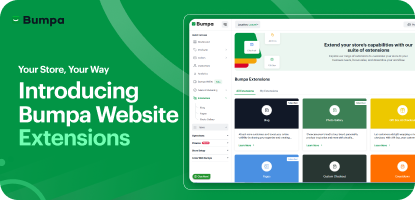
Your Store, Your Way: Introducing Bumpa Website Extensions

Tips
Black Friday Coupon Code Ideas (2025): 27 Proven Promos + How to Name, Cap, and Track Them

Communities
"We Don't Do Impossible" - Celebrating CX Week at Bumpa

Tips
How to Create Professional Invoices for Small Businesses with an Online Invoice Generator
Tips
How to Create & Start an Online Store in Nigeria in 2024
Features
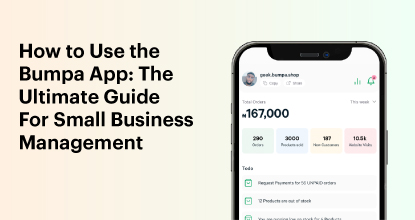
How to Use the Bumpa App: The Ultimate Guide For Small Business Management
Features
Recover More Sales With Bumpa’s New Automated Abandoned Order Reminders

Tips
Black Friday 2025: The Business Guide to Deals That Triple Your Sales

Spotlight
Ronbee Signature: The Entrepreneur who Ditched the Idea of Being A Professor to Become A Jewelry & Perfume Connoisseur.
Spotlight
How Melira Fits Started From A One-Bed Apartment to Doing Up To 15 Million in Revenue.
Features
Get Amazon-Level Delivery for your Business with Bumpa’s New Shipping Automation

Tips
How Businesses (Small and Big) Are Making Big Money with AI in 2025! (Here's How)

Tips
How to Make Money on the Internet in 2025 (12 Easy E-commerce Hustles That Actually Pay)

Tips
These 7 Business Finance Mistakes May Cost You Millions !
Tips
6 Bumpa Websites Designed With New Themes to Inspire Your Online Store
Features
The Ultimate Guide to Managing Your Multiple Stores for Your Business with Bumpa

Features
How to Set Up Google Analytics for Your Bumpa Website
Tips
These 5 Urgent Fixes Will Save Your Dying Online Store!
Entrepreneurship
Be Part of Something Big: Join Our Partners' Program To Help Businesses Go Digital with Bumpa!

Tips
How to Write Product Descriptions that Convert Online Shoppers + Examples & Template

Features
Introducing Brand New Professional Website Themes & Templates For Your Bumpa Store!

Entrepreneurship
ShowUp #2: Love is in the Air! (And So Are Sales)

Tips
How to Turn your Products into Irresistible Valentine's Day Gifts

Features
How to Add Shipping Fees on Your Bumpa App
Features
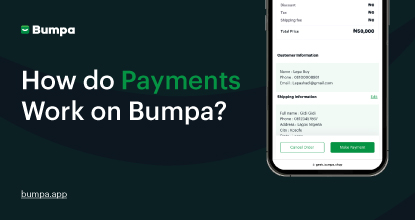
How does Online Payment Work on Bumpa?

Entrepreneurship
The Biggest Business Growth Event (BBGW) of 2025 Is Here!

Tips
Top 8 Trending Products to Launch a Successful Online Business in 2025

Tips
4 Secret Growth Strategies Smart Businesses Are Stealing in 2025

Entrepreneurship