Entrepreneurship
Bumpa vs Paystack Storefront: Which Is Right for Your Business?
Entrepreneurship



If you've been selling online in Nigeria for any amount of time, chances are you've heard of Paystack Storefront. It's free. It's connected to a payment gateway you already trust. And setting it up takes maybe five minutes.
So the question a lot of business owners ask is: "Why would I pay for Bumpa when Paystack Storefront is free?"
It's a fair question. And I'll give you a fair answer.
Paystack Storefront is a great place to start. But Bumpa is where businesses grow with an all-in-one business management suite created specifically to help you make the most of your business. There's a real difference between the two and by the end of this article, you'll know exactly which one is right for where your business is today.
First, Let's Give Paystack Storefront Its Flowers
Paystack is one of Nigeria's most trusted names in fintech. Millions of businesses use it to collect payments every day and for good reason. It works.
Paystack Storefront is their free seller page tool. You can list unlimited products, add images and videos, set up discount codes, manage basic inventory, and share a clean link with your customers. There are no subscription fees and you only pay the standard Paystack transaction fee of 1.5% per sale.
If you sell digital products like eBooks or courses, it's pretty solid for that. If you want a simple payment page to share on your Instagram bio, it works well. If you're just testing the waters and not yet sure you want to invest in a full business platform, Paystack Storefront is a decent starting point.
So What Does Bumpa Offer You Or Do Differently?
Bumpa is not just a storefront. It's a full business management app built specifically for Nigerian entrepreneurs, by Nigerian entrepreneurs.
Think of it this way: Paystack Storefront is a shop window. Bumpa is the entire shop (window, stockroom, cashier, delivery desk, customer records, and the analytics board in the back office) all in your pocket.
Over 136,000 business owners trust Bumpa to run their day-to-day operations. Fashion brands. Beauty stores. Food vendors. Hair businesses. You name it.
Here's what that actually looks like in practice.
The moment a customer places an order on your Bumpa store, your inventory updates automatically. They get an order confirmation. You get a notification. If they abandon checkout before paying, Bumpa sends up to three automated follow-up reminders (by email and SMS) with a direct link back to their cart. Merchants recover between 10 and 30% of sales that would have otherwise gone cold.
When it's time to ship, shipping integrations like the one we have with ShipBubble is built right in, so all you have to do is pick a courier, the customer gets a tracking update, and the logistics side of your business runs itself.
And for the days you're selling in person — at a market, a pop-up, a showroom, Bumpa Terminal lets you accept bank transfers and QR payments offline, with instant WhatsApp confirmation so you never accept a fake alert again.
Businesses like Dresses by Lami processed over 1,500 orders in a single month after switching to Bumpa, and this is what happens when a business stops running on memory and WhatsApp notes and starts running on a system.
Let's Actually Compare Bumpa & Paystack Feature by Feature


Here's where it gets interesting. Let's look at what each platform actually offers across the areas that matter most to a growing business.
1. Store Setup
After testing both platforms, i'll admit that both platforms are fast. You can set up a basic storefront on either in under 10 minutes, with zero coding skills required.
On Bumpa, you get access to beautifully designed themes built for Nigerian e-commerce. It's mobile-optimised, clean, and ready to convert. You can also fully customise the look and feel of your store on a subscription plan.
As opposed to the Paystack Storefront where the design and overall them keeps things more minimal and functional, with less room to make it yours with your branding and colors.
2. Inventory Management
Bumpa's inventory system tracks your stock in real time. Every time someone places an order on your website, your inventory automatically updates. You also get low stock alerts, so you're never caught off guard mid-sale.
You can view what's selling, what's sitting, and what you need to restock, all from one dashboard. It also syncs across your physical and online sales channels, so your numbers actually reflect your real business.
On the other hand, Paystack Storefront has basic inventory where you can set quantities and get a low stock alert. But it doesn't connect to any bigger picture of your business operations, like analytics and customer engagement features.
3. Order Management & Logistics
One of the things our merchants tell us most often is how much time they used to spend managing orders manually. Chasing riders. Sending shipping updates by hand. Responding to 'has my order shipped?' DMs at midnight.
Bumpa automates all of that. Your customers get automatic order confirmation emails. Shipping updates go out without you lifting a finger. And through Bumpa's integration with logistics providers like ShipBubble and FEZ, your customers can even choose their preferred delivery option right at checkout.
With Paystack Storefront, you can track orders and mark them as delivered but the communication and logistics coordination is still largely manual.
4. Business Analytics
Bumpa gives you weekly and monthly business reports, a full analytics dashboard, sales broken down by channel (Instagram, physical store, website, etc.), and key metrics like Gross Profit, Average Spend per Customer, and your top-selling products, all calculated automatically.
Paystack's dashboard gives you transaction records and basic order summaries. That's useful. But it's not the same as actually understanding your business performance.
5. Customer Management
Your customers are your biggest asset, so Bumpa lets you build a real CRM where you can store customer records, track purchase history, create customer groups, and send bulk SMS or email campaigns directly from the app.
You can also connect your Instagram DMs to Bumpa, so when someone slides into your DMs asking about a product, you can send them straight to your store without losing track of the conversation.
Paystack Storefront doesn't have customer management features. It captures buyer details per transaction, but there's no way to re-engage those customers or build any kind of relationship from within the platform.
6. Payments
Bumpa actually includes Paystack as a default payment option. The moment you sign up for Bumpa, Paystack is already integrated and ready to go.
But it doesn't stop there. You can also add Nomba (with a lower 1.3% transaction fee), Stripe for international payments, and Bumpa Terminal for in-person transactions. Your customers can pay by card, bank transfer, USSD, QR code, or OPay — whatever works for them.
So with Bumpa, you're not choosing between Bumpa or Paystack. You're getting the Paystack payment integration plus a whole lot more.
7. Custom Domain
Bumpa lets you connect a custom domain to your store (e.g., yourstore.com) on a paid subscription plan. You can also purchase the domain directly through the app. Your store, your brand, your URL.
Paystack Storefront doesn't offer custom domains. Your store lives on a Paystack-generated link. That's fine for a starting point, but it limits how professional your brand looks to customers.
8. Pricing
Paystack Storefront is free with a 1.5% transaction fee on every sale.
Bumpa offers a 14-day free trial , then starts from ₦15,000 per quarter, which amounts to about ₦5,000 per month. You can save up to ₦40,000 if you pay annually. There's also a transaction fee of 1.5% on online payments, same as Paystack.
So the real question isn't 'free vs paid.' It's: what is ₦5,000 a month worth in time saved, mistakes avoided, and sales captured that you'd otherwise lose?
For most growing businesses? It pays for itself quickly.
Features Bumpa Has That Paystack Storefront Simply Doesn't
This is the part that usually seals the deal for most business owners I've spoken to. It's one thing to compare features that both platforms have. It's another thing entirely to look at the tools Bumpa offers that Paystack Storefront doesn't even come close to.
And there are quite a few of them.
1. Staff Accounts & Permissions


The moment your business grows beyond just you, you need a way to give your team access — without giving them access to everything. Bumpa's staff management lets you add team members (store managers, sales reps, stockkeepers), assign them specific roles, and control exactly what they can see or do.
With granular permissions, you can decide which staff member can view cost prices, manage orders, edit products, or access analytics. You can also track every action they take — who created which order, who edited a product, who logged in and when. That's real accountability for a real business.
Paystack Storefront is single-user only. There's no concept of a team on the platform.
2. Multi-Location Management


If you have more than one physical store — or you're planning to — Bumpa's Growth plan is built exactly for that. You can add multiple store locations, manage inventory independently per location, assign staff to specific branches, and see a unified view of all your stores in one dashboard.
No more calling your Ikeja store to ask what's in stock while you're in Lekki. No more guessing which branch is performing best. It all lives in one place.
This feature doesn't exist in any form on Paystack Storefront.
3. Automated Shipping

Manual shipping coordination is one of the biggest time drains for Nigerian product sellers. With Bumpa's ShipBubble integration (available on Pro and Growth plans), the process becomes almost entirely hands-free. Once a customer places an order, it automatically appears on ShipBubble. Once the item ships or gets delivered, your Bumpa store updates automatically too.
Your customers can compare logistics providers, choose their preferred courier at checkout, and get real-time tracking. You don't have to manually paste order details, call dispatch riders, or update order statuses one by one.
Paystack Storefront has basic delivery settings. Automated shipping — the kind that actually removes the work — isn't there.
4. Newsletter Sign-Up & Pop-Up


Every visitor to your Bumpa website is a potential subscriber. Bumpa lets you add a newsletter sign-up form and a pop-up notification to your store — capturing email addresses from people who browse but don't buy yet. Those addresses are saved directly to your Bumpa dashboard and can be used for email campaigns through the app.
This is a feature that most small business owners don't think about until they realise they've been letting potential customers walk out the door with no way to reach them again. On Bumpa, it's a simple toggle.
Paystack Storefront doesn't have any mechanism to collect visitor emails or run newsletter sign-ups.
5. Built-In Blog
SEO matters more than most sellers think. Bumpa's website extensions include a blog feature — meaning you can publish content directly on your store's website. Product guides, styling tips, ingredient breakdowns, care instructions — whatever your customers actually search for.
This brings organic traffic to your store over time. A customer searching 'how to care for a human hair wig' can land on your blog, trust your expertise, and buy from your store — all without you spending a naira on ads.
Paystack Storefront is a product listing page. There's no content or SEO layer built into it.
6. Website Extensions

Bumpa's extensions library lets you supercharge your store beyond the basics. You can add countdown timers for flash sales (urgency converts), back-in-stock alerts so customers get notified when a sold-out item returns, product add-ons for upselling at checkout, and custom checkout fields to collect exactly the information you need from buyers.
These are the kinds of small features that, in practice, add up to significant revenue. A countdown timer on a sale weekend. A back-in-stock alert that brings a customer back three weeks later. A checkout field that saves you from having to ask for measurements over DM.
None of this is available on Paystack Storefront.
7. Bumpa Terminal & Bumpa Wallet
Bumpa Terminal lets you accept in-person payments anywhere — no POS machine required. Customers pay via a QR code or transfer, you get instant WhatsApp notification, and the transaction records itself in your Bumpa dashboard automatically. It's perfect for pop-up events, market days, and physical stores.
Bumpa Wallet is newer but a big deal: your sales go straight into your Wallet instantly — no waiting for the 24-hour settlement window. You can withdraw for just ₦50 per transaction and even earn 8% interest on money sitting in your Wallet. That's your business money working for you while you sleep.
Paystack processes payments. Bumpa processes payments and gives you a financial home for those payments.
8. POS & Barcode System

For businesses with physical stores, Bumpa's Growth plan includes a full Point of Sale system — the kind you'd expect to see in a proper retail environment. Add items to a customer's cart on your device, collect payment via Bumpa Terminal, and generate a receipt in minutes.
There's also a barcode generator and scanner. You can create unique barcodes for all your products, scan them in-store to instantly pull up product details and prices, and record sales automatically to your inventory. Think supermarket-level checkout — on your phone, for your small business.
Paystack Storefront was built for online sales. It has no offline or POS component.
💡 In short: Paystack Storefront helps you sell. Bumpa helps you run a business. Those are two very different things.
Who Should Use Paystack Storefront
To be fair, paystack Storefront is the right tool in specific situations:
You're selling one or two digital products and need a clean payment link.
You're running a one-off campaign or seasonal promotion — Paystack lets you create multiple storefronts for different campaigns.
You're testing whether people will actually buy before you invest in anything.
You have zero budget right now and just need to start somewhere.
Starting is better than waiting, and we understad that but if you're past that stage, and you have orders coming in from both old and new custoemrs, and your WhatsApp is full of business messages, you've probably outgrown Paystack Storefront already.
Who Should Use Bumpa
Bumpa is built for you if:
You sell physical products and need to track inventory properly.
You're managing orders on Instagram, WhatsApp, and in person — and things are slipping through the cracks.
You want a real branded website that looks professional and converts.
You're running sales, discount seasons, or promotional campaigns and want them to actually run without chaos.
You have customers you want to keep — and you want to actually reach them again.
You want to know your actual numbers: profit, top products, best sales channels.
You're serious about building a business, not just selling products.
The Verdict
Paystack is an excellent payments company. Their Storefront is a genuinely useful feature, especially if you're just starting out or selling digital products.
But if you're building a product-based business in Nigeria and you're thinking about where to actually run that business, Bumpa clearly wins this one, and it's not particularly close.
With Bumpa, you get your own store, with several payment methods including paystack built right in, you get inventory, analytics, CRM, logistics, automated order updates, and a custom domain. Everything that happens before, during, and after the sale in one app, on your phone.
The 14-day free trial is there for a reason. Start there. You'll see the difference in your first week.
→ Start your free 14-day Bumpa trial Today
Frequently Asked Questions
1. Is Bumpa better than Paystack Storefront?
For product-based businesses that want to manage inventory, automate orders, understand their analytics, and retain customers — yes, Bumpa is significantly more capable. Paystack Storefront is a strong starting point for simple product listings and digital product sales, but it doesn't offer the full business management features that Bumpa does.
2. Can I use Paystack on Bumpa?
Yes — and this is one of the most underrated things about Bumpa. When you sign up, Paystack is already integrated as a default payment option. You can also add Nomba, Stripe, and Bumpa Terminal. So you get Paystack's payment infrastructure plus everything else Bumpa offers.
3. Does Bumpa charge transaction fees?
Bumpa charges a 1.5% transaction fee on online payments processed through your Bumpa website — the same rate as Paystack Storefront. You also have the option to pass this fee on to your customer. Subscription plans start from ₦5,000/month when billed quarterly.
4. Is Paystack Storefront completely free?
Yes. Paystack Storefront has no setup fees or subscription fees. You only pay the 1.5% transaction fee on each successful sale. It's a solid free option for sellers who need a simple product page without ongoing operational features.
5. Can I get a custom domain on Paystack Storefront?
No. Paystack Storefront does not support custom domains. Your store will live on a Paystack-generated link. Bumpa, on the other hand, allows you to connect or purchase a custom domain (e.g., yourstore.com) through the app on a paid plan.
6. Which is better for a Nigerian fashion business — Bumpa or Paystack Storefront?
For a fashion business managing multiple products, sizes, colours, and frequent sales campaigns, Bumpa is much better suited. Inventory management, discount and coupon tools, logistics integration, and customer CRM are all features that fashion businesses need as they grow — none of which Paystack Storefront offers.
7. Does Bumpa work for digital products?
Bumpa is currently optimised for product-based (physical goods) businesses. If you primarily sell digital products like eBooks, courses, or downloads, Paystack Storefront or a platform like Selar may be a better fit. Bumpa is the stronger choice once physical inventory is involved.
Related Articles
View Related Articles Here

Spotlight
The Extra Mile: Celebrating Customer Service Week 2026 at Bumpa

Features
8 Things You Can Automate on Bumpa So Your Business Runs While You Rest

Features
How to Set Up TikTok Pixel on Bumpa | Step-by-Step Guide

Features
Collect the Birthday & Gender Information of Your Customers Through Multiple Ways on Bumpa.

Entrepreneurship
How to Get Paid Faster: The Complete Guide to Business Payments in Nigeria & Kenya

Tips
How to Choose the Right Payment Options for Your Customers in 2026

Features
How to Set Up Facebook Pixel on Bumpa | Step-by-Step Guide

Entrepreneurship
How to Build a Good Inventory Management System (Step-by-Step)
Tips
How to Keep Daily Records of Sales for Your Business Easily

Tips
How to Detect, Deal with & Prevent Fake Bank Alerts for Your Business

Sales
How Gift Cards, Product Bundles, and Add-Ons Can Help You Make More Money Per Order on Bumpa

Entrepreneurship
Pezesha & Bumpa Partner to Empower Merchants with Digital Business Tools

Features
What Happens When My Bumpa Subscription Expires?

Entrepreneurship
How to Track Profit for Your Business in Nigeria in 2026

Tips
7 Signs You Need Inventory Management Software In 2026

Entrepreneurship
How to Prepare Your Business for Black Friday (2025): A Simple 10-Step Plan With Checklists and Templates

Entrepreneurship
Black Friday Marketing Strategy In 2026: 7-Day Plan for Small Businesses

Tips
When to Restock Inventory: Reorder Point Guide for Nigerian Businesses in 2026

Entrepreneurship
Inventory Management for Fashion & Clothing Business in Nigeria [2026]

Tips
6 Ways to Stop Staff From Stealing Your Stock (Without Losing Trust in Your Team)

Tips
Instagram Business Account Disabled? Here's Exactly What to Do in the Next 24 Hours (2026 Guide)

Entrepreneurship
From One Blender to 25 Branches and Counting: How FruityLife Manages Its Business with Bumpa

Features
New on Bumpa: The July Updates That Make Running Your Business Easier

Features
Create Emails That Drive Sales with Bumpa's Sales Email Template

Features
June Bumpa Product Update: Here's what's new!

Tips
8 Things To Do Before You Launch Your Online Store In 2026

Tips
10 Ways to Get more Customers & Increase Sales for your Business

Tips
Top 5 Online Selling Platforms & Sites in Nigeria (2026 Guide)

Tips
How to Optimise your Bumpa Website for more Visibility on Google in 2026!

Entrepreneurship
How To Start A Bag & Accessories Business In Nigeria In 2026

Tips
When to Upgrade Your Bumpa Plan And How to Know You're Ready

Entrepreneurship
10 Signs Your Business Needs Better Structure and Organization In 2026

Entrepreneurship
Bumpa vs WooCommerce: Is "Free and Powerful" Actually Free for Nigerian and Kenyan Businesses?

Entrepreneurship
Bumpa vs Shopify: Which Platform Actually Works Best For African Businesses?

Features
How to Improve SEO for Your Bumpa Website in 14 Steps

Features
Is the Bumpa App Free? (2026 Update: What’s Free, What’s Paid & What You Get)

Entrepreneurship
How to Use Social Media to Drive Sales to Your Bumpa Store In 2026

Entrepreneurship
25 Small Business Ideas in Kenya with Low Capital (2026 Guide)
Features
Every Physical Store You Add on your Bumpa Account Now Has Its Own Terminal Account. Here's Why It Matters

Features
Grow Your Business Faster with Loans: Say Hello to Bumpa Capital!

Features
How to Stop Staff Theft in Your DMs and Your Physical Store Using Bumpa

Tips
Business Name Ideas - How to Generate One + 42 Examples

Entrepreneurship
Bumpa vs Wix: A Guide for Nigerian Business Owners
Entrepreneurship
Bumpa vs Paystack Storefront: Which Is Right for Your Business?

Entrepreneurship
Bumpa vs Flutterwave Store: What Nigerian Sellers Actually Need to Know

Entrepreneurship
7 Marketing Tools You Can Use on Bumpa To 5x Sales. (Free & Paid 2026)

Spotlight
From a Mom's Shop Floor to 10K Orders: How Harjoke Fabrics Automated Sales with Bumpa
Features
Bumpa Wallet Is Here: A Faster Way to Get Paid Instantly, Grow Your Money & Stay in Control

Spotlight
For our One of One, Teejay…
Entrepreneurship
8 Best Paystack Storefront Alternatives Nigeria (2026)

Sales
How to Start an Online Business in Kenya (2026 Complete Guide)

Features
Bumpa POS: A Simple Point of Sale System for Businesses in Nigeria

Entrepreneurship
How Bumpa Helps Business Owners Adapt To Nigeria’s New Tax Laws in 2026

Sales
5 Reasons Why Your Business Isn't Making Money (And How To Fix It)

Features
Selling Internationally: Start Collecting Foreign Payments with Bumpa’s Multi-currency Feature!

Features
How to Get Started on Bumpa: An Onboarding Guide.
Tips
10 Small Business Ideas you can start with 20,000 in Nigeria in 2026
Tips
How to Collect Customer Reviews and Boost Sales With Them In 2026

Tips
How to File CAC Annual Returns Online in 2026 as a Business Owner

Entrepreneurship
Happening Live: 30 Days of Bumpa with Kelvin! (Plus 3M Up for Grabs)!
Features
What’s New This Month for Your Business (November 2025)

Entrepreneurship
Share Your Story, Win ₦500,000: Bumpa Business Story 2025
Features
Bumpa Product Updates: What’s New This Month for Your Business (October 2025)
Features
Your Store, Your Way: Introducing Bumpa Website Extensions

Tips
Black Friday Coupon Code Ideas (2025): 27 Proven Promos + How to Name, Cap, and Track Them

Communities
"We Don't Do Impossible" - Celebrating CX Week at Bumpa

Tips
How to Create Professional Invoices for Small Businesses with an Online Invoice Generator
Tips
How to Create & Start an Online Store in Nigeria in 2024
Features
How to Use the Bumpa App: The Ultimate Guide For Small Business Management
Features
Recover More Sales With Bumpa’s New Automated Abandoned Order Reminders

Tips
Black Friday 2025: The Business Guide to Deals That Triple Your Sales

Spotlight
Ronbee Signature: The Entrepreneur who Ditched the Idea of Being A Professor to Become A Jewelry & Perfume Connoisseur.
Spotlight
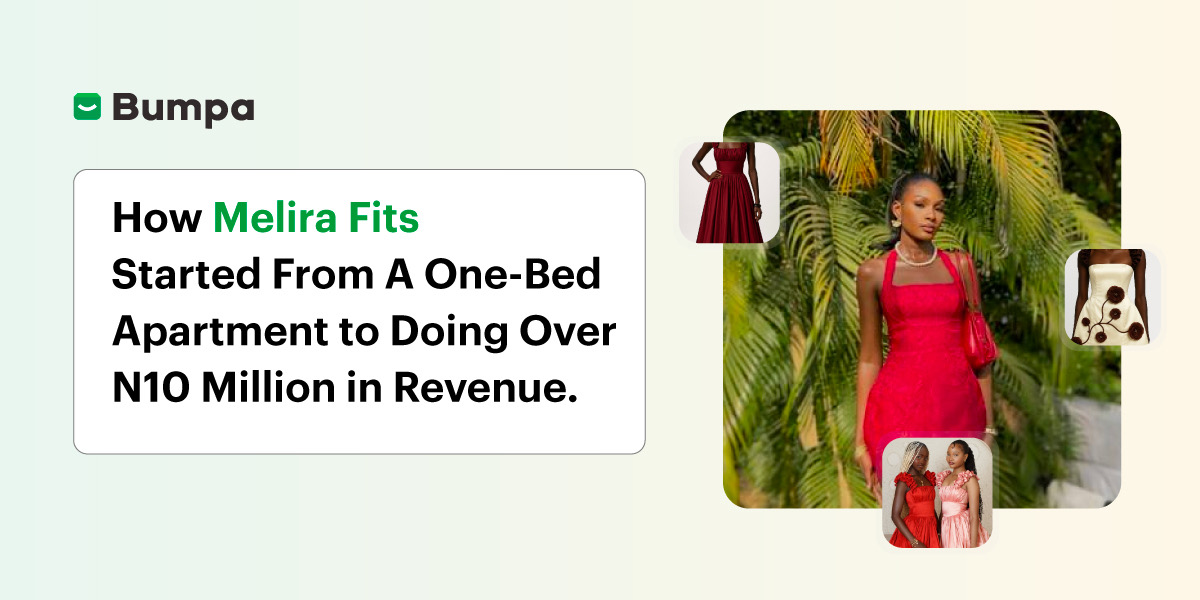
How Melira Fits Started From A One-Bed Apartment to Doing Up To 15 Million in Revenue.
Features
Get Amazon-Level Delivery for your Business with Bumpa’s New Shipping Automation

Tips
How Businesses (Small and Big) Are Making Big Money with AI in 2025! (Here's How)

Tips
How to Make Money on the Internet in 2025 (12 Easy E-commerce Hustles That Actually Pay)

Tips
These 7 Business Finance Mistakes May Cost You Millions !
Tips
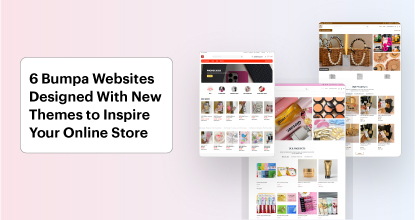
6 Bumpa Websites Designed With New Themes to Inspire Your Online Store
Features
The Ultimate Guide to Managing Your Multiple Stores for Your Business with Bumpa

Features
How to Set Up Google Analytics for Your Bumpa Website

Tips
These 5 Urgent Fixes Will Save Your Dying Online Store!

Entrepreneurship
Be Part of Something Big: Join Our Partners' Program To Help Businesses Go Digital with Bumpa!

Tips
How to Write Product Descriptions that Convert Online Shoppers + Examples & Template

Features
Introducing Brand New Professional Website Themes & Templates For Your Bumpa Store!

Entrepreneurship
ShowUp #2: Love is in the Air! (And So Are Sales)

Tips
How to Turn your Products into Irresistible Valentine's Day Gifts

Features
How to Add Shipping Fees on Your Bumpa App
Features
How does Online Payment Work on Bumpa?

Entrepreneurship
The Biggest Business Growth Event (BBGW) of 2025 Is Here!

Tips
Top 8 Trending Products to Launch a Successful Online Business in 2025

Tips
4 Secret Growth Strategies Smart Businesses Are Stealing in 2025

Entrepreneurship
ShowUp #1: Thank You for 2024 and Welcome to 2025! 🎉
Features
What to Know about Bumpa’s KYC Verification & Fraud Prevention

Entrepreneurship
Shape Your 2025: 50 Motivational and Inspirational Quotes Every Business Owner Needs

TipsFeatures
25 Marketing Strategies for Increasing Sales to Implement on Day One of 2025!

Entrepreneurship
The Season of Sales - Lessons, Tips & Giveaways

EntrepreneurshipFeatures
A Good Time For Gifts: Celebrating Our Super Sellers with WiiCreate! 🎁

Entrepreneurship
How Lagos's Top Parfait Brand, Melony Pine Fruit Hub Manages Its Growing Success with Bumpa
Features
Bumpa's Invoice Generator 2.0: Now with Custom Notes & Upgraded Shipping Slips
Features