Entrepreneurship
How to Separate Your Business and Personal Finances [2026 Guide]
Entrepreneurship



Not on Bumpa yet? Give your business its own home for money, record every sale as it happens, and earn 10% interest on your Wallet balance while you're at it. Sign up on Bumpa in 5 seconds and start separating your money today. 💚
Let's be honest about how this usually starts. You made a sale, the money landed in your account, and a few days later you need to buy something for yourself. You think, "Let me just borrow from the business, I'll put it back." The business money and your personal money are sitting in the same account, so it takes five seconds and nobody is watching.
Then it happens again. And again. Somewhere along the way you "borrow" for data, for your sister's school fees, for that owambe you really can't miss. At the end of the month, you look at your account and ask the question every business owner has asked at some point: "I sold so much this month, where did the money go?" (And no, the answer is not "juju.")
If this is you, relax. You're not irresponsible, and you're in very big company. Most businesses in Nigeria and Kenya start this way, because when it's just you and your hustle, the line between "my money" and "business money" doesn't feel real yet.
But it needs to become real, and the sooner the better. In this article, we'll show you exactly how to draw that line, even if you're a one-person business right now.
What does it actually mean to "separate" your business and personal money?
Separating your money simply means your business has its own place where its money lives, and you have your own place where yours lives. Business income goes into the business's space. Business expenses come out of it. And when you need money for yourself, you pay yourself from the business in a planned way, rather than dipping in whenever you feel like it.
It's not about being "big enough," and it's not reserved for registered companies with fancy offices. It's a structure, not a luxury, and it works whether you're selling 5 items a week or 500. We also cover how the different ways of receiving payments fit into this in our complete guide to business payments in Nigeria and Kenya.
Why mixing the two is quietly hurting your business


You may not realize it, but a successful business depends on knowing the difference between your business money and your personal money. When they sit together, your daily expenses start eating into the money meant for either one. Without a system to keep them apart, you slowly lose your business, steadily, without even noticing, until one day you're staring at your account wondering what happened.
Here are four ways mixing the two is hurting your business.
1. You can't tell if you're making a profit
When your sales, personal withdrawals, data subscription and even black tax all live in one account, they blur together. You see money going in and out, but you have no idea what the business actually earned. You could be making a profit. You could be running at a loss. You wouldn't know.
This is why we recommend Bumpa to business owners. Every payment is logged in one place, so you can see the difference between your revenue and your profit. You can also log your expenses and tag each one, so you always know what was spent on the business and what wasn't. Not sure how to work out your numbers? Here's how to calculate profit for your business.
2. Tax season becomes a full-time job
When it's time to file, or even just to figure out your numbers, you'll find yourself scrolling through months of transactions asking, "Was this for the business or for me?" By then, you likely won't remember, because it's been months.
A good way to prevent this is to set up tax on Bumpa. You add VAT to your products, and it's charged automatically whenever you sell, so you're not working it out by hand at checkout. All your transactions also live in one place, so when it's time to file, you simply download the CSV of everything you need.
And because every Bumpa merchant can get a Bumpa Terminal account, an account number in your business name, you're never confused about whether a payment went into your personal account or your business one. Customers pay into the Terminal account, and each payment is recorded as a business transaction, separate from your personal spending.
3. Loans and funding get harder to access
Lenders and funders want to see a clean record of what your business earns and spends. If your account is a mix of business sales and personal spending, there's nothing clean to show them. A business that's actually doing well can end up looking messy on paper, and that can cost you real opportunities.
When your sales, expenses and payments are recorded separately from your personal spending, you have a proper record to show anyone who asks.
4. You can't plan for the future
How much should you restock? Can you afford a new product? Do you need to hire more help, and can you pay them? You can't answer any of these if you don't know the real numbers behind your business. So you end up guessing, and guessing with your capital is a very expensive mistake.
None of this means you're doing a bad job. It just means the system you're running on has a leak. The good news is that the leak can be fixed, and Bumpa helps you stay prepared and avoid situations like this.
How to actually separate your money (step by step)
Good news: you don't need to be "a big business" to do this. You can start today, with whatever you've got. Here's how.
Step 1: Give your business money its own home

Your business needs somewhere to live that isn't your personal account. Before you think "I need to walk into a bank and queue for hours," know that you don't. A business wallet does the same job without the paperwork.
With the Bumpa Wallet, your sales payments land in a place that's only for your business. And since you're not touching it for personal spending, the money isn't just sitting idle. It earns 10% interest while it waits. So separating your money isn't only the responsible thing to do, it's also putting your money to work.
Do this even if you only make a few sales a week. The habit matters more than the size.
Step 2: Pay yourself a fixed amount, on a schedule
This is the one that changes everything, and it needs no app or tool, just discipline.
Stop paying yourself "whatever's left." That approach means you're always dipping in, always guessing, and never sure if you've taken too much. Instead, decide on a fixed amount, treat it like a salary, and pay yourself on the same day every week or month.
Let's say your business consistently earns enough for you to take ₦80,000 a month. Then you move ₦80,000 to your personal account on the 28th, and that's it. The rest stays in the business for restocking, expenses and growth. If your personal needs go beyond that amount, you adjust your lifestyle or grow the business. You don't quietly borrow from it.
It will feel tight at first. That's normal. It's also the first time you're seeing what your business can truly afford.
Step 3: Stop guessing, record it as it happens

The usual way people try to separate money is by reconstructing it at the end of the month: "Okay, this ₦12,000 was for stock, this ₦5,000 was... me?" That never works, because nobody remembers.
The better way is to record each transaction at the moment it happens. When you sell through Bumpa, every sale is already recorded for you, so you're not rebuilding anything after the fact. Business income is logged, your expenses can be tagged, and what belongs to the business stays clearly apart from what doesn't.
If you want to go deeper on this, we've got a full guide on keeping daily sales records.
Step 4: Look at your business numbers on their own
Once your money is separated, make it a habit to look at your business's numbers by themselves, regularly, away from your personal finances. Once a week is enough.
The question you're answering isn't "how much is in my account?" It's "how much did the business actually earn, and how much of that is profit?" Those are very different numbers. An account can look full while the business is losing money, and the reverse is also true.
Knowing your real profit is what lets you make decisions with confidence, like how much to restock or when to hire. If you're not sure how to calculate it, here's our guide on how to calculate profit in your business.
What changes once you separate your finances

Once your business money and your personal money stop sharing the same space, something big happens: you can finally answer the one question every business owner needs to be able to answer, "Is my business actually making money?"
You no longer have to guess from how much is sitting in your account. You can see what came in, what went out, and what's left as real profit. You know how much to restock without holding your breath, and when a lender or funder asks for your records, you have something clean to show them.
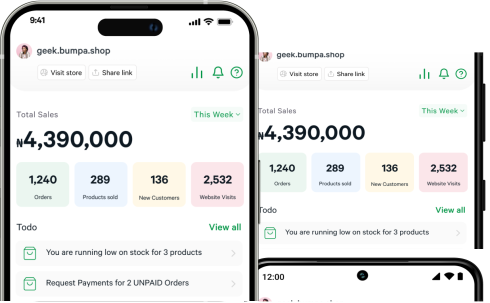
And you don't have to do the math by hand. With Bumpa's business analytics, your sales, expenses and profit are all in one place, so you can check how your business is doing from your phone, any day of the week.
Same business, same hustle, but now you actually know where you stand.
Start Small But Start Today
Separating your money isn't about being strict with yourself. It's about finally seeing your business clearly. Start small: give your business its own home, pay yourself on a schedule, and look at your numbers once a week. That's all it takes.
If you want an easier way to do it, Bumpa gives you a Wallet for your business money, records your sales as they happen, and shows you your real profit. Your business deserves to know where it stands. 💚
You don't have to be big, registered, or "ready" to start. You just need a place for your business money to live and a way to see what's coming in and going out. Bumpa gives you both: a Wallet that earns 10% interest, sales recorded as they happen, and your real profit in one place.
Sign up on Bumpa today and let's help you build a business that actually knows where it stands. 💚
Frequently Asked Questions
1. Do I need a registered business to separate my business and personal money?
No. You can start separating your money today, even if your business isn't registered yet. What matters is that business money and personal money have different places to live.
2. How much should I pay myself from my business?
There's no one-size-fits-all number. Look at what your business consistently earns after covering stock and expenses, then pick an amount you can comfortably take every month without hurting the business. Start low and adjust as your sales grow.
3. What if I'm a one-person business? Do I still need to do this?
Yes, even more so. When you're the only person running things, it's easiest to blur the lines. A simple setup, like a separate wallet and a fixed "salary," keeps you honest with yourself.
4. What if I really need to use business money for an emergency?
It happens. When it does, record it as a loan from the business and pay it back as soon as you can. Don't just quietly take it. Writing it down is what keeps your numbers accurate.
5. How often should I check my business numbers?
Once a week is enough. Look at what came in, what went out, and what's left as profit. Doing it weekly means problems show up early instead of at the end of the month.
6. Does the Bumpa Wallet earn interest?
Yes, money in your Bumpa Wallet earns 10% interest while it sits there. Sign up on Bumpa to open yours.
Related Articles
View Related Articles Here

Entrepreneurship
How to Separate Your Business and Personal Finances [2026 Guide]

Spotlight
The Extra Mile: Celebrating Customer Service Week 2026 at Bumpa

Features
8 Things You Can Automate on Bumpa So Your Business Runs While You Rest

Features
How to Set Up TikTok Pixel on Bumpa | Step-by-Step Guide

Features
Collect the Birthday & Gender Information of Your Customers Through Multiple Ways on Bumpa.

Entrepreneurship
How to Get Paid Faster: The Complete Guide to Business Payments in Nigeria & Kenya

Tips
How to Choose the Right Payment Options for Your Customers in 2026

Features
How to Set Up Facebook Pixel on Bumpa | Step-by-Step Guide

Entrepreneurship
How to Build a Good Inventory Management System (Step-by-Step)
Tips
How to Keep Daily Records of Sales for Your Business Easily
Tips
How to Detect, Deal with & Prevent Fake Bank Alerts for Your Business

Sales
How Gift Cards, Product Bundles, and Add-Ons Can Help You Make More Money Per Order on Bumpa

Entrepreneurship
Pezesha & Bumpa Partner to Empower Merchants with Digital Business Tools

Features
What Happens When My Bumpa Subscription Expires?

Entrepreneurship
How to Track Profit for Your Business in Nigeria in 2026

Tips
7 Signs You Need Inventory Management Software In 2026

Entrepreneurship
How to Prepare Your Business for Black Friday (2025): A Simple 10-Step Plan With Checklists and Templates

Entrepreneurship
Black Friday Marketing Strategy In 2026: 7-Day Plan for Small Businesses

Tips
When to Restock Inventory: Reorder Point Guide for Nigerian Businesses in 2026

Entrepreneurship
Inventory Management for Fashion & Clothing Business in Nigeria [2026]

Tips
6 Ways to Stop Staff From Stealing Your Stock (Without Losing Trust in Your Team)

Tips
Instagram Business Account Disabled? Here's Exactly What to Do in the Next 24 Hours (2026 Guide)

Entrepreneurship
From One Blender to 25 Branches and Counting: How FruityLife Manages Its Business with Bumpa

Features
New on Bumpa: The July Updates That Make Running Your Business Easier

Features
Create Emails That Drive Sales with Bumpa's Sales Email Template

Features
June Bumpa Product Update: Here's what's new!

Tips
8 Things To Do Before You Launch Your Online Store In 2026

Tips
10 Ways to Get more Customers & Increase Sales for your Business

Tips
Top 5 Online Selling Platforms & Sites in Nigeria (2026 Guide)

Tips
How to Optimise your Bumpa Website for more Visibility on Google in 2026!

Entrepreneurship
How To Start A Bag & Accessories Business In Nigeria In 2026

Tips
When to Upgrade Your Bumpa Plan And How to Know You're Ready

Entrepreneurship
10 Signs Your Business Needs Better Structure and Organization In 2026

Entrepreneurship
Bumpa vs WooCommerce: Is "Free and Powerful" Actually Free for Nigerian and Kenyan Businesses?

Entrepreneurship
Bumpa vs Shopify: Which Platform Actually Works Best For African Businesses?

Features
How to Improve SEO for Your Bumpa Website in 14 Steps

Features
Is the Bumpa App Free? (2026 Update: What’s Free, What’s Paid & What You Get)

Entrepreneurship
How to Use Social Media to Drive Sales to Your Bumpa Store In 2026

Entrepreneurship
25 Small Business Ideas in Kenya with Low Capital (2026 Guide)

Features
Every Physical Store You Add on your Bumpa Account Now Has Its Own Terminal Account. Here's Why It Matters

Features
Grow Your Business Faster with Loans: Say Hello to Bumpa Capital!

Features
How to Stop Staff Theft in Your DMs and Your Physical Store Using Bumpa

Tips
Business Name Ideas - How to Generate One + 42 Examples

Entrepreneurship
Bumpa vs Wix: A Guide for Nigerian Business Owners

Entrepreneurship
Bumpa vs Paystack Storefront: Which Is Right for Your Business?

Entrepreneurship
Bumpa vs Flutterwave Store: What Nigerian Sellers Actually Need to Know

Entrepreneurship
7 Marketing Tools You Can Use on Bumpa To 5x Sales. (Free & Paid 2026)

Spotlight
From a Mom's Shop Floor to 10K Orders: How Harjoke Fabrics Automated Sales with Bumpa

Features
Bumpa Wallet Is Here: A Faster Way to Get Paid Instantly, Grow Your Money & Stay in Control

Spotlight
For our One of One, Teejay…

Entrepreneurship
8 Best Paystack Storefront Alternatives Nigeria (2026)

Sales
How to Start an Online Business in Kenya (2026 Complete Guide)

Features
Bumpa POS: A Simple Point of Sale System for Businesses in Nigeria

Entrepreneurship
How Bumpa Helps Business Owners Adapt To Nigeria’s New Tax Laws in 2026

Sales
5 Reasons Why Your Business Isn't Making Money (And How To Fix It)

Features
Selling Internationally: Start Collecting Foreign Payments with Bumpa’s Multi-currency Feature!

Features
How to Get Started on Bumpa: An Onboarding Guide.

Tips
10 Small Business Ideas you can start with 20,000 in Nigeria in 2026
Tips
How to Collect Customer Reviews and Boost Sales With Them In 2026

Tips
How to File CAC Annual Returns Online in 2026 as a Business Owner

Entrepreneurship
Happening Live: 30 Days of Bumpa with Kelvin! (Plus 3M Up for Grabs)!
Features
What’s New This Month for Your Business (November 2025)

Entrepreneurship
Share Your Story, Win ₦500,000: Bumpa Business Story 2025

Features
Bumpa Product Updates: What’s New This Month for Your Business (October 2025)
Features
Your Store, Your Way: Introducing Bumpa Website Extensions

Tips
Black Friday Coupon Code Ideas (2025): 27 Proven Promos + How to Name, Cap, and Track Them

Communities
"We Don't Do Impossible" - Celebrating CX Week at Bumpa

Tips
How to Create Professional Invoices for Small Businesses with an Online Invoice Generator
Tips
How to Create & Start an Online Store in Nigeria in 2024
Features
How to Use the Bumpa App: The Ultimate Guide For Small Business Management
Features
Recover More Sales With Bumpa’s New Automated Abandoned Order Reminders

Tips
Black Friday 2025: The Business Guide to Deals That Triple Your Sales

Spotlight
Ronbee Signature: The Entrepreneur who Ditched the Idea of Being A Professor to Become A Jewelry & Perfume Connoisseur.
Spotlight
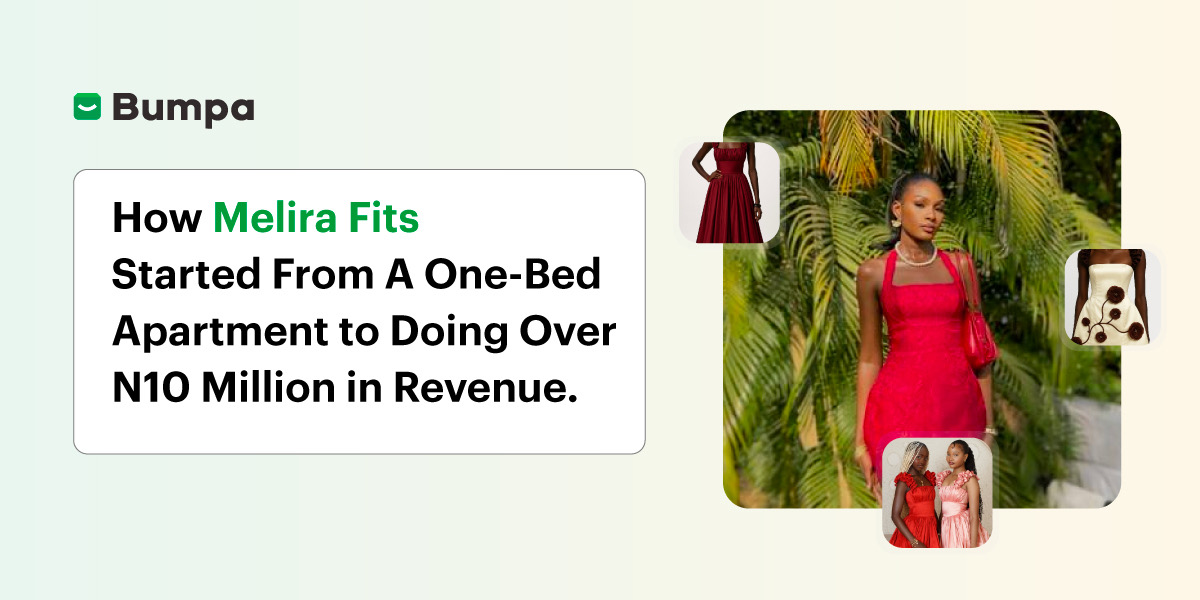
How Melira Fits Started From A One-Bed Apartment to Doing Up To 15 Million in Revenue.
Features
Get Amazon-Level Delivery for your Business with Bumpa’s New Shipping Automation

Tips
How Businesses (Small and Big) Are Making Big Money with AI in 2025! (Here's How)

Tips
How to Make Money on the Internet in 2025 (12 Easy E-commerce Hustles That Actually Pay)

Tips
These 7 Business Finance Mistakes May Cost You Millions !
Tips
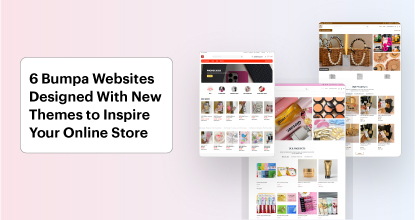
6 Bumpa Websites Designed With New Themes to Inspire Your Online Store
Features
The Ultimate Guide to Managing Your Multiple Stores for Your Business with Bumpa

Features
How to Set Up Google Analytics for Your Bumpa Website

Tips
These 5 Urgent Fixes Will Save Your Dying Online Store!
Entrepreneurship
Be Part of Something Big: Join Our Partners' Program To Help Businesses Go Digital with Bumpa!

Tips
How to Write Product Descriptions that Convert Online Shoppers + Examples & Template

Features
Introducing Brand New Professional Website Themes & Templates For Your Bumpa Store!

Entrepreneurship
ShowUp #2: Love is in the Air! (And So Are Sales)

Tips
How to Turn your Products into Irresistible Valentine's Day Gifts

Features
How to Add Shipping Fees on Your Bumpa App
Features
How does Online Payment Work on Bumpa?

Entrepreneurship
The Biggest Business Growth Event (BBGW) of 2025 Is Here!

Tips
Top 8 Trending Products to Launch a Successful Online Business in 2025

Tips
4 Secret Growth Strategies Smart Businesses Are Stealing in 2025

Entrepreneurship
ShowUp #1: Thank You for 2024 and Welcome to 2025! 🎉
Features
What to Know about Bumpa’s KYC Verification & Fraud Prevention

Entrepreneurship
Shape Your 2025: 50 Motivational and Inspirational Quotes Every Business Owner Needs

TipsFeatures
25 Marketing Strategies for Increasing Sales to Implement on Day One of 2025!

Entrepreneurship
The Season of Sales - Lessons, Tips & Giveaways

EntrepreneurshipFeatures
A Good Time For Gifts: Celebrating Our Super Sellers with WiiCreate! 🎁

Entrepreneurship
How Lagos's Top Parfait Brand, Melony Pine Fruit Hub Manages Its Growing Success with Bumpa
Features