Entrepreneurship
25 Small Business Ideas in Kenya with Low Capital (2026 Guide)
Entrepreneurship



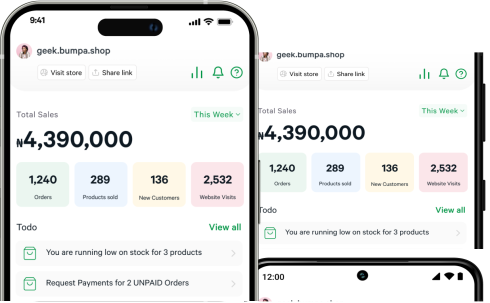
Starting a business is the hard part. Managing it doesn't have to be. With Bumpa, you can accept M-Pesa payments instantly, track your stock in real time, manage orders from WhatsApp and Instagram in one place, and see your actual profit, all from your phone.
Not on Bumpa yet? Sign up for free today and see what your business has been missing.
The economy is squeezing everyone right now. Unga prices are up. Fuel keeps climbing. Rent? Don't even get me started. And if you're employed, your salary is doing the same thing it did last year and the year before—absolutely nothing.
So you're thinking about starting a business. Something on the side. Something that could eventually replace your income. Maybe you've been scrolling through "business ideas" articles online, watching YouTube videos of people claiming they made millions in three months, or sitting in those WhatsApp groups where everyone's talking about "the next big opportunity."
But here's where it gets frustrating: every "expert" assumes you have capital. "Start with KES 200,000." "Invest KES 500,000 and scale." Meanwhile, you're sitting there with KES 15,000 in savings wondering if you're just locked out of entrepreneurship entirely.
Let me be clear about something: you don't need KES 500,000 to start a business in Kenya. You don't even need KES 100,000. Some of the most profitable small businesses running right now—businesses putting food on tables, paying school fees, building financial security—started with less than KES 20,000.
The problem isn't your capital. The problem is that most business advice in Kenya is either recycled garbage from 2015, written by people who've never actually run a business, or it's designed to sell you an overpriced course. Nobody's being honest about what actually works when you're starting with limited funds.
This guide is different. I'm breaking down 25 real small business ideas you can start with low capital in Kenya—organized by how much you actually have to invest right now. No fluff. Real profit margins. Honest challenges. And actual steps you can take this week.
If you've got KES 5,000, KES 20,000, or KES 50,000 sitting somewhere and you're ready to put it to work, keep reading. Your situation isn't as hopeless as it feels.
What "Low Capital" Actually Means in Kenya
Before we get into the business ideas, let's be honest about what "low capital" actually means. Because I've seen too many articles claim a business is "low capital" and then casually mention you need KES 250,000 to start. That's not low capital. That's a down payment on a car.
Here's how we're breaking it down in this guide:
Micro Capital: KES 5,000–10,000: This is what you have if you've been saving small amounts or you just got paid and can spare a little. You're not starting a salon or a car wash with this. But you can absolutely start something that generates daily income.
Low Capital: KES 10,000–50,000: This is where most people reading this guide actually are. You've saved for a few months, maybe sold something, or you've been putting money aside specifically to start a business. This range opens up way more options.
Medium-Low Capital: KES 50,000–100,000: You've been saving seriously, or you got a loan, a chama payout, or inheritance. This gives you access to businesses with better equipment, more inventory, and faster scaling potential.
Why does this matter? Because most "business idea" lists online are lying to you. They'll call something "low capital" and then list businesses that realistically need KES 200,000+ when you factor in rent, licenses, equipment, and stock. This guide tells you the truth. If a business needs KES 80,000, I'm saying KES 80,000—not hiding it behind vague terms like "minimal investment."
You deserve to know exactly what you're getting into before you spend a single shilling.
How to Choose the Right Business Idea in 2026
Alright, you're about to read through 25 business ideas. Some will sound exciting. Some will sound boring but profitable. A few will make you think, "I could actually do this."
But before you pick one and run with it, slow down. Choosing the wrong business isn't just a waste of money—it's a waste of time, energy, and momentum. And in this economy, you can't afford to waste any of those.
Here's how to pick the right business for you:
The 3-Question Test
Ask yourself these three questions—honestly—before you commit to any business idea:
1. Do I have the skill, or can I learn it quickly?
Don't start a salon if you can't braid. Don't open a bakery if you've never baked a cake that didn't come out flat. I know this sounds obvious, but people ignore this all the time because they see others making money and think, "How hard can it be?"
Very hard, actually. If the business requires a skill you don't have, you need to either learn it fast (YouTube, a quick course, shadowing someone for a week) or partner with someone who has the skill. Otherwise, you'll spend your capital fixing mistakes instead of making sales.
2. Is there demand in my area?
A car wash works in Nairobi where traffic is constant and people have cars. It doesn't work in a rural village where most people use boda bodas. A juice stand works near offices, gyms, or schools—not in the middle of an industrial area.
Look around your neighborhood. What are people buying? What are they complaining they can't find? Where are the gaps? Don't assume demand exists just because you saw it work somewhere else. Verify it for your location.
3. Can I afford to lose this capital?
This is the hardest question, but it's the most important. Only invest money you can afford to lose. I'm not saying you will lose it—but if the business fails or takes longer to pick up than expected, can you survive financially?
If losing that KES 20,000 means you can't pay rent next month, don't start yet. Save a bit more. Build a cushion. The business will still be there in two months, and you'll be in a stronger position to handle setbacks.
Validation Before You Start
Picking a business idea is step one. Validating that it'll actually work is step two—and most people skip it.
Here's how you validate:
Talk to 10 potential customers: Not your mom. Not your best friend who will say yes to make you feel good. Real potential customers. Ask them: "If I sold [product/service], would you buy it? How much would you pay?" Their answers will tell you if demand is real or imagined.
Check if competitors exist: Competitors aren't a bad sign—they're proof that the business works. If nobody else is doing it in your area, that's either a massive opportunity or a massive red flag. Figure out which one before you invest.
Test with small batches before scaling: Don't buy KES 30,000 worth of stock on day one. Buy enough for 10–20 sales. See if people actually buy. See if your pricing works. See if the logistics make sense. Then scale up. Testing small saves you from expensive mistakes.
Now let's get into the actual business ideas.
25 Small Business Ideas (Organized by Capital Required)
Tier 1: Micro Capital (KES 5,000–10,000)
These are businesses you can start this week if you have even a small amount saved up. They're perfect for testing the waters without risking everything.
1. Smokies & Eggs Vendor
You boil smokies and eggs, set up near a matatu stage, school, or busy street, and sell to people who need quick, cheap breakfast or lunch. Startup capital: KES 5,000–8,000 (charcoal jiko, stock of eggs and smokies, condiments). Profit potential: KES 500–1,500 daily depending on location and foot traffic. Where to operate: Matatu stages, near colleges, busy estates like Pipeline, Umoja, or Kayole in Nairobi; works in any town with commuters. Pro tip: Offer combos (smokie + egg + kachumbari for KES 50) to increase your average sale and stand out from competitors selling just one item.
2. Phone Accessories (Tray Selling)
You buy phone cases, chargers, earphones, and screen protectors in bulk from Luthuli Avenue or River Road, then sell them on a tray at matatu stages or busy streets. Startup capital: KES 8,000–10,000 (initial stock). Profit potential: KES 1,000–2,500 daily if you're in a high-traffic area and know how to engage customers. Where to operate: Matatu stages, town centers, near colleges, outside malls—anywhere with heavy foot traffic. Pro tip: Specialize in one phone brand (Samsung or Tecno) so customers see you as the "expert" for that brand, and you'll spend less time explaining compatibility.
3. M-Pesa Agent
You register as an official M-Pesa agent through Safaricom, stock your float, and earn commissions on every transaction customers make through you. Startup capital: KES 10,000 (minimum float requirement, though more float = more transactions = more money). Profit potential: KES 30,000–80,000 monthly depending on location and transaction volume. Where to operate: Busy estates, near markets, shopping centers, or anywhere underserved by agents. Pro tip: Build relationships with customers—offer fast service, never run out of float, and they'll choose you over other agents every single time, giving you consistent traffic.
4. Social Media Management
You manage social media accounts for small businesses—creating posts, scheduling content, engaging with followers, and growing their online presence. Startup capital: KES 5,000–10,000 (smartphone, data bundles, Canva Pro subscription optional). Profit potential: KES 30,000–100,000 monthly per client depending on the scope of work. Where to operate: Anywhere—this is location-independent; target salons, restaurants, boutiques, and other small businesses in your area or online. Pro tip: Start with one client (even at a discounted rate or free) to build a portfolio of results, then use those results and testimonials to land paying clients at full price.
5. Freelance Writing/Content Creation
You write blog posts, website copy, social media captions, or articles for businesses and get paid per piece or per word. Startup capital: KES 5,000 (laptop or smartphone, internet, Grammarly subscription optional). Profit potential: KES 40,000–150,000 monthly depending on your rates and how many clients you take on. Where to operate: Fully remote—sign up on Upwork, Fiverr, or Contently, or reach out to Kenyan businesses directly via LinkedIn or email. Pro tip: Specialize in one niche (e.g., health, finance, tech) instead of being a generalist; clients pay more for writers who understand their industry deeply.
Tier 2: Low Capital (KES 10,000–50,000)
This is where most people reading this guide are. These businesses give you more room to scale and better profit margins than micro-capital options.
6. Mitumba (Second-Hand Clothes)
You buy bales of second-hand clothes from Gikomba or other wholesale markets, sort through them, and sell individual pieces at a markup. Startup capital: KES 15,000–50,000 (one or two bales, depending on quality). Profit potential: KES 2,000–5,000 daily if you're in a good location and know how to pick quality items. Where to operate: Set up a stall in markets like Gikomba, Toi Market, or go mobile selling door-to-door in estates. Pro tip: Specialize in one category (kids' clothes, jeans, or dresses) so customers know exactly what you're known for, and you waste less time digging through random items.
7. Grocery Kiosk
You stock essential items like unga, rice, sugar, cooking oil, and sell them to people in your neighborhood who need convenience over supermarket prices. Startup capital: KES 20,000–50,000 (initial stock, shelves, basic setup). Profit potential: KES 1,000–3,000 daily depending on location and foot traffic. Where to operate: Residential estates—anywhere people live and need daily essentials without traveling far. Pro tip: Offer M-Pesa payments and home delivery within your estate; convenience wins customers over cheaper supermarket prices every time.
8. Juice & Smoothie Stand
You blend fresh juice and smoothies and sell them to health-conscious customers, office workers, or gym-goers. Startup capital: KES 15,000–30,000 (blender, fruits, cups, table setup). Profit potential: KES 1,500–4,000 daily depending on location and pricing. Where to operate: Near gyms, offices, colleges, busy streets in Nairobi CBD, Westlands, or any town center with foot traffic. Pro tip: Offer combo deals (juice + fruit salad) and loyalty cards (buy 5, get 1 free) to build repeat customers who come back weekly.
9. Baking from Home (Cakes, Mandazi)
You bake cakes, mandazi, scones, or other baked goods from home and sell them to individuals, offices, or at events. Startup capital: KES 10,000–25,000 (baking ingredients, basic equipment, packaging). Profit potential: KES 2,000–6,000 daily if you're taking consistent orders. Where to operate: From home—market via WhatsApp, Instagram, and word of mouth; deliver to estates, offices, or events. Pro tip: Focus on one signature item (e.g., the best chocolate cake in your area) and build a reputation around it; people will pay premium prices for consistent quality.
10. Mobile Car Wash
You go to customers' homes or offices with a water tank, pressure washer, and cleaning supplies, and wash their cars on-site. Startup capital: KES 25,000–50,000 (portable pressure washer, water tank, cleaning detergents, transportation). Profit potential: KES 2,000–5,000 daily washing 4–8 cars. Where to operate: Residential estates, office parks, apartment complexes in Nairobi, Mombasa, Kisumu. Pro tip: Offer subscription packages (4 washes a month for KES 2,000) to lock in recurring revenue and reduce the hustle of finding new customers every day.
11. Event Decoration
You decorate venues for weddings, birthdays, baby showers, and corporate events using balloons, flowers, drapes, and lighting. Startup capital: KES 20,000–40,000 (basic decoration supplies, balloons, fabrics, transportation). Profit potential: KES 5,000–20,000 per event depending on size and complexity. Where to operate: Anywhere events happen—market via Instagram, Facebook, and referrals from event planners or venues. Pro tip: Specialize in one type of event (e.g., kids' birthdays or weddings) and build a portfolio around that niche; clients trust specialists over generalists.
12. Phone Repair Services
You repair cracked screens, replace batteries, fix charging ports, and handle other common phone issues. Startup capital: KES 15,000–35,000 (basic tools, replacement parts, small workspace or mobile setup). Profit potential: KES 2,000–5,000 daily fixing 3–6 phones. Where to operate: Set up a small stall in town centers, markets, or go mobile offering on-site repairs. Pro tip: Partner with phone accessory sellers—they send you repair customers, you send them accessory buyers, and both of you benefit.
13. Graphic Design Services
You design logos, flyers, social media graphics, business cards, and posters for small businesses using tools like Canva or Photoshop. Startup capital: KES 10,000–20,000 (laptop, design software subscriptions, internet). Profit potential: KES 30,000–100,000 monthly depending on how many clients you take on. Where to operate: Fully remote—market on Instagram, LinkedIn, or freelance platforms like Fiverr. Pro tip: Create templates for common designs (event flyers, business cards) and sell them repeatedly on platforms like Etsy or Gumroad for passive income.
14. Online Tutoring
You teach students online in subjects you're strong in—math, science, English, or even exam prep like KCSE or SAT. Startup capital: KES 5,000–15,000 (laptop or tablet, good internet, headset). Profit potential: KES 40,000–120,000 monthly depending on how many students you take on and your rates. Where to operate: Fully online—market via Facebook groups for parents, Instagram, or tutoring platforms. Pro tip: Offer group sessions (5–10 students at once) at a lower per-student rate; you make more per hour while students pay less than 1-on-1 rates.
15. Virtual Assistant Services
You handle administrative tasks for busy entrepreneurs or small businesses—managing emails, scheduling appointments, data entry, customer service. Startup capital: KES 5,000–10,000 (laptop, internet, basic software). Profit potential: KES 50,000–150,000 monthly depending on your clients and workload. Where to operate: Fully remote—sign up on Upwork, Fiverr, or reach out to businesses on LinkedIn. Pro tip: Specialize in one platform (e.g., become a Shopify VA or a real estate VA) so you can charge higher rates as an expert rather than a generalist.
Tier 3: Medium-Low Capital (KES 50,000–100,000)
This tier unlocks businesses with better equipment, more inventory, and faster scaling potential. If you've saved seriously or got a loan, these are worth considering.
16. Salon/Barbershop (Home-Based)
You set up a small salon or barbershop in your home or rent a small space and offer haircuts, styling, braiding, or grooming services. Startup capital: KES 60,000–100,000 (equipment, chairs, mirrors, initial products, licenses). Profit potential: KES 3,000–8,000 daily depending on location and clientele. Where to operate: Residential estates, near colleges, or busy shopping areas in Nairobi, Mombasa, Kisumu. Pro tip: Offer membership packages (unlimited cuts for KES 3,000/month) to lock in recurring revenue and reduce the need to find new customers constantly.
17. Poultry Farming (Layers)
You raise chickens for egg production and sell eggs to individuals, hotels, supermarkets, or wholesalers. Startup capital: KES 50,000–80,000 (chicken coop, 50–100 chicks, feed, water system). Profit potential: KES 40,000–100,000 monthly once chickens start laying (around 5–6 months). Where to operate: Rural areas or peri-urban zones with space for a coop; sell eggs locally or transport to urban markets. Pro tip: Start with layer chickens instead of broilers—layers give you recurring income from eggs rather than one-time sales from meat.
18. Water Refilling Business
You buy a water dispenser or small bottling system, source clean water, and sell refills to homes and offices. Startup capital: KES 70,000–100,000 (refilling equipment, initial water stock, transport). Profit potential: KES 3,000–7,000 daily depending on customer base. Where to operate: Urban and peri-urban areas—target estates, offices, schools. Pro tip: Offer subscription services (weekly or monthly deliveries) to guarantee steady income and reduce the need to hunt for customers daily.
19. Gas Cylinder Refilling
You refill gas cylinders for homes and businesses and charge per kilogram. Startup capital: KES 60,000–90,000 (refilling equipment, initial gas stock, transport). Profit potential: KES 500–700 per cylinder refilled, translating to KES 3,000–8,000 daily depending on volume. Where to operate: Urban estates, near markets, or offer mobile refilling services. Pro tip: Partner with landlords of apartment blocks to become the official gas supplier for their tenants—guaranteed customer base with minimal marketing.
20. Photography Services
You offer photography for events, portraits, corporate headshots, or product photos for businesses. Startup capital: KES 60,000–100,000 (DSLR or mirrorless camera, lens, basic lighting, editing software). Profit potential: KES 5,000–30,000 per event or shoot depending on the type of work. Where to operate: Anywhere—market via Instagram, Facebook, and referrals from event planners. Pro tip: Specialize in one niche (weddings, corporate, or product photography) to build a strong portfolio and charge premium rates as an expert.
21. Catering Services
You prepare food for events—weddings, birthdays, corporate meetings—and deliver it to the venue. Startup capital: KES 50,000–90,000 (cooking equipment, initial ingredients, packaging, transport). Profit potential: KES 10,000–50,000 per event depending on size and menu. Where to operate: Anywhere events happen—market via word of mouth, Instagram, and partnerships with event planners. Pro tip: Offer tasting sessions to potential clients; once they taste your food, closing the deal becomes much easier.
22. Cybercafé/Printing Services
You set up a small shop offering printing, photocopying, scanning, typing, and internet services. Startup capital: KES 70,000–100,000 (computers, printer, photocopy machine, internet). Profit potential: KES 2,000–5,000 daily depending on location and services offered. Where to operate: Near colleges, schools, government offices, or busy town centers. Pro tip: Add services like lamination, binding, and passport photos to increase your revenue per customer and stand out from basic cybercafés.
23. Delivery/Logistics Services
You offer courier or delivery services for businesses and individuals using a motorbike or car. Startup capital: KES 50,000–80,000 (motorbike down payment or rental, fuel, branding, permits). Profit potential: KES 2,500–6,000 daily depending on delivery volume. Where to operate: Urban areas—partner with restaurants, shops, or e-commerce businesses in Nairobi, Mombasa, Nakuru. Pro tip: Partner with restaurants or online shops as their dedicated delivery service; recurring business is easier than finding new clients daily.
24. Beauty Products Reselling
You buy beauty products—makeup, skincare, hair products—in bulk and resell them online or in-person at a markup. Startup capital: KES 30,000–70,000 (initial stock, packaging, branding). Profit potential: KES 2,000–6,000 daily depending on your customer base and marketing. Where to operate: Sell online via Instagram, WhatsApp, or set up a small stall in markets or salons. Pro tip: Partner with salons to stock your products there on consignment—they get a commission, you get access to their customers without paying rent.
25. Fish Mongering
You buy fresh fish in bulk from Kisumu or coastal towns and sell it to customers in urban areas like Nairobi or Nakuru. Startup capital: KES 50,000–80,000 (initial stock, coolers, transport). Profit potential: KES 3,000–8,000 daily depending on sales volume. Where to operate: Urban markets, estates, or offer home delivery via WhatsApp orders. Pro tip: Build a WhatsApp customer list and send weekly updates when you have fresh stock; repeat customers are the backbone of this business.
How to Manage Your Small Business (With Bumpa)
Here's the part nobody talks about when they're hyping up "business ideas": the chaos that comes after you start making sales.
You're getting orders on WhatsApp. Someone's calling to ask if you still have stock. You wrote down expenses on a random piece of paper that's now lost. You think you made profit this week, but you're not actually sure because you haven't added everything up. And when a customer asks for a receipt? You're scribbling something on an old notebook and hoping it looks professional enough.
This is where most small businesses in Kenya get stuck. Not because the business idea was bad. Not because there's no demand. But because the systems are chaotic, and chaos kills growth.
You can't scale a business you can't track. You can't make smart decisions when you don't know your actual profit. And you definitely can't build customer trust when your receipts look like homework from primary school.
Whether you're selling mitumba, running a juice stand, managing social media accounts, or offering any of the 25 businesses we just covered—you need a simple way to track everything. That's where Bumpa comes in.
Bumpa is built specifically for small businesses like yours. It's not some complicated enterprise software that requires training. It's not expensive. And you don't need to be tech-savvy to use it. You just need a phone and the desire to run your business properly.
Here's what Bumpa does:
Track inventory in real-time — Know exactly when stock is running low so you're never caught off guard
Manage orders from WhatsApp, Instagram, calls — all in one place — Stop juggling five apps and losing orders in the process
Generate professional invoices and receipts — Your customers get clean, branded receipts that make you look legit
Accept M-Pesa payments seamlessly — Customers pay, you get notified, money hits your account. Simple.
See your actual profit (not just sales) — Know what you're really making after expenses, not just what's coming in
Track repeat customers and build relationships — Know who your best customers are and reward them to keep them coming back
And here's why it works perfectly for low-capital businesses:
It's free to start. You're not dropping KES 10,000 on software before you've even made your first sale. You start free, and as your business grows, you can upgrade.
No technical skills needed. If you can use WhatsApp, you can use Bumpa. The interface is simple, clean, and designed for real business owners—not tech nerds.
Manage everything from your phone. You don't need a laptop or an office. Whether you're at the market, on a matatu, or at home, you can run your entire business from your phone.
It scales as you grow. Start with the basics today. Add more features as your business gets bigger. Bumpa grows with you—you're not outgrowing it in three months and scrambling to find something else.
Thousands of Kenyan small businesses are already using Bumpa to stop the chaos and start building something real. Join them. Start free today →
5 Common Mistakes That Kill Small Businesses
You've picked a business idea. You're excited. You're ready to start. But before you do, let me save you from the mistakes that kill most small businesses in Kenya within the first year.
These aren't dramatic failures. They're quiet killers—small decisions that seem harmless at first but compound into disaster later.
1. Starting without validation
You think people will buy your product because you think it's a good idea. But what you think doesn't matter. What matters is whether customers will actually pay money for it. Build what sells, not what you assume will sell. Talk to 10 potential customers before you spend a shilling. If they're not enthusiastic, pivot or pick a different idea.
2. Mixing business money with personal money
This is the fastest way to kill your business without even realizing it. You make KES 5,000 in profit, then "borrow" KES 2,000 for rent or groceries, telling yourself you'll pay it back. You won't. And suddenly your business has no capital to restock, and you're wondering why it's failing. Open a separate M-Pesa account or bank account for the business. Treat it like it's not your money—because it's not. It's the business's money.
3. Not tracking expenses
You're making sales. Money is coming in. You feel like you're doing well. But then you sit down and realize you've spent more than you've made because you weren't tracking expenses. Profit isn't what comes in—it's what's left after you subtract what goes out. Use Bumpa or even just a notebook. Write down every single expense. Every. Single. One.
4. Ignoring customer feedback
Your customers are telling you exactly what's wrong with your product, your service, your pricing, or your delivery. And you're ignoring them because you think you know better. You don't. Listen. Adapt. The businesses that grow are the ones that treat customer complaints as free consulting, not as personal attacks.
5. Giving up after one slow month
The first three months of any business are brutal. Sales are inconsistent. Some days you make nothing. You start doubting yourself. But here's the thing: everyone goes through this. The people making money now had slow months too. They just didn't quit. If you've validated your idea and you're doing the work, give it time. Momentum builds slowly, then all at once.
So What Should You Do Next?
Alright. You've read through 25 business ideas. You've learned how to validate. You've seen the common mistakes. Now what?
Here's your action plan for the next 30 days:
1. Pick ONE business from this list
Not three. Not five. ONE. I know you're tempted to hedge your bets and try multiple things at once, but that's how you fail at all of them. Pick the one that matches your capital, your skills, and the demand in your area. Commit to it.
2. Validate it this week
Talk to 10 potential customers. Ask them if they'd buy what you're planning to sell. Ask them how much they'd pay. Don't skip this. Validation is the difference between wasting money and building something real.
3. Start small next week
Don't wait until everything is perfect. Don't wait until you have more capital. Start with what you have. Buy minimal stock. Test with a few customers. Learn as you go. Action beats planning every single time.
4. Use Bumpa to track everything from day one
Not next month. Not after you "figure things out." From day one. Track your sales, your expenses, your inventory, your customers. The businesses that scale are the ones that have their systems in place from the beginning, not the ones scrambling to organize chaos six months in.
5. Reinvest profits to scale
Your first KES 5,000 in profit? Don't spend it. Reinvest it. Buy more stock. Improve your setup. Invest in better tools. The fastest way to grow a small business is to plow profits back into it until it's self-sustaining.
Every successful business in Kenya started small. The matatu owner you see running a fleet of 20 vehicles? Started with one. The salon chain with branches in three towns? Started in someone's bedroom. The difference between them and the people still "planning to start someday" is simple: they started.
You don't need to have it all figured out. You don't need perfect conditions. You just need to take the first step this week.
Ready to start? Sign up for Bumpa and turn your small business idea into real income.
Frequently Asked Questions
1. What is the most profitable small business in Kenya with low capital?
Phone accessories, M-Pesa agency, and mitumba consistently show the highest profit margins—anywhere from 60% to 150% depending on your sourcing and pricing. But here's the truth: "most profitable" depends entirely on your location and your skills. A car wash in Nairobi might be more profitable than mitumba if you're in the right spot with the right execution. Pick the business that fits your situation, not just the one with the highest margin on paper.
2. Can I start a business with KES 5,000 in Kenya?
Yes. Smokies and eggs, phone accessories (tray selling), and freelance services like writing or social media management can all start with KES 5,000 or even less. You won't be opening a salon or a car wash with that amount, but you can absolutely start something that generates daily income and scales from there.
3. Do I need a business permit for a small business in Kenya?
Technically, yes. Every business operating in Kenya is supposed to have a Single Business Permit, which costs between KES 5,000 and KES 15,000 depending on your county and business type. But here's the reality: most small businesses start without one to save capital. Once you're making consistent profit (after 3–6 months), get your permit to avoid harassment from county officials and to operate legitimately as you scale.
4. How long does it take to make profit from a small business?
Most low-capital businesses break even within 1–3 months if you've validated demand and you're executing well. Consistent monthly profit—where you're reliably making more than you're spending—usually comes after 3–6 months of reinvesting and refining your approach. The first few months are about learning, adjusting, and building momentum. Don't expect instant wealth, but don't give up if it's slow at first either.
5. Can Bumpa help me manage my small business?
Absolutely. Bumpa is built specifically for small businesses in Kenya. You can track inventory in real-time, manage orders from WhatsApp and Instagram in one place, accept M-Pesa payments, generate professional invoices, and see your actual profit (not just sales). It's free to start, works entirely from your phone, and scales as your business grows. Thousands of Kenyan small businesses are already using it to stay organized and profitable.
Subscribe to our Blog
If you love tips & content like this that will help with your small business marketing and growth, then you’ll be excited to know we have more! We can send you notifications when they are published if you share your email address with us. We promise not to be a bother, and you can always unsubscribe anytime!
Want to Learn More about Bumpa & How to Grow Your Business with it?
You can sign up to Bumpa in 5 seconds as a small business owner and let us begin the journey of growing your business with you!
Related Articles
View Related Articles Here

Spotlight
The Extra Mile: Celebrating Customer Service Week 2026 at Bumpa

Features
8 Things You Can Automate on Bumpa So Your Business Runs While You Rest

Features
How to Set Up TikTok Pixel on Bumpa | Step-by-Step Guide

Features
Collect the Birthday & Gender Information of Your Customers Through Multiple Ways on Bumpa.

Entrepreneurship
How to Get Paid Faster: The Complete Guide to Business Payments in Nigeria & Kenya

Tips
How to Choose the Right Payment Options for Your Customers in 2026

Features
How to Set Up Facebook Pixel on Bumpa | Step-by-Step Guide

Entrepreneurship
How to Build a Good Inventory Management System (Step-by-Step)

Tips
How to Keep Daily Records of Sales for Your Business Easily

Tips
How to Detect, Deal with & Prevent Fake Bank Alerts for Your Business

Sales
How Gift Cards, Product Bundles, and Add-Ons Can Help You Make More Money Per Order on Bumpa

Entrepreneurship
Pezesha & Bumpa Partner to Empower Merchants with Digital Business Tools

Features
What Happens When My Bumpa Subscription Expires?

Entrepreneurship
How to Track Profit for Your Business in Nigeria in 2026

Tips
7 Signs You Need Inventory Management Software In 2026

Entrepreneurship
How to Prepare Your Business for Black Friday (2025): A Simple 10-Step Plan With Checklists and Templates

Entrepreneurship
Black Friday Marketing Strategy In 2026: 7-Day Plan for Small Businesses

Tips
When to Restock Inventory: Reorder Point Guide for Nigerian Businesses in 2026

Entrepreneurship
Inventory Management for Fashion & Clothing Business in Nigeria [2026]

Tips
6 Ways to Stop Staff From Stealing Your Stock (Without Losing Trust in Your Team)

Tips
Instagram Business Account Disabled? Here's Exactly What to Do in the Next 24 Hours (2026 Guide)

Entrepreneurship
From One Blender to 25 Branches and Counting: How FruityLife Manages Its Business with Bumpa

Features
New on Bumpa: The July Updates That Make Running Your Business Easier

Features
Create Emails That Drive Sales with Bumpa's Sales Email Template

Features
June Bumpa Product Update: Here's what's new!

Tips
8 Things To Do Before You Launch Your Online Store In 2026

Tips
10 Ways to Get more Customers & Increase Sales for your Business

Tips
Top 5 Online Selling Platforms & Sites in Nigeria (2026 Guide)

Tips
How to Optimise your Bumpa Website for more Visibility on Google in 2026!

Entrepreneurship
How To Start A Bag & Accessories Business In Nigeria In 2026

Tips
When to Upgrade Your Bumpa Plan And How to Know You're Ready

Entrepreneurship
10 Signs Your Business Needs Better Structure and Organization In 2026

Entrepreneurship
Bumpa vs WooCommerce: Is "Free and Powerful" Actually Free for Nigerian and Kenyan Businesses?

Entrepreneurship
Bumpa vs Shopify: Which Platform Actually Works Best For African Businesses?

Features
How to Improve SEO for Your Bumpa Website in 14 Steps

Features
Is the Bumpa App Free? (2026 Update: What’s Free, What’s Paid & What You Get)

Entrepreneurship
How to Use Social Media to Drive Sales to Your Bumpa Store In 2026
Entrepreneurship
25 Small Business Ideas in Kenya with Low Capital (2026 Guide)

Features
Every Physical Store You Add on your Bumpa Account Now Has Its Own Terminal Account. Here's Why It Matters

Features
Grow Your Business Faster with Loans: Say Hello to Bumpa Capital!

Features
How to Stop Staff Theft in Your DMs and Your Physical Store Using Bumpa

Tips
Business Name Ideas - How to Generate One + 42 Examples

Entrepreneurship
Bumpa vs Wix: A Guide for Nigerian Business Owners

Entrepreneurship
Bumpa vs Paystack Storefront: Which Is Right for Your Business?

Entrepreneurship
Bumpa vs Flutterwave Store: What Nigerian Sellers Actually Need to Know

Entrepreneurship
7 Marketing Tools You Can Use on Bumpa To 5x Sales. (Free & Paid 2026)

Spotlight
From a Mom's Shop Floor to 10K Orders: How Harjoke Fabrics Automated Sales with Bumpa

Features
Bumpa Wallet Is Here: A Faster Way to Get Paid Instantly, Grow Your Money & Stay in Control

Spotlight
For our One of One, Teejay…

Entrepreneurship
8 Best Paystack Storefront Alternatives Nigeria (2026)

Sales
How to Start an Online Business in Kenya (2026 Complete Guide)

Features
Bumpa POS: A Simple Point of Sale System for Businesses in Nigeria

Entrepreneurship
How Bumpa Helps Business Owners Adapt To Nigeria’s New Tax Laws in 2026

Sales
5 Reasons Why Your Business Isn't Making Money (And How To Fix It)

Features
Selling Internationally: Start Collecting Foreign Payments with Bumpa’s Multi-currency Feature!

Features
How to Get Started on Bumpa: An Onboarding Guide.
Tips
10 Small Business Ideas you can start with 20,000 in Nigeria in 2026

Tips
How to Collect Customer Reviews and Boost Sales With Them In 2026

Tips
How to File CAC Annual Returns Online in 2026 as a Business Owner

Entrepreneurship
Happening Live: 30 Days of Bumpa with Kelvin! (Plus 3M Up for Grabs)!

Features
What’s New This Month for Your Business (November 2025)

Entrepreneurship
Share Your Story, Win ₦500,000: Bumpa Business Story 2025

Features
Bumpa Product Updates: What’s New This Month for Your Business (October 2025)

Features
Your Store, Your Way: Introducing Bumpa Website Extensions

Tips
Black Friday Coupon Code Ideas (2025): 27 Proven Promos + How to Name, Cap, and Track Them

Communities
"We Don't Do Impossible" - Celebrating CX Week at Bumpa

Tips
How to Create Professional Invoices for Small Businesses with an Online Invoice Generator

Tips
How to Create & Start an Online Store in Nigeria in 2024
Features
How to Use the Bumpa App: The Ultimate Guide For Small Business Management

Features
Recover More Sales With Bumpa’s New Automated Abandoned Order Reminders

Tips
Black Friday 2025: The Business Guide to Deals That Triple Your Sales

Spotlight
Ronbee Signature: The Entrepreneur who Ditched the Idea of Being A Professor to Become A Jewelry & Perfume Connoisseur.
Spotlight
How Melira Fits Started From A One-Bed Apartment to Doing Up To 15 Million in Revenue.

Features
Get Amazon-Level Delivery for your Business with Bumpa’s New Shipping Automation

Tips
How Businesses (Small and Big) Are Making Big Money with AI in 2025! (Here's How)

Tips
How to Make Money on the Internet in 2025 (12 Easy E-commerce Hustles That Actually Pay)

Tips
These 7 Business Finance Mistakes May Cost You Millions !

Tips
6 Bumpa Websites Designed With New Themes to Inspire Your Online Store
Features
The Ultimate Guide to Managing Your Multiple Stores for Your Business with Bumpa

Features
How to Set Up Google Analytics for Your Bumpa Website

Tips
These 5 Urgent Fixes Will Save Your Dying Online Store!

Entrepreneurship
Be Part of Something Big: Join Our Partners' Program To Help Businesses Go Digital with Bumpa!

Tips
How to Write Product Descriptions that Convert Online Shoppers + Examples & Template

Features
Introducing Brand New Professional Website Themes & Templates For Your Bumpa Store!

Entrepreneurship
ShowUp #2: Love is in the Air! (And So Are Sales)

Tips
How to Turn your Products into Irresistible Valentine's Day Gifts

Features
How to Add Shipping Fees on Your Bumpa App

Features
How does Online Payment Work on Bumpa?

Entrepreneurship
The Biggest Business Growth Event (BBGW) of 2025 Is Here!

Tips
Top 8 Trending Products to Launch a Successful Online Business in 2025

Tips
4 Secret Growth Strategies Smart Businesses Are Stealing in 2025

Entrepreneurship
ShowUp #1: Thank You for 2024 and Welcome to 2025! 🎉

Features
What to Know about Bumpa’s KYC Verification & Fraud Prevention

Entrepreneurship
Shape Your 2025: 50 Motivational and Inspirational Quotes Every Business Owner Needs

TipsFeatures
25 Marketing Strategies for Increasing Sales to Implement on Day One of 2025!
Entrepreneurship
The Season of Sales - Lessons, Tips & Giveaways

EntrepreneurshipFeatures
A Good Time For Gifts: Celebrating Our Super Sellers with WiiCreate! 🎁

Entrepreneurship
How Lagos's Top Parfait Brand, Melony Pine Fruit Hub Manages Its Growing Success with Bumpa

Features
Bumpa's Invoice Generator 2.0: Now with Custom Notes & Upgraded Shipping Slips
Features